
Classroom Observation, Feedback and follow up, Reflection & Dialogue as means of constructivist teaching: Compehensive topics for KVS/NVS Exam 2026. Based on IGNOU, NIOS and SCERT study materials with MCQs for CTET, B.Ed and NET exams.
Classroom Observation, Feedback and Follow-up, Reflections and Dialogues as a Means of Constructivist Teaching/ रचनावादी शिक्षण में कक्षा अवलोकन, प्रतिपुष्टि, अनुवर्ती कार्य, चिंतन और संवाद की भूमिका
Table of Contents
1. Introduction / परिचय
Modern education emphasizes active learning, participation, and understanding rather than memorization. In this context, the constructivist approach to teaching has gained importance. Constructivism believes that learners actively construct their own knowledge through experiences, interactions, reflection, and dialogue.
आधुनिक शिक्षा में केवल रटने की बजाय सक्रिय अधिगम, सहभागिता और समझ पर अधिक जोर दिया जाता है। इसी संदर्भ में रचनावादी (Constructivist) शिक्षण दृष्टिकोण का महत्व बढ़ा है। रचनावाद के अनुसार शिक्षार्थी अपने अनुभव, संवाद, चिंतन और गतिविधियों के माध्यम से स्वयं ज्ञान का निर्माण करते हैं।
According to teacher education materials used in B.Ed., M.Ed., NIOS, and SCERT Delhi, practices such as classroom observation, feedback, follow-up activities, reflective thinking, and dialogue are essential strategies to promote constructivist learning in classrooms.
B.Ed., M.Ed., NIOS तथा SCERT दिल्ली की अध्ययन सामग्री के अनुसार कक्षा अवलोकन, प्रतिपुष्टि, अनुवर्ती गतिविधियाँ, चिंतन और संवाद जैसे अभ्यास कक्षा में रचनावादी अधिगम को बढ़ावा देने के महत्वपूर्ण साधन हैं।
2. Constructivist Teaching: Meaning/ रचनावादी शिक्षण का अर्थ
Constructivist teaching is a learner-centered approach in which students actively participate in the learning process and construct knowledge based on their previous experiences.
रचनावादी शिक्षण एक शिक्षार्थी-केंद्रित दृष्टिकोण है जिसमें छात्र सक्रिय रूप से सीखने की प्रक्रिया में भाग लेते हैं और अपने पूर्व अनुभवों के आधार पर ज्ञान का निर्माण करते हैं।
Key characteristics include:
- Active participation of learners
- Problem solving and inquiry
- Collaboration and discussion
- Reflection and self-evaluation
मुख्य विशेषताएँ:
- शिक्षार्थियों की सक्रिय भागीदारी
- समस्या समाधान और खोजपरक अधिगम
- सहयोग और चर्चा
- चिंतन और आत्म-मूल्यांकन
3. Classroom Observation in Constructivist Teaching/ रचनावादी शिक्षण में कक्षा अवलोकन
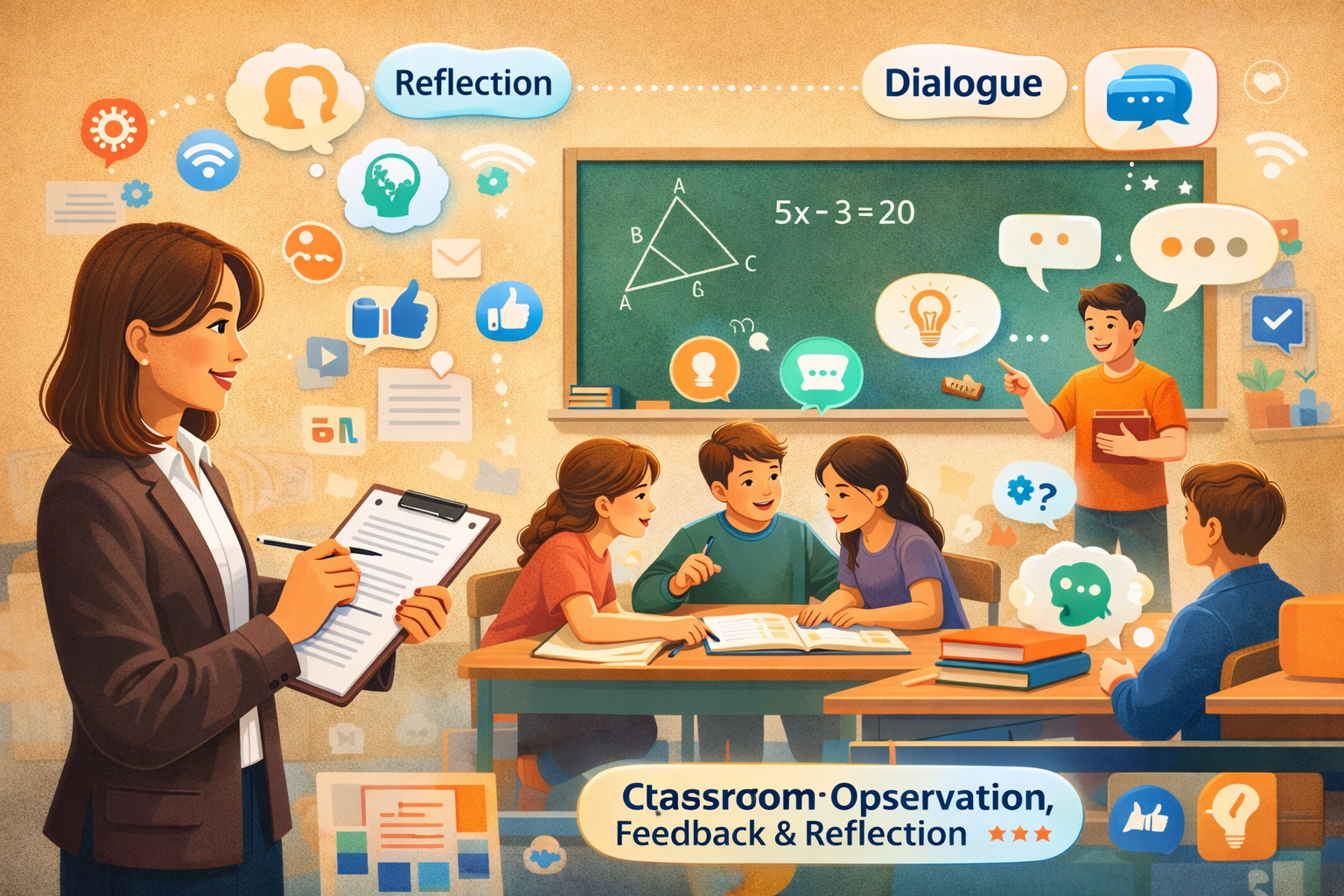
Classroom observation refers to the systematic process of watching and analyzing classroom activities to understand teaching methods, student behavior, and learning outcomes.
कक्षा अवलोकन से तात्पर्य कक्षा में होने वाली गतिविधियों का व्यवस्थित रूप से निरीक्षण करना है, जिससे शिक्षण विधियों, छात्रों के व्यवहार और अधिगम की स्थिति को समझा जा सके।
4. Importance of Classroom Observation
- Helps teachers evaluate teaching strategies
- Identifies students’ learning difficulties
- Improves classroom interaction
- Enhances teaching effectiveness
महत्व:
- शिक्षण रणनीतियों का मूल्यांकन
- छात्रों की सीखने की कठिनाइयों की पहचान
- कक्षा में बेहतर संवाद
- शिक्षण की प्रभावशीलता में सुधार
Classroom observation also allows teachers to understand whether students are actively constructing knowledge.
कक्षा अवलोकन से शिक्षक यह भी समझ पाते हैं कि छात्र वास्तव में ज्ञान का निर्माण कर रहे हैं या नहीं।
5. Feedback and Follow-up in Teaching / शिक्षण में प्रतिपुष्टि और अनुवर्ती कार्य
Feedback is an essential component of effective teaching. It refers to the information provided to learners about their performance and progress.
प्रतिपुष्टि (Feedback) प्रभावी शिक्षण का एक महत्वपूर्ण भाग है। इसका अर्थ है छात्रों को उनके प्रदर्शन और प्रगति के बारे में जानकारी देना।
6. Types of Feedback
- Immediate feedback
- Delayed feedback
- Positive feedback
- Corrective feedback
प्रतिपुष्टि के प्रकार:
- तात्कालिक प्रतिपुष्टि
- विलंबित प्रतिपुष्टि
- सकारात्मक प्रतिपुष्टि
- सुधारात्मक प्रतिपुष्टि
Follow-up activities ensure that students improve their learning after receiving feedback.
अनुवर्ती कार्य (Follow-up) यह सुनिश्चित करता है कि प्रतिपुष्टि प्राप्त करने के बाद छात्र अपनी सीखने की प्रक्रिया को और बेहतर बना सकें।
Examples of follow-up activities include:
- Additional practice tasks
- Group discussions
- Revision assignments
- Remedial teaching
उदाहरण:
- अतिरिक्त अभ्यास
- समूह चर्चा
- पुनरावृत्ति कार्य
- उपचारात्मक शिक्षण
7. Reflection in Constructivist Learning / रचनावादी अधिगम में चिंतन
Reflection is the process of thinking deeply about one’s experiences to gain better understanding.
चिंतन का अर्थ है अपने अनुभवों के बारे में गहराई से सोचकर बेहतर समझ विकसित करना।
Reflection helps learners:
- Understand what they have learned
- Identify mistakes
- Improve learning strategies
चिंतन से छात्रों को:
- अपनी सीख को समझने में सहायता मिलती है
- गलतियों की पहचान होती है
- सीखने की रणनीतियों में सुधार होता है
Teachers also use reflective practices to improve their teaching methods.
शिक्षक भी चिंतन के माध्यम से अपनी शिक्षण विधियों में सुधार करते हैं।
8. Dialogue and Discussion in Constructivist Teaching / रचनावादी शिक्षण में संवाद और चर्चा
Dialogue and discussion are powerful tools in constructivist classrooms. They encourage students to express ideas, ask questions, and learn from each other.
संवाद और चर्चा रचनावादी कक्षा में अत्यंत प्रभावशाली उपकरण हैं। यह छात्रों को अपने विचार व्यक्त करने, प्रश्न पूछने और एक-दूसरे से सीखने के लिए प्रेरित करते हैं।
Benefits include:
- Development of critical thinking
- Better understanding of concepts
- Collaborative learning
- Improved communication skills
लाभ:
- आलोचनात्मक सोच का विकास
- अवधारणाओं की बेहतर समझ
- सहयोगात्मक अधिगम
- संप्रेषण कौशल में सुधार
9.Role of Teacher in Constructivist Classroom
रचनावादी कक्षा में शिक्षक की भूमिका
In a constructivist classroom, the teacher acts as a facilitator rather than a knowledge transmitter.
रचनावादी कक्षा में शिक्षक ज्ञान प्रदान करने वाले के बजाय मार्गदर्शक की भूमिका निभाते हैं।
Key roles include:
- Encouraging inquiry
- Providing feedback
- Creating learning opportunities
- Facilitating discussions
मुख्य भूमिकाएँ:
- जिज्ञासा को प्रोत्साहित करना
- प्रतिपुष्टि प्रदान करना
- सीखने के अवसर बनाना
- चर्चा का संचालन करना
10. Advantages of Constructivist Teaching / रचनावादी शिक्षण के लाभ
- Promotes deep understanding
- Encourages active participation
- Develops critical thinking
- Improves problem-solving skills
लाभ:
- गहरी समझ विकसित करता है
- सक्रिय सहभागिता बढ़ाता है
- आलोचनात्मक सोच विकसित करता है
- समस्या समाधान क्षमता बढ़ाता है
11. Conclusion / निष्कर्ष
Constructivist teaching focuses on active learning, reflection, dialogue, and meaningful interaction. Classroom observation, feedback, follow-up activities, reflection, and dialogue play an essential role in promoting effective learning. Teachers should adopt these strategies to create a learner-centered and interactive classroom environment.
रचनावादी शिक्षण सक्रिय अधिगम, चिंतन, संवाद और सार्थक सहभागिता पर आधारित है। कक्षा अवलोकन, प्रतिपुष्टि, अनुवर्ती कार्य, चिंतन और संवाद प्रभावी अधिगम को बढ़ावा देने में महत्वपूर्ण भूमिका निभाते हैं। शिक्षकों को इन रणनीतियों को अपनाकर शिक्षार्थी-केंद्रित और संवादात्मक कक्षा वातावरण बनाना चाहिए।
For more related topics, please follow us: https://teacherszone.in/
Please follow us on Facebook : https://www.facebook.com/profile.php?id=61586013442564
12. Practice MCQs 30 Practice MCQs
- Constructivist learning emphasizes
A Teacher-centered learning
B Passive learning
C Active knowledge construction
D Memorization
Answer: C
- Classroom observation mainly helps in
A Entertainment
B Teaching evaluation
C Homework
D Discipline
Answer: B
- Feedback in education means
A Punishment
B Information about performance
C Homework
D Lecture
Answer: B
- Reflection refers to
A Deep thinking about experiences
B Memorization
C Reading
D Writing
Answer: A
- Dialogue in classroom promotes
A Silence
B Interaction
C Memorization
D Discipline
Answer: B6. Classroom observation helps teachers mainly to
A. Punish students
B. Understand classroom teaching-learning process
C. Increase homework
D. Reduce teaching time
Answer: B
7. Constructivist classrooms mainly encourage
A. Passive learning
B. Active participation
C. Memorization
D. Teacher domination
Answer: B
8. Feedback in teaching mainly helps to
A. Improve student learning
B. Increase fear among students
C. Reduce interaction
D. Control classroom
Answer: A
9. Reflection in learning mainly involves
A. Copying notes
B. Deep thinking about experiences
C. Memorizing answers
D. Reading textbooks only
Answer: B
10. Follow-up activities in teaching help to
A. Reinforce learning
B. Reduce learning
C. Replace teaching
D. Avoid practice
Answer: A
11. Constructivist teaching focuses on
A. Teacher-centered learning
B. Student-centered learning
C. Rote memorization
D. Passive listening
Answer: B
12. Dialogue in classroom mainly promotes
A. Interaction and understanding
B. Silence
C. Discipline only
D. Memorization
Answer: A
13. Reflective teaching helps teachers to
A. Improve teaching practices
B. Reduce teaching
C. Avoid interaction
D. Ignore students
Answer: A
14. In constructivist teaching the role of teacher is mainly
A. Knowledge transmitter
B. Facilitator of learning
C. Authority only
D. Controller
Answer: B
15. Classroom observation is important for
A. Improving teaching methods
B. Entertainment
C. Punishment
D. Discipline only
Answer: A
16. Dialogue-based teaching helps students develop
A. Critical thinking
B. Passive learning
C. Memorization
D. Fear of teacher
Answer: A
17. Which method encourages collaborative learning?
A. Group discussion
B. Lecture method
C. Dictation
D. Silent reading
Answer: A
18. Reflection helps learners to
A. Evaluate their own learning
B. Avoid learning
C. Ignore mistakes
D. Memorize notes
Answer: A
19. Constructivist learning mainly encourages
A. Exploration and discovery
B. Passive listening
C. Teacher control
D. Memorization
Answer: A
20. Feedback should ideally be
A. Immediate and constructive
B. Delayed and negative
C. Punitive
D. Ignored
Answer: A
21. Classroom observation can help identify
A. Students’ learning difficulties
B. Only attendance
C. Only discipline problems
D. Only homework issues
Answer: A
22. Reflection in education mainly develops
A. Self-awareness
B. Fear
C. Memorization
D. Discipline
Answer: A
23. Dialogue helps in
A. Sharing ideas
B. Memorizing answers
C. Avoiding interaction
D. Silent learning
Answer: A
24. Follow-up teaching mainly focuses on
A. Reinforcement of learning
B. Punishment
C. Examination only
D. Homework only
Answer: A
25. Constructivist teaching mainly emphasizes
A. Active learning
B. Passive learning
C. Memorization
D. Teacher domination
Answer: A
26. Reflection encourages students to
A. Think critically about their learning
B. Memorize content
C. Avoid questions
D. Ignore experiences
Answer: A
27. Classroom observation is useful for
A. Professional development of teachers
B. Reducing teaching
C. Ignoring students
D. Increasing discipline
Answer: A
28. Constructivist teaching environment promotes
A. Discussion and collaboration
B. Silence
C. Memorization
D. Teacher control
Answer: A
29. Effective feedback helps students to
A. Improve performance
B. Reduce learning
C. Avoid studies
D. Ignore mistakes
Answer: A
30. Dialogue in classroom supports
A. Conceptual understanding
B. Passive learning
C. Memorization
D. Isolation
Answer: A
12. Previous Years 50 MCQs
- Constructivism emphasizes
A Passive learning
B Knowledge construction by learners
C Teacher domination
D Memorization
Answer: B
- According to constructivist theory, knowledge is
A Transmitted
B Constructed
C Memorized
D Fixed
Answer: B
- Reflection in learning mainly promotes
A Surface learning
B Deep learning
C Memorization
D Discipline
Answer: B
- Dialogue in classroom supports
A Critical thinking
B Silence
C Memorization
D Passive learning
Answer: A
- Follow-up teaching mainly aims to
A Punish students
B Reinforce learning
C Reduce homework
D Avoid teaching
6. Classroom observation mainly helps a teacher to:
A. Control students
B. Evaluate infrastructure
C. Understand learning processes
D. Punish weak learners
Answer: C. Understand learning processes
7. In constructivist classrooms, observation focuses more on:
A. Teacher activities
B. Student learning behaviour
C. School administration
D. Discipline management
Answer: B. Student learning behaviour
8. Which type of observation uses a checklist or rating scale?
A. Informal observation
B. Structured observation
C. Random observation
D. Personal observation
Answer: B. Structured observation
9. The main aim of feedback in teaching is to:
A. Criticize students
B. Improve learning performance
C. Compare students
D. Give punishment
Answer: B. Improve learning performance
10. Feedback given immediately after a learning activity is called:
A. Delayed feedback
B. Immediate feedback
C. Formal feedback
D. Indirect feedback
Answer: B. Immediate feedback
11. Constructive feedback should be:
A. Judgmental
B. Negative
C. Specific and supportive
D. Punitive
Answer: C. Specific and supportive
12. Follow-up in teaching mainly refers to:
A. Giving homework
B. Revisiting learning outcomes
C. Ending the lesson
D. Conducting exams
Answer: B. Revisiting learning outcomes
13. Which approach encourages dialogue between teacher and students?
A. Behaviorism
B. Constructivism
C. Structuralism
D. Idealism
Answer: B. Constructivism
14. Reflection in teaching means:
A. Memorizing lessons
B. Thinking critically about teaching practices
C. Writing notes
D. Giving lectures
Answer: B. Thinking critically about teaching practices
15. Reflection helps teachers to:
A. Improve teaching strategies
B. Reduce syllabus
C. Avoid teaching
D. Increase homework
Answer: A. Improve teaching strategies
16. Dialogue in classroom learning helps to:
A. Create discipline problems
B. Encourage student participation
C. Increase teacher dominance
D. Reduce interaction
Answer: B. Encourage student participation
17. According to constructivist theory, knowledge is:
A. Transmitted by teacher
B. Constructed by learner
C. Fixed and static
D. Memorized by students
Answer: B. Constructed by learner
18. Reflective teaching is strongly associated with:
A. Mechanical teaching
B. Teacher-centered approach
C. Self-evaluation of teaching
D. Punishment
Answer: C. Self-evaluation of teaching
19. Which tool is commonly used in classroom observation?
A. Observation schedule
B. Blackboard
C. Attendance register
D. Time table
Answer: A. Observation schedule
20. Which of the following supports reflective practice?
A. Teaching diary
B. Punishment register
C. Attendance sheet
D. School calendar
Answer: A. Teaching diary
21. Classroom dialogue helps students to develop:
A. Passive learning
B. Critical thinking
C. Memorization
D. Fear of teacher
Answer: B. Critical thinking
22. Constructivist teaching focuses on:
A. Lecture method
B. Student-centered learning
C. Teacher authority
D. Textbook memorization
Answer: B. Student-centered learning
23. Observation used during teaching practice in B.Ed is called:
A. Peer observation
B. Random observation
C. Institutional observation
D. Social observation
Answer: A. Peer observation
24. Effective feedback must be:
A. Vague
B. Timely and clear
C. Negative
D. Confusing
Answer: B. Timely and clear
25. Which method encourages reflective thinking among students?
A. Discussion
B. Dictation
C. Lecture
D. Drill
Answer: A. Discussion
26. Dialogue-based teaching encourages:
A. Passive learning
B. Active participation
C. Teacher domination
D. Silence in class
Answer: B. Active participation
27. Reflective teaching promotes:
A. Professional development
B. Rote learning
C. Teacher authority
D. Student punishment
Answer: A. Professional development
28. Which educationist emphasized reflective thinking?
A. John Dewey
B. Plato
C. Aristotle
D. Rousseau
Answer: A. John Dewey
29. Which strategy is most suitable for constructivist learning?
A. Problem-solving method
B. Lecture method
C. Dictation method
D. Drill method
Answer: A. Problem-solving method
30. Classroom observation helps in:
A. Improving teaching quality
B. Increasing syllabus
C. Reducing interaction
D. Ignoring students
Answer: A. Improving teaching quality
Questions 31–50 (Advanced Exam Level)
31. Constructivist classrooms promote:
A. Passive learning
B. Inquiry-based learning
C. Memorization
D. Lecture dominance
Answer: B. Inquiry-based learning
32. Reflection after teaching mainly helps in:
A. Self-improvement
B. Completing syllabus
C. Managing discipline
D. Giving homework
Answer: A. Self-improvement
33. Which of the following is an example of formative feedback?
A. Final exam results
B. Unit test guidance
C. Board exam marks
D. Admission test
Answer: B. Unit test guidance
34. Follow-up teaching ensures:
A. Learning reinforcement
B. Punishment
C. Homework only
D. Attendance
Answer: A. Learning reinforcement
35. Reflective dialogue helps teachers to:
A. Share teaching experiences
B. Reduce communication
C. Avoid evaluation
D. Increase authority
Answer: A. Share teaching experiences
36. Which method best promotes classroom dialogue?
A. Group discussion
B. Lecture method
C. Dictation
D. Drill
Answer: A. Group discussion
37. Reflective teaching requires:
A. Critical thinking
B. Memorization
C. Punishment
D. Silence
Answer: A. Critical thinking
38. Observation in teaching practice is mainly used for:
A. Professional training
B. Discipline control
C. Attendance
D. Punishment
Answer: A. Professional training
39. Constructivist teachers act as:
A. Knowledge transmitters
B. Learning facilitators
C. Strict controllers
D. Dictators
Answer: B. Learning facilitators
40. Dialogue-based learning supports:
A. Collaborative learning
B. Passive learning
C. Memorization
D. Isolation
Answer: A. Collaborative learning
41. Which strategy supports reflective teaching?
A. Self-assessment
B. Punishment
C. Lecture dominance
D. Drill
Answer: A. Self-assessment
42. Constructivist learning environment encourages:
A. Student interaction
B. Silence
C. Fear
D. Rote learning
Answer: A. Student interaction
43. Classroom observation helps identify:
A. Learning difficulties
B. Student punishment
C. Attendance problems
D. School fees
Answer: A. Learning difficulties
44. Reflection is an important part of:
A. Professional teaching practice
B. Administrative work
C. School management
D. Financial planning
Answer: A. Professional teaching practice
45. Dialogue between teacher and students builds:
A. Trust and understanding
B. Fear
C. Distance
D. Silence
Answer: A. Trust and understanding
46. Feedback that focuses on improvement is called:
A. Constructive feedback
B. Negative feedback
C. Formal feedback
D. Random feedback
Answer: A. Constructive feedback
47. Which method encourages reflective learning among students?
A. Project method
B. Dictation
C. Drill
D. Lecture
Answer: A. Project method
48. Constructivist teachers encourage students to:
A. Explore and discover
B. Memorize only
C. Remain silent
D. Follow orders
Answer: A. Explore and discover
49. Follow-up activities mainly ensure:
A. Retention of learning
B. Punishment
C. Attendance
D. Discipline
Answer: A. Retention of learning
50. Reflection and dialogue together promote:
A. Deep learning
B. Rote learning
C. Teacher domination
D. Passive learning
Answer: A. Deep learning