
Learn Inclusive Education concepts: diversity, disability, social model, types of disabilities, identification and interventions.
Inclusive Education: Diversity, Disability and Inclusion – Concepts, Types, Identification and Interventions/ समावेशी शिक्षा: विविधता, दिव्यांगता और समावेशन – अवधारणा, प्रकार, पहचान और हस्तक्षेप
Table of Contents
1. Introduction | परिचय
Inclusive education is one of the most important concepts in modern education. It ensures that all children, regardless of their abilities, disabilities, socio-economic background, gender, language, or culture, learn together in the same classroom environment.
समावेशी शिक्षा आधुनिक शिक्षा की एक अत्यंत महत्वपूर्ण अवधारणा है। इसका उद्देश्य यह सुनिश्चित करना है कि सभी बच्चे – चाहे उनकी क्षमता, दिव्यांगता, सामाजिक-आर्थिक स्थिति, भाषा या संस्कृति कुछ भी हो – एक ही कक्षा में साथ-साथ सीखें।
Inclusive education is strongly promoted in Indian education policies such as the Right to Education Act (2009), National Education Policy (2020), and programs like Sarva Shiksha Abhiyan (SSA).
भारत में शिक्षा का अधिकार अधिनियम 2009, राष्ट्रीय शिक्षा नीति 2020 तथा सर्व शिक्षा अभियान जैसी योजनाएँ समावेशी शिक्षा को बढ़ावा देती हैं।
According to inclusive education philosophy, every child has the right to education and equal learning opportunities.
समावेशी शिक्षा के अनुसार हर बच्चे को शिक्षा प्राप्त करने का अधिकार और समान अवसर मिलना चाहिए।
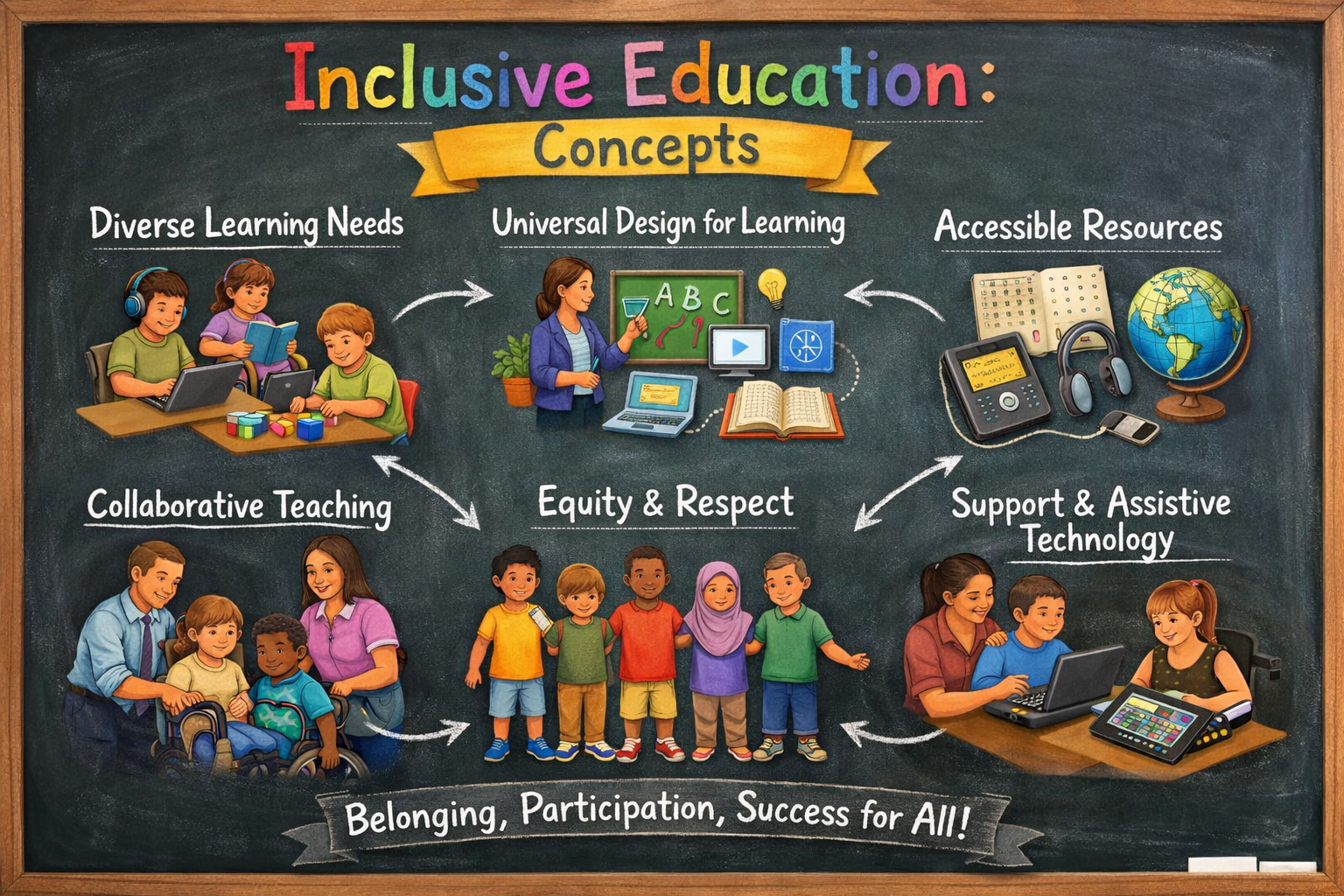
2. Concept of Diversity | विविधता की अवधारणा
Diversity refers to the differences among individuals in a classroom.
विविधता का अर्थ है कक्षा में विद्यार्थियों के बीच मौजूद विभिन्न प्रकार के अंतर।
These differences may include:
Types of Diversity | विविधता के प्रकार
- Cultural diversity – different traditions and cultures
सांस्कृतिक विविधता - Linguistic diversity – different languages spoken by students
भाषाई विविधता - Socio-economic diversity – different economic backgrounds
सामाजिक-आर्थिक विविधता - Gender diversity – different gender identities
लैंगिक विविधता - Ability diversity – differences in learning ability
क्षमता आधारित विविधता
Diversity enriches classroom learning by bringing different perspectives and experiences.
विविधता कक्षा में विभिन्न अनुभव और दृष्टिकोण लाकर सीखने को समृद्ध बनाती है।
for more topic Please visit:https://teacherszone.in/
Please follow us on Facebook: https://www.facebook.com/profile.php?id=61586013442564
3. Concept of Disability | दिव्यांगता की अवधारणा
Disability refers to physical, mental, intellectual, or sensory impairments that limit a person’s participation in activities.
दिव्यांगता का अर्थ है ऐसी शारीरिक, मानसिक, बौद्धिक या संवेदी सीमाएँ जो व्यक्ति की सामान्य गतिविधियों में भागीदारी को प्रभावित करती हैं।
According to the Rights of Persons with Disabilities Act (2016), disability is not only a medical condition but also a result of social barriers.
दिव्यांगजन अधिकार अधिनियम 2016 के अनुसार दिव्यांगता केवल चिकित्सीय समस्या नहीं बल्कि सामाजिक बाधाओं का परिणाम भी है।
4. Disability as a Social Construct
दिव्यांगता एक सामाजिक निर्माण के रूप में
The social model of disability explains that disability is not only caused by impairment but also by society’s attitudes and environmental barriers.
दिव्यांगता का सामाजिक मॉडल बताता है कि दिव्यांगता केवल शारीरिक कमी से नहीं बल्कि समाज के दृष्टिकोण और पर्यावरणीय बाधाओं से भी उत्पन्न होती है।
Examples | उदाहरण
- A wheelchair user cannot enter a building without a ramp.
व्हीलचेयर उपयोगकर्ता रैंप के बिना भवन में प्रवेश नहीं कर सकता। - A visually impaired student cannot read textbooks without Braille.
दृष्टिबाधित विद्यार्थी ब्रेल के बिना पाठ्यपुस्तक नहीं पढ़ सकता।
Thus, disability is partly created by inaccessible environments.
इस प्रकार दिव्यांगता का एक कारण असुलभ वातावरण भी होता है।
5. Concept of Inclusion | समावेशन की अवधारणा
Inclusion means educating all children together in the same classroom regardless of differences.
समावेशन का अर्थ है सभी बच्चों को उनके अंतर के बावजूद एक ही कक्षा में शिक्षा देना।
Inclusive education promotes:
- Equality
- Participation
- Acceptance
- Respect for diversity
समावेशी शिक्षा समानता, सहभागिता और विविधता के सम्मान को बढ़ावा देती है।
6. Types of Disabilities
दिव्यांगताओं के प्रकार
According to educational classification, disabilities are broadly categorized into several types.
शैक्षिक दृष्टि से दिव्यांगताओं को कई प्रकारों में वर्गीकृत किया जाता है।
Physical Disability
शारीरिक दिव्यांगता
Physical disabilities affect movement and motor functions.
यह शरीर की गतिशीलता और मोटर क्रियाओं को प्रभावित करती है।
Examples:
- Cerebral palsy
- Muscular dystrophy
- Orthopedic impairment
Visual Impairment
दृष्टि बाधा
Students with visual impairment have difficulty seeing or blindness.
दृष्टिबाधित विद्यार्थियों को देखने में कठिनाई या अंधता होती है।
Interventions:
- Braille books
- Audio learning materials
- Assistive technology
Hearing Impairment
श्रवण बाधा
Students with hearing impairment face difficulty in hearing sounds or speech.
श्रवण बाधित विद्यार्थियों को सुनने में कठिनाई होती है।
Interventions:
- Sign language
- Hearing aids
- Visual teaching aids
Intellectual Disability
बौद्धिक दिव्यांगता
This affects learning ability, reasoning and problem solving.
यह सीखने की क्षमता और समस्या समाधान को प्रभावित करती है।
Examples:
- Down syndrome
- Developmental delay
Learning Disabilities
अधिगम अक्षमता
Learning disabilities affect reading, writing or mathematical skills.
यह पढ़ने, लिखने या गणितीय कौशल को प्रभावित करती है।
Examples:
- Dyslexia
- Dysgraphia
- Dyscalculia
Autism Spectrum Disorder
ऑटिज्म स्पेक्ट्रम विकार
Autism affects communication, social interaction and behavior.
ऑटिज्म संचार और सामाजिक व्यवहार को प्रभावित करता है।
7. Identification of Disabilities / दिव्यांगता की पहचान
Early identification is essential for providing appropriate support and intervention.
प्रारंभिक पहचान से उचित सहायता और हस्तक्षेप प्रदान करना संभव होता है।
Methods of Identification
- Classroom observation
- Psychological tests
- Medical assessment
- Screening programs
8. Educational Interventions for Inclusive Education
समावेशी शिक्षा के लिए हस्तक्षेप
Teachers play an important role in implementing inclusive education.
समावेशी शिक्षा को लागू करने में शिक्षक की महत्वपूर्ण भूमिका होती है।
Important Interventions
Individualized Education Program (IEP)
A personalized learning plan designed for students with disabilities.
दिव्यांग विद्यार्थियों के लिए व्यक्तिगत शिक्षण योजना।
Assistive Technology
Examples:
- Screen readers
- Braille devices
- Hearing aids
Differentiated Instruction
Teaching methods adapted to meet diverse learning needs.
विभिन्न छात्रों की आवश्यकताओं के अनुसार शिक्षण।
Collaborative Learning
Students work together in groups.
समूह आधारित सीखना।
Classroom Modifications
Examples:
- Flexible seating
- Simplified instructions
- Visual aids
9. Role of Teachers in Inclusive Education / समावेशी शिक्षा में शिक्षक की भूमिका
Teachers must:
- Promote equality
- Use inclusive teaching strategies
- Support students with disabilities
- Encourage peer support
शिक्षकों को:
- समानता को बढ़ावा देना
- समावेशी शिक्षण रणनीतियाँ अपनाना
- दिव्यांग विद्यार्थियों का समर्थन करना चाहिए।
10.Benefits of Inclusive Education
समावेशी शिक्षा के लाभ
- Promotes equality
- Encourages empathy
- Improves social skills
- Reduces discrimination
समावेशी शिक्षा:
- समानता बढ़ाती है
- सहानुभूति विकसित करती है
- सामाजिक कौशल सुधारती है।
11. Challenges of Inclusive Education
समावेशी शिक्षा की चुनौतियाँ
- Lack of trained teachers
- Inadequate infrastructure
- Lack of teaching resources
- Negative attitudes
12.Conclusion | निष्कर्ष
Inclusive education is essential for creating an equitable and democratic education system.
समावेशी शिक्षा समान और न्यायपूर्ण शिक्षा प्रणाली के निर्माण के लिए अत्यंत आवश्यक है।
It ensures that every child receives quality education and equal opportunities to succeed.
यह सुनिश्चित करती है कि हर बच्चे को गुणवत्तापूर्ण शिक्षा और समान अवसर मिले।
13.MCQs for Practice 40 MCQs
1. Inclusive education mainly promotes
A Equality
B Competition
C Segregation
D Isolation
Answer: A
2. Diversity in classroom refers to
A Differences among learners
B Same abilities
C Same language
D Same culture
Answer: A
3. The social model of disability emphasizes
A Medical treatment
B Social barriers
C Intelligence
D Discipline
Answer: B
4. Dyslexia is related to
A Reading difficulty
B Hearing loss
C Visual impairment
D Speech problem
Answer: A
5. Braille is used by
A Hearing impaired students
B Visually impaired students
C Physically disabled students
D Gifted students
Answer: B
6. Inclusive education aims to
A Separate students with disabilities
B Educate all students together
C Teach only gifted students
D Exclude weak students
Answer: B
7. The concept of diversity in classroom refers to
A Differences among students
B Same abilities
C Same culture
D Same language
Answer: A
8. Which act protects the rights of persons with disabilities in India?
A Right to Education Act
B Rights of Persons with Disabilities Act
C Child Labour Act
D Education Commission Act
Answer: B
9. The social model of disability emphasizes
A Medical treatment only
B Social and environmental barriers
C Intelligence level
D Teacher authority
Answer: B
10. Dyscalculia is related to difficulty in
A Reading
B Writing
C Mathematics
D Speaking
Answer: C
11. Inclusive education promotes
A Segregation
B Equality and participation
C Competition only
D Isolation
Answer: B
12. Braille system is used by
A Hearing impaired students
B Visually impaired students
C Physically disabled students
D Gifted students
Answer: B
13. Sign language is used for teaching
A Hearing impaired students
B Visually impaired students
C Physically disabled students
D Gifted students
Answer: A
14. Autism mainly affects
A Physical growth
B Social interaction and communication
C Vision
D Hearing
Answer: B
15. Inclusive education supports
A Equal learning opportunities
B Separate classrooms
C Limited participation
D Discrimination
Answer: A
16. Dyslexia mainly affects
A Reading ability
B Hearing ability
C Vision
D Motor skills
Answer: A
17. The aim of inclusive education is
A Competition
B Equality in education
C Segregation
D Exclusion
Answer: B
18. Early identification of disability helps in
A Providing timely support
B Ignoring problems
C Increasing punishment
D Reducing education
Answer: A
19. Inclusive classroom encourages
A Collaboration among students
B Isolation
C Teacher domination
D Passive learning
Answer: A
20. Intellectual disability affects
A Hearing
B Vision
C Learning and reasoning
D Physical movement only
Answer: C
21. Diversity in classroom enhances
A Learning experiences
B Discrimination
C Isolation
D Competition only
Answer: A
22. Inclusive education reduces
A Equality
B Discrimination
C Participation
D Learning
Answer: B
23. Assistive technology helps
A Students with disabilities learn better
B Only teachers
C Only administrators
D Only parents
Answer: A
24. The concept of inclusive education is based on
A Equality and human rights
B Competition
C Segregation
D Discipline only
Answer: A
25. Cerebral palsy is an example of
A Physical disability
B Hearing disability
C Visual disability
D Learning disability
Answer: A
26. Dysgraphia is related to difficulty in
A Writing
B Hearing
C Reading
D Walking
Answer: A
27. Inclusive education requires
A Teacher sensitivity
B Ignoring diversity
C Punishment
D Segregation
Answer: A
28. Students with hearing impairment mainly use
A Braille
B Sign language
C Wheelchair
D Audio books
Answer: B
29. Inclusive classroom environment should be
A Supportive and accessible
B Competitive only
C Strict
D Isolated
Answer: A
30. Individualized Education Program (IEP) is prepared for
A Students with disabilities
B Teachers
C Administrators
D Parents
Answer: A
31. Inclusive education helps develop
A Empathy among students
B Discrimination
C Fear
D Isolation
Answer: A
32. Autism Spectrum Disorder affects
A Communication skills
B Vision
C Hearing
D Physical movement
Answer: A
33. Inclusive education promotes
A Social integration
B Segregation
C Isolation
D Exclusion
Answer: A
34. Early screening helps
A Identify learning difficulties
B Ignore problems
C Reduce education
D Increase punishment
Answer: A
35. Inclusive education is based on the principle of
A Education for all
B Education for few
C Education for gifted only
D Education for rich
Answer: A
36. Visual impairment refers to difficulty in
A Seeing
B Hearing
C Walking
D Writing
Answer: A
37. Inclusive education benefits
A All students
B Only disabled students
C Only teachers
D Only parents
Answer: A
38. A barrier-free environment helps
A Students with disabilities participate fully
B Increase discrimination
C Reduce participation
D Segregate learners
Answer: A
39. Inclusive classrooms emphasize
A Cooperation and acceptance
B Competition
C Isolation
D Segregation
Answer: A
40. Inclusive education ensures
A Equal opportunities for all learners
B Separate education
C Limited participation
D Discrimination
Answer: A
14. Previous Year 60 Questions:-
1. Inclusive education means
A Education for gifted children
B Education for all learners together
C Special schools only
D Home schooling
Answer: B
2. Inclusive education emphasizes
A Segregation
B Equality in education
C Competition
D Discipline only
Answer: B
3. The concept of inclusive education is based on
A Equality and human rights
B Competition
C Memorization
D Segregation
Answer: A
4. Diversity in classroom refers to
A Differences among students
B Same abilities
C Same culture
D Same language
Answer: A
5. The Rights of Persons with Disabilities Act was passed in
A 2005
B 2009
C 2016
D 2019
Answer: C
6. Dyslexia is associated with difficulty in
A Reading
B Hearing
C Vision
D Movement
Answer: A
7. Dyscalculia is related to difficulty in
A Reading
B Mathematics
C Hearing
D Writing
Answer: B
8. Dysgraphia affects
A Writing ability
B Hearing ability
C Vision
D Walking
Answer: A
9. Autism Spectrum Disorder mainly affects
A Social interaction
B Hearing ability
C Vision
D Physical movement
Answer: A
10. Braille is used by
A Visually impaired students
B Hearing impaired students
C Physically disabled students
D Gifted students
Answer: A
11. Sign language is used for
A Visually impaired learners
B Hearing impaired learners
C Physically disabled learners
D Gifted learners
Answer: B
12. Inclusive classroom promotes
A Cooperation
B Competition only
C Isolation
D Segregation
Answer: A
13. The aim of inclusive education is
A Education for all
B Education for gifted only
C Education for rich children
D Education for boys only
Answer: A
14. Which disability affects movement?
A Physical disability
B Hearing disability
C Visual disability
D Learning disability
Answer: A
15. Intellectual disability affects
A Learning ability
B Hearing ability
C Vision
D Motor skills
Answer: A
16. Early identification of disability helps in
A Providing proper support
B Ignoring problems
C Increasing punishment
D Reducing education
Answer: A
17. Inclusive education benefits
A All learners
B Only disabled learners
C Only teachers
D Only parents
Answer: A
18. Assistive technology helps
A Students with disabilities
B Teachers only
C Parents only
D Administrators only
Answer: A
19. Inclusive education reduces
A Discrimination
B Equality
C Participation
D Learning
Answer: A
20. Individualized Education Program (IEP) is prepared for
A Students with disabilities
B Teachers
C Parents
D Administrators
Answer: A
21. Inclusive education is supported by
A Right to Education Act
B Child Labour Act
C Income Tax Act
D Banking Act
Answer: A
22. Diversity enhances
A Learning experiences
B Discrimination
C Isolation
D Segregation
Answer: A
23. Autism mainly affects
A Communication skills
B Vision
C Hearing
D Physical movement
Answer: A
24. Hearing impairment affects
A Ability to hear sounds
B Ability to walk
C Ability to see
D Ability to write
Answer: A
25. Visual impairment refers to difficulty in
A Seeing
B Hearing
C Walking
D Writing
Answer: A
26. Inclusive classroom environment should be
A Supportive and accessible
B Competitive only
C Strict
D Isolated
Answer: A
27. Inclusive education promotes
A Social integration
B Segregation
C Isolation
D Discrimination
Answer: A
28. Cerebral palsy is an example of
A Physical disability
B Visual disability
C Hearing disability
D Learning disability
Answer: A
29. Inclusive education encourages
A Participation of all learners
B Segregation
C Isolation
D Competition only
Answer: A
30. Inclusive teaching strategies include
A Differentiated instruction
B Punishment
C Ignoring diversity
D Segregation
Answer: A
31. Inclusive education supports
A Equal opportunities
B Limited participation
C Discrimination
D Isolation
Answer: A
32. Learning disability mainly affects
A Academic skills
B Hearing ability
C Vision
D Movement
Answer: A
33. Inclusive education promotes
A Empathy
B Discrimination
C Isolation
D Segregation
Answer: A
34. Barrier-free environment helps
A Students with disabilities
B Teachers only
C Parents only
D Administrators only
Answer: A
35. Inclusive education emphasizes
A Respect for diversity
B Competition
C Isolation
D Segregation
Answer: A
36. Teacher’s role in inclusive education is
A Facilitator
B Controller
C Authority only
D Observer only
Answer: A
37. Inclusive education focuses on
A Student-centered learning
B Teacher-centered learning
C Memorization
D Discipline only
Answer: A
38. Early screening helps
A Identify learning difficulties
B Ignore problems
C Increase punishment
D Reduce education
Answer: A
39. Inclusive education encourages
A Collaboration
B Isolation
C Competition only
D Segregation
Answer: A
40. Inclusive classroom promotes
A Respect among students
B Discrimination
C Fear
D Isolation
Answer: A
41. Learning disability affecting reading is called
A Dyslexia
B Dyscalculia
C Dysgraphia
D Autism
Answer: A
42. Learning disability affecting writing is called
A Dysgraphia
B Dyslexia
C Dyscalculia
D Autism
Answer: A
43. Learning disability affecting mathematics is
A Dyscalculia
B Dyslexia
C Dysgraphia
D Autism
Answer: A
44. Inclusive education is based on the principle of
A Equality
B Competition
C Segregation
D Isolation
Answer: A
45. Diversity in classroom promotes
A Mutual understanding
B Discrimination
C Isolation
D Segregation
Answer: A
46. Inclusive education benefits society by
A Promoting equality
B Promoting discrimination
C Increasing segregation
D Increasing isolation
Answer: A
47. Students with hearing impairment may use
A Hearing aids
B Braille
C Wheelchair
D Audio books
Answer: A
48. Students with visual impairment may use
A Braille books
B Sign language
C Hearing aids
D Wheelchair
Answer: A
49. Inclusive education encourages
A Respect for diversity
B Discrimination
C Isolation
D Segregation
Answer: A
50. Inclusive education helps in developing
A Social skills
B Discrimination
C Isolation
D Fear
Answer: A
51. Inclusive classrooms encourage
A Peer support
B Isolation
C Competition only
D Segregation
Answer: A
52. Inclusive education ensures
A Equal participation
B Limited participation
C Discrimination
D Isolation
Answer: A
53. Inclusive education promotes
A Democratic values
B Discrimination
C Segregation
D Isolation
Answer: A
54. Inclusive education supports
A Equal rights
B Limited rights
C Segregation
D Isolation
Answer: A
55. Inclusive teaching encourages
A Cooperative learning
B Isolation
C Segregation
D Competition only
Answer: A
56. Inclusive education helps develop
A Empathy among learners
B Discrimination
C Isolation
D Fear
Answer: A
57. Inclusive education aims to
A Remove barriers to learning
B Create barriers
C Increase discrimination
D Promote segregation
Answer: A
58. Inclusive classroom promotes
A Participation of all students
B Segregation
C Isolation
D Competition only
Answer: A
59. Inclusive education ensures
A Equal access to education
B Limited access
C Segregation
D Isolation
Answer: A
60. The ultimate goal of inclusive education is
A Education for all
B Education for few
C Education for gifted only
D Education for rich only