
Explore the concept of School Mental Health and Well-Being in education. Understand preventive, promotive and curative dimensions, guidance and counselling with MCQs for CTET, B.Ed, NET, KVS, NVS, EMRS and other teaching exams. Mental Health and Well-Being is important factors of current curriculum in india.
Mental Health and Well-Being: In School Perspective
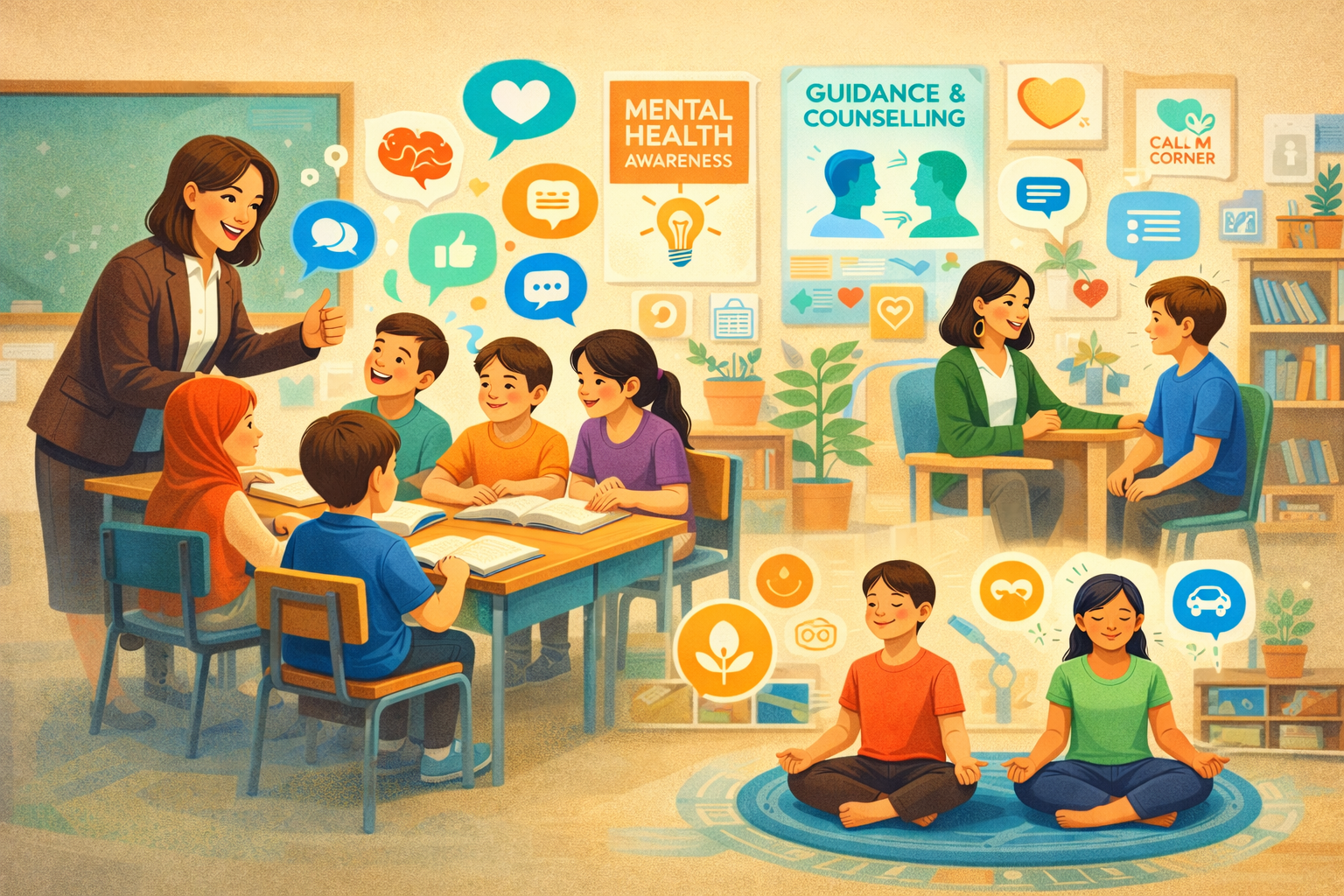
Table of Contents
1. Concept of Mental Health
मानसिक स्वास्थ्य की अवधारणा
Mental health refers to a person’s emotional, psychological, and social well-being. It influences how individuals think, feel, and behave in daily life. Good mental health enables individuals to cope with stress, work productively, and maintain healthy relationships.
मानसिक स्वास्थ्य से तात्पर्य व्यक्ति के भावनात्मक, मनोवैज्ञानिक और सामाजिक कल्याण से है। यह इस बात को प्रभावित करता है कि व्यक्ति जीवन में कैसे सोचता है, महसूस करता है और व्यवहार करता है। अच्छा मानसिक स्वास्थ्य व्यक्ति को तनाव से निपटने, उत्पादक कार्य करने और स्वस्थ संबंध बनाए रखने में मदद करता है।
2. Importance of Mental Health and Well-Being in Schools
विद्यालयों में मानसिक स्वास्थ्य का महत्व
Schools play a significant role in promoting mental health because children spend a large part of their day in school. A positive school environment supports students’ emotional development and academic success.
विद्यालय मानसिक स्वास्थ्य को बढ़ावा देने में महत्वपूर्ण भूमिका निभाते हैं क्योंकि बच्चे दिन का बड़ा हिस्सा विद्यालय में बिताते हैं। एक सकारात्मक विद्यालयी वातावरण विद्यार्थियों के भावनात्मक विकास और शैक्षणिक सफलता को बढ़ावा देता है।
Schools should focus on:
विद्यालयों को निम्नलिखित बातों पर ध्यान देना चाहिए:
• Creating a safe and supportive environment
• Preventing bullying and discrimination
• Providing counselling services
• Promoting emotional well-being
• सुरक्षित और सहयोगी वातावरण बनाना
• बुलिंग और भेदभाव को रोकना
• काउंसलिंग सेवाएँ प्रदान करना
• भावनात्मक कल्याण को बढ़ावा देना
3. Role of Family in Mental Health and Well-Being
मानसिक स्वास्थ्य में परिवार की भूमिका
Family is the first environment where children learn emotional and social behavior. A supportive family provides love, care, security, and guidance, which are essential for healthy mental development.
परिवार वह पहला वातावरण है जहाँ बच्चे भावनात्मक और सामाजिक व्यवहार सीखते हैं। एक सहायक परिवार बच्चों को प्रेम, सुरक्षा, देखभाल और मार्गदर्शन प्रदान करता है, जो स्वस्थ मानसिक विकास के लिए आवश्यक है।
In Indian culture, multigenerational families (including grandparents) provide additional emotional support to children.
भारतीय संस्कृति में बहु-पीढ़ी परिवार (दादा-दादी सहित) बच्चों को अतिरिक्त भावनात्मक सहयोग प्रदान करते हैं।
4. Role of Community in Mental Health and Well-Being
समुदाय की भूमिका
The community also plays an important role in shaping children’s mental health. A supportive community provides safety, social interaction, and opportunities for development.
समुदाय भी बच्चों के मानसिक स्वास्थ्य को प्रभावित करता है। एक सहायक समुदाय बच्चों को सुरक्षा, सामाजिक संपर्क और विकास के अवसर प्रदान करता है।
Community support helps children develop confidence, social skills, and emotional stability.
समुदाय का सहयोग बच्चों में आत्मविश्वास, सामाजिक कौशल और भावनात्मक स्थिरता विकसित करने में मदद करता है।
5. Factors Affecting Mental Health and Well-Being
मानसिक स्वास्थ्य को प्रभावित करने वाले कारक
Mental health is influenced by biological, psychological, and environmental factors.
मानसिक स्वास्थ्य जैविक, मनोवैज्ञानिक और पर्यावरणीय कारकों से प्रभावित होता है।
5.1 Biological Factors
जैविक कारक
Biological factors include genetic inheritance, brain injury, neurological disorders, and prenatal health conditions.
जैविक कारकों में वंशानुगतता, मस्तिष्क की चोट, तंत्रिका तंत्र से जुड़ी समस्याएँ और गर्भावस्था के दौरान स्वास्थ्य स्थितियाँ शामिल होती हैं।
5.2 Psychological Factors
मनोवैज्ञानिक कारक
Psychological factors include emotional trauma, neglect, abuse, loss of parents, and negative childhood experiences.
मनोवैज्ञानिक कारकों में भावनात्मक आघात, उपेक्षा, दुर्व्यवहार, माता-पिता की मृत्यु या नकारात्मक बचपन के अनुभव शामिल होते हैं।
5.3 Environmental Factors
पर्यावरणीय कारक
Environmental factors include family conflicts, social pressure, poverty, discrimination, and media influence.
पर्यावरणीय कारकों में पारिवारिक संघर्ष, सामाजिक दबाव, गरीबी, भेदभाव और मीडिया का प्रभाव शामिल होता है।
6. Attachment and Emotional Development in Mental Health and Well-Being
लगाव और भावनात्मक विकास
Attachment refers to the emotional bond between a child and caregivers. Secure attachment helps children develop trust, confidence, and emotional stability.
लगाव से तात्पर्य बच्चे और देखभाल करने वाले व्यक्ति के बीच भावनात्मक संबंध से है। सुरक्षित लगाव बच्चों में विश्वास, आत्मविश्वास और भावनात्मक स्थिरता विकसित करता है।
Children with attachment problems may show:
• Lack of eye contact
• Aggressive behaviour
• Difficulty in relationships
लगाव की समस्या वाले बच्चे निम्न व्यवहार दिखा सकते हैं:
• आँखों का संपर्क न बनाना
• आक्रामक व्यवहार
• संबंध बनाने में कठिनाई
7. Mental Health and Well-Being: Challenges in Adolescence
किशोरावस्था में मानसिक स्वास्थ्य चुनौतियाँ
Adolescence (10–19 years) is a critical stage of development involving physical, emotional, and psychological changes.
किशोरावस्था (10–19 वर्ष) विकास का एक महत्वपूर्ण चरण है जिसमें शारीरिक, भावनात्मक और मनोवैज्ञानिक परिवर्तन होते हैं।
During this stage, adolescents may experience:
• Academic stress
• Identity crisis
• Peer pressure
• Emotional instability
इस दौरान किशोरों को कई चुनौतियों का सामना करना पड़ सकता है:
• शैक्षणिक तनाव
• पहचान संकट
• सहपाठी दबाव
• भावनात्मक अस्थिरता
8. Emotional Development and Self-Esteem in Mental Health and Well-Being
भावनात्मक विकास और आत्मसम्मान
Self-esteem is the way individuals perceive their own value and abilities. High self-esteem helps students become confident and resilient.
आत्मसम्मान वह भावना है जिससे व्यक्ति अपनी योग्यता और मूल्य को समझता है। उच्च आत्मसम्मान विद्यार्थियों को आत्मविश्वासी और मजबूत बनाता है।
Teachers should help students recognize their strengths and talents.
शिक्षकों को विद्यार्थियों को उनकी क्षमताओं और प्रतिभाओं को पहचानने में मदद करनी चाहिए।
9. Managing Anger and Emotions in Mental Health and Well-Being
क्रोध और भावनाओं का प्रबंधन
Students should learn healthy ways to manage anger and emotions. Techniques such as relaxation, meditation, and positive thinking are helpful.
विद्यार्थियों को क्रोध और भावनाओं को स्वस्थ तरीके से नियंत्रित करना सीखना चाहिए। इसके लिए ध्यान, विश्राम तकनीक और सकारात्मक सोच उपयोगी हैं।
10. Role of Teachers in Promoting Mental Health and Well-Being
मानसिक स्वास्थ्य को बढ़ावा देने में शिक्षक की भूमिका
Teachers are key figures in identifying and supporting students with mental health concerns. They can create a positive classroom environment and encourage emotional development.
शिक्षक विद्यार्थियों के मानसिक स्वास्थ्य की पहचान और सहायता करने में महत्वपूर्ण भूमिका निभाते हैं। वे कक्षा में सकारात्मक वातावरण बनाकर भावनात्मक विकास को बढ़ावा दे सकते हैं।
Teachers should:
• Encourage participation
• Provide positive feedback
• Use interactive teaching methods
• Avoid labelling students
शिक्षकों को चाहिए:
• विद्यार्थियों को सहभागिता के लिए प्रोत्साहित करें
• सकारात्मक प्रतिक्रिया दें
• सक्रिय शिक्षण विधियों का प्रयोग करें
• विद्यार्थियों को लेबल न करें
Conclusion of Mental Health and Well-Being
निष्कर्ष
Mental health is essential for the overall development of children. Schools, families, and communities must work together to promote mental well-being and provide support systems for students.
बच्चों के समग्र विकास के लिए मानसिक स्वास्थ्य अत्यंत आवश्यक है। विद्यालय, परिवार और समुदाय को मिलकर विद्यार्थियों के मानसिक कल्याण को बढ़ावा देने और सहायता प्रणाली विकसित करने के लिए कार्य करना चाहिए।
A mentally healthy school environment leads to better learning outcomes and a healthier society.
एक मानसिक रूप से स्वस्थ विद्यालयी वातावरण बेहतर अधिगम परिणाम और स्वस्थ समाज का निर्माण करता है।
Please visit us for more similar topics: https://teacherszone.in/
Please follow us on Facebook : https://www.facebook.com/profile.php?id=61586013442564
50 MCQs from CBSE Mental Health & Well-being
1. Mental health refers to
A Physical strength
B Emotional, psychological and social well-being
C Intelligence
D Academic achievement
Answer: B
2. Good mental health enables a person to
A Cope with stress
B Avoid challenges
C Ignore problems
D Become isolated
Answer: A
3. According to CBSE guidelines, schools should focus on
A Only academic development
B Holistic development
C Only discipline
D Competition
Answer: B
4. School mental health programs aim to
A Improve emotional well-being
B Increase pressure
C Promote competition
D Ignore emotions
Answer: A
5. Children spend most of their time in
A Community centers
B Schools
C Markets
D Hospitals
Answer: B
6. Family plays an important role in
A Emotional development of children
B Only financial support
C Only discipline
D Physical fitness
Answer: A
7. A supportive family environment provides
A Love and security
B Fear
C Isolation
D Stress
Answer: A
8. Community support helps children develop
A Confidence
B Fear
C Aggression
D Isolation
Answer: A
9. Mental health problems may arise due to
A Biological factors
B Psychological factors
C Environmental factors
D All of the above
Answer: D
10. Genetic inheritance is an example of
A Biological factor
B Environmental factor
C Social factor
D Cultural factor
Answer: A
11. Emotional trauma is a
A Psychological factor
B Biological factor
C Economic factor
D Political factor
Answer: A
12. Family conflicts are considered
A Environmental factors
B Biological factors
C Physical factors
D Academic factors
Answer: A
13. Attachment refers to
A Emotional bond between child and caregiver
B Academic relationship
C Peer competition
D Discipline
Answer: A
14. Secure attachment helps develop
A Confidence and trust
B Fear
C Aggression
D Isolation
Answer: A
15. Lack of emotional bonding may lead to
A Attachment problems
B Academic success
C Physical fitness
D Discipline
Answer: A
16. Adolescence is the age group of
A 5–10 years
B 10–19 years
C 20–25 years
D 25–30 years
Answer: B
17. Adolescence is characterized by
A Physical and emotional changes
B Only physical growth
C Only academic development
D Only discipline
Answer: A
18. Peer pressure mainly affects
A Emotional well-being
B Height
C Vision
D Hearing
Answer: A
19. Self-esteem refers to
A Self-worth and confidence
B Physical strength
C Memory
D Intelligence
Answer: A
20. High self-esteem helps students
A Develop confidence
B Become fearful
C Avoid learning
D Isolate themselves
Answer: A
21. Teachers should help students identify
A Their strengths
B Their weaknesses only
C Their failures
D Their mistakes
Answer: A
22. Emotional development is supported by
A Positive environment
B Fear
C Punishment
D Competition
Answer: A
23. Anger management techniques include
A Deep breathing
B Punishment
C Ignoring emotions
D Isolation
Answer: A
24. Meditation helps
A Reduce stress
B Increase fear
C Increase aggression
D Reduce learning
Answer: A
25. Teachers play a key role in
A Identifying student problems
B Ignoring students
C Punishing students
D Creating fear
Answer: A
26. A positive classroom environment promotes
A Mental well-being
B Fear
C Competition
D Isolation
Answer: A
27. Bullying in schools affects
A Mental health
B Physical strength
C Height
D Memory
Answer: A
28. School counselling services help students with
A Emotional problems
B Physical exercise
C Sports training
D Homework
Answer: A
29. Guidance services help students in
A Career planning
B Punishment
C Isolation
D Competition
Answer: A
30. A mentally healthy student usually shows
A Positive behaviour
B Aggression
C Fear
D Isolation
Answer: A
31. School mental health programs focus on
A Holistic development
B Only marks
C Competition
D Discipline
Answer: A
32. Teachers should avoid
A Labelling students
B Encouraging participation
C Positive feedback
D Cooperative learning
Answer: A
33. Emotional support from teachers helps
A Build confidence
B Increase fear
C Avoid learning
D Promote aggression
Answer: A
34. Life skills education promotes
A Emotional competence
B Fear
C Isolation
D Competition
Answer: A
35. Mental health awareness helps to
A Reduce stigma
B Increase fear
C Promote punishment
D Reduce participation
Answer: A
36. A supportive school environment includes
A Safety and respect
B Fear
C Punishment
D Competition
Answer: A
37. Parents should
A Spend quality time with children
B Ignore problems
C Increase pressure
D Punish frequently
Answer: A
38. Mental health problems can affect
A Learning ability
B Height
C Weight
D Vision
Answer: A
39. Stress management programs help students
A Cope with pressure
B Increase fear
C Avoid learning
D Promote aggression
Answer: A
40. Positive teacher-student relationships promote
A Emotional well-being
B Fear
C Isolation
D Competition
Answer: A
41. Mental health promotion includes
A Emotional support
B Punishment
C Competition
D Isolation
Answer: A
42. A mentally healthy school promotes
A Cooperation
B Fear
C Isolation
D Aggression
Answer: A
43. Community support helps in
A Social development
B Fear
C Isolation
D Aggression
Answer: A
44. Early identification of mental health problems helps
A Provide timely support
B Ignore problems
C Increase punishment
D Reduce participation
Answer: A
45. Counselling services are important for
A Emotional guidance
B Punishment
C Competition
D Isolation
Answer: A
46. Mental health education should begin
A Early in school life
B Only in college
C Only in adulthood
D After graduation
Answer: A
47. School environment should be
A Safe and supportive
B Fearful
C Competitive only
D Punishing
Answer: A
48. Teachers can improve student well-being by
A Encouraging participation
B Ignoring students
C Increasing punishment
D Creating fear
Answer: A
49. Mental well-being improves
A Learning outcomes
B Fear
C Isolation
D Aggression
Answer: A
50. The ultimate goal of school mental health programs is
A Overall well-being of students
B Competition
C Punishment
D Examination success only
Answer: A