
School Self-Assessment and Improvement in the School – concept, objectives, process, tools, and importance for quality education. Important topic for KVS,NVS,EMRS,CTET,B.Ed, M.Ed and other teaching exam.
Table of Contents
Introduction / परिचय
Education is one of the most important pillars of national development. In India, improving the quality of school education has become a major priority for policymakers, teachers, and administrators. One effective strategy for improving school quality is School Self-Assessment (SSA). It is a systematic process in which schools evaluate their own performance in order to identify strengths, weaknesses, and areas for improvement.
शिक्षा किसी भी राष्ट्र के विकास का महत्वपूर्ण आधार है। भारत में विद्यालयी शिक्षा की गुणवत्ता सुधारना नीति-निर्माताओं, शिक्षकों और प्रशासकों की प्रमुख प्राथमिकताओं में से एक है। विद्यालय की गुणवत्ता सुधारने का एक प्रभावी उपाय विद्यालय स्व-मूल्यांकन (School Self-Assessment) है। यह एक ऐसी प्रक्रिया है जिसमें विद्यालय स्वयं अपने कार्य-निष्पादन का मूल्यांकन करते हैं ताकि अपनी शक्तियों, कमजोरियों और सुधार के क्षेत्रों की पहचान कर सकें।
According to teacher education materials from IGNOU, NIOS, and SCERT Delhi, self-assessment helps schools reflect on their functioning and develop strategies for continuous improvement.
IGNOU, NIOS और SCERT दिल्ली के शिक्षक-शिक्षा अध्ययन-सामग्री के अनुसार, स्व-मूल्यांकन विद्यालयों को अपने कार्यों पर चिंतन करने और निरंतर सुधार की रणनीतियाँ विकसित करने में सहायता करता है।
Concept of School Self-Assessment / विद्यालय स्व-मूल्यांकन की अवधारणा
School Self-Assessment refers to the internal evaluation of school performance conducted by the school community itself, including teachers, school leaders, students, and sometimes parents.
विद्यालय स्व-मूल्यांकन से तात्पर्य विद्यालय के कार्यों का आंतरिक मूल्यांकन है, जिसे स्वयं विद्यालय समुदाय—जैसे शिक्षक, प्रधानाचार्य, विद्यार्थी और कभी-कभी अभिभावक—द्वारा किया जाता है।
It focuses on analyzing key areas such as:
- Teaching and learning processes
- Student achievement
- School leadership
- Infrastructure and learning resources
- Community participation
यह निम्न प्रमुख क्षेत्रों के विश्लेषण पर केंद्रित होता है—
- शिक्षण-अधिगम प्रक्रिया
- विद्यार्थियों की उपलब्धि
- विद्यालय नेतृत्व
- आधारभूत संरचना एवं शिक्षण संसाधन
- समुदाय की सहभागिता
The ultimate aim is to improve educational quality and student learning outcomes.
इसका अंतिम उद्देश्य शिक्षा की गुणवत्ता और विद्यार्थियों की अधिगम उपलब्धियों में सुधार करना है।
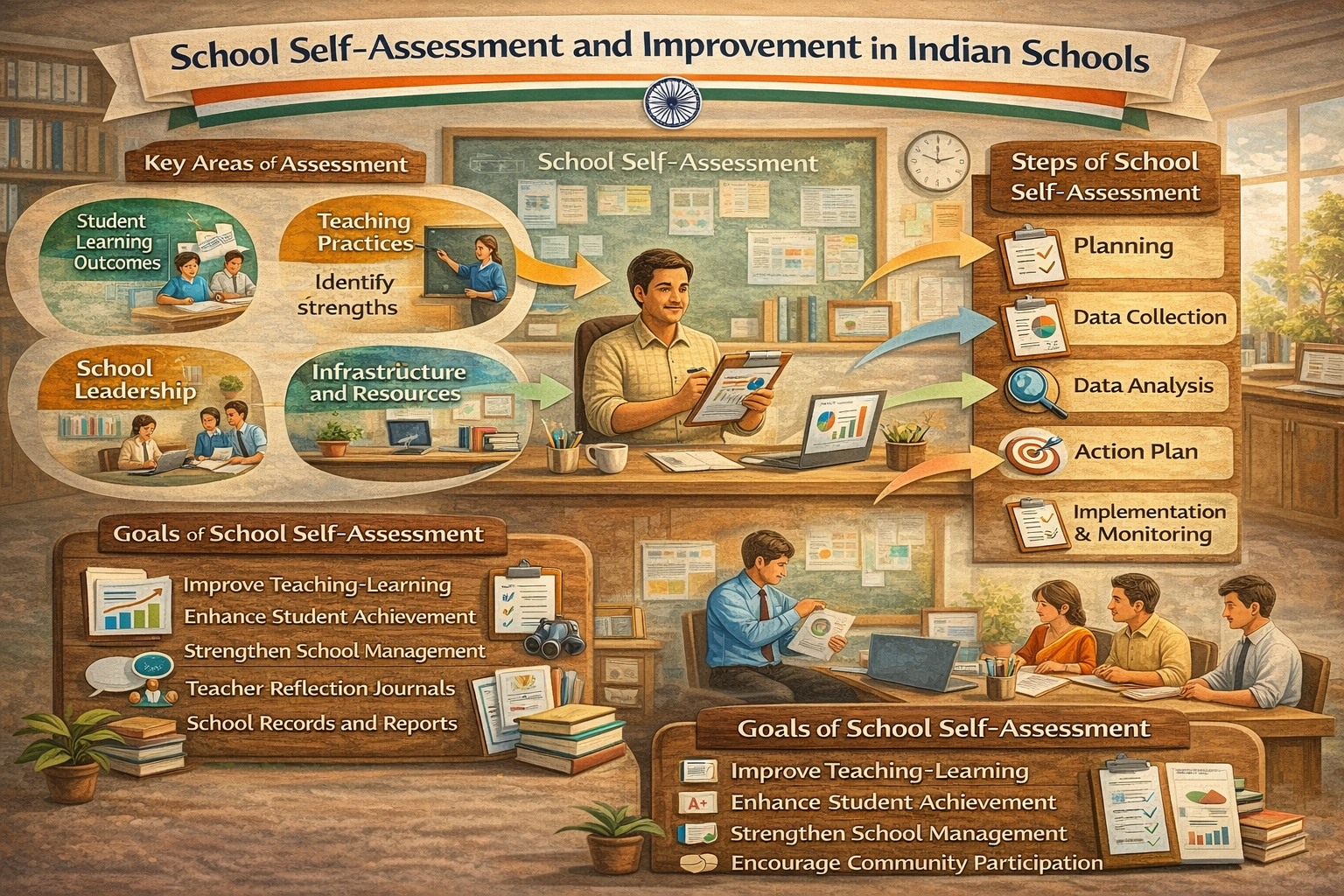
Need for School Self-Assessment in India / भारत में विद्यालय स्व-मूल्यांकन की आवश्यकता
India has a vast and diverse school system with different types of schools such as government schools, private schools, and aided institutions. Due to variations in resources and teaching practices, maintaining quality becomes challenging.
भारत में विद्यालय प्रणाली अत्यंत विशाल और विविधतापूर्ण है, जिसमें सरकारी, निजी और अनुदानित विद्यालय शामिल हैं। संसाधनों और शिक्षण-प्रक्रियाओं में भिन्नता के कारण गुणवत्ता बनाए रखना चुनौतीपूर्ण हो जाता है।
School Self-Assessment is needed because it:
- Helps identify learning gaps among students.
- Improves teaching strategies.
- Strengthens school leadership and management.
- Promotes accountability and transparency.
- Encourages participation of teachers and community.
विद्यालय स्व-मूल्यांकन की आवश्यकता इसलिए है क्योंकि यह—
- विद्यार्थियों की अधिगम-कमियों की पहचान करता है।
- शिक्षण-रणनीतियों को बेहतर बनाता है।
- विद्यालय नेतृत्व और प्रबंधन को मजबूत करता है।
- जवाबदेही और पारदर्शिता को बढ़ाता है।
- शिक्षकों और समुदाय की भागीदारी को प्रोत्साहित करता है।
Objectives of School Self-Assessment / विद्यालय स्व-मूल्यांकन के उद्देश्य
The main objectives of school self-assessment are:
1. Improving Teaching-Learning Process
Teachers analyze classroom practices and identify ways to make teaching more effective.
शिक्षण-अधिगम प्रक्रिया में सुधार
शिक्षक अपनी कक्षा-शिक्षण पद्धतियों का विश्लेषण करते हैं और उन्हें अधिक प्रभावी बनाने के उपाय खोजते हैं।
2. Enhancing Student Achievement
Assessment helps identify students who need remedial support.
विद्यार्थियों की उपलब्धि बढ़ाना
मूल्यांकन से उन विद्यार्थियों की पहचान होती है जिन्हें अतिरिक्त सहायता की आवश्यकता होती है।
3. Strengthening School Management
School leaders use assessment results to improve planning and decision-making.
विद्यालय प्रबंधन को मजबूत बनाना
प्रधानाचार्य और प्रशासन मूल्यांकन के आधार पर बेहतर योजना और निर्णय लेते हैं।
4. Ensuring Continuous Improvement
Self-assessment promotes a culture of continuous development.
निरंतर सुधार सुनिश्चित करना
स्व-मूल्यांकन विद्यालय में सतत विकास की संस्कृति विकसित करता है।
Areas of School Self-Assessment / विद्यालय स्व-मूल्यांकन के प्रमुख क्षेत्र
According to educational guidelines used in teacher education programs, school self-assessment generally focuses on the following areas:
शिक्षक-शिक्षा कार्यक्रमों में प्रयुक्त दिशानिर्देशों के अनुसार विद्यालय स्व-मूल्यांकन निम्न क्षेत्रों पर केंद्रित होता है—
1. Student Learning Outcomes
Evaluation of students’ academic performance.
विद्यार्थियों की अधिगम उपलब्धियाँ
विद्यार्थियों के शैक्षिक प्रदर्शन का मूल्यांकन।
2. Teaching Practices
Observation of teaching methods and classroom management.
शिक्षण-पद्धतियाँ
शिक्षण विधियों और कक्षा-प्रबंधन का अवलोकन।
3. School Leadership
Role of the principal in guiding teachers and improving school performance.
विद्यालय नेतृत्व
प्रधानाचार्य की भूमिका जो शिक्षकों का मार्गदर्शन करती है और विद्यालय के प्रदर्शन को बेहतर बनाती है।
4. Infrastructure and Resources
Availability of classrooms, laboratories, libraries, and teaching aids.
भौतिक संसाधन
कक्षाएँ, प्रयोगशालाएँ, पुस्तकालय और शिक्षण-सामग्री की उपलब्धता।
5. Community Participation
Involvement of parents and local community in school development.
समुदाय की भागीदारी
अभिभावकों और स्थानीय समुदाय की विद्यालय विकास में सहभागिता।
Process of School Self-Assessment / विद्यालय स्व-मूल्यांकन की प्रक्रिया
School Self-Assessment follows a systematic process.
विद्यालय स्व-मूल्यांकन एक व्यवस्थित प्रक्रिया का पालन करता है।
Step 1: Planning
Schools define objectives and areas to be evaluated.
योजना बनाना
विद्यालय मूल्यांकन के उद्देश्य और क्षेत्र निर्धारित करते हैं।
Step 2: Data Collection
Information is collected through tests, surveys, classroom observations, and records.
डेटा संग्रह
परीक्षाओं, सर्वेक्षणों, कक्षा-अवलोकन और अभिलेखों के माध्यम से जानकारी एकत्र की जाती है।
Step 3: Data Analysis
The collected data is analyzed to identify strengths and weaknesses.
डेटा विश्लेषण
एकत्रित आंकड़ों का विश्लेषण कर शक्तियों और कमजोरियों की पहचान की जाती है।
Step 4: Action Plan
Schools prepare improvement strategies based on findings.
कार्य-योजना बनाना
मूल्यांकन के आधार पर सुधार की रणनीतियाँ तैयार की जाती हैं।
Step 5: Implementation and Monitoring
The improvement plan is implemented and progress is monitored.
क्रियान्वयन और निगरानी
सुधार योजनाओं को लागू किया जाता है और उनकी प्रगति पर निगरानी रखी जाती है।

Tools Used in School Self-Assessment / विद्यालय स्व-मूल्यांकन के उपकरण
Schools use various tools to conduct self-assessment:
विद्यालय स्व-मूल्यांकन के लिए कई उपकरणों का उपयोग किया जाता है—
- Student achievement tests
- Classroom observation
- Teacher reflection journals
- Feedback from parents and students
- School records and reports
- विद्यार्थियों की उपलब्धि परीक्षाएँ
- कक्षा-अवलोकन
- शिक्षक चिंतन डायरी
- अभिभावक एवं विद्यार्थी प्रतिक्रिया
- विद्यालय अभिलेख और रिपोर्ट
These tools help schools gather reliable information about their functioning.
ये उपकरण विद्यालय के कार्य-प्रदर्शन के बारे में विश्वसनीय जानकारी प्रदान करते हैं।
For more similar articel Please visit us: https://teacherszone.in/
Please follow us on Facebook: https://www.facebook.com/profile.php?id=61586013442564
Role of Teachers in School Improvement / विद्यालय सुधार में शिक्षक की भूमिका
Teachers play a crucial role in the process of school self-assessment and improvement.
विद्यालय स्व-मूल्यांकन और सुधार की प्रक्रिया में शिक्षक की महत्वपूर्ण भूमिका होती है।
They contribute by:
- Reflecting on their teaching practices
- Using student achievement data
- Providing remedial teaching
- Collaborating with colleagues
शिक्षक निम्न तरीकों से योगदान देते हैं—
- अपने शिक्षण पर चिंतन करना
- विद्यार्थियों की उपलब्धि के आंकड़ों का उपयोग करना
- सुधारात्मक शिक्षण प्रदान करना
- सहकर्मियों के साथ सहयोग करना
A reflective teacher continuously evaluates his or her teaching methods and strives for improvement.
एक चिंतनशील शिक्षक अपने शिक्षण-कार्य का निरंतर मूल्यांकन करता है और सुधार के लिए प्रयास करता है।
Challenges in School Self-Assessment / विद्यालय स्व-मूल्यांकन की चुनौतियाँ
Despite its benefits, schools face several challenges in implementing self-assessment.
इसके लाभों के बावजूद विद्यालयों को स्व-मूल्यांकन लागू करने में कई चुनौतियों का सामना करना पड़ता है।
Some major challenges include:
- Lack of training among teachers
- Limited resources in schools
- Resistance to change
- Time constraints
- Lack of proper data management systems
कुछ प्रमुख चुनौतियाँ हैं—
- शिक्षकों का पर्याप्त प्रशिक्षण न होना
- विद्यालयों में संसाधनों की कमी
- परिवर्तन के प्रति प्रतिरोध
- समय की कमी
- डेटा प्रबंधन प्रणाली का अभाव
Addressing these challenges requires proper training, support, and policy initiatives.
इन चुनौतियों को दूर करने के लिए प्रशिक्षण, समर्थन और नीति-स्तरीय पहल आवश्यक हैं।
Strategies for Improving Schools through Self-Assessment / स्व-मूल्यांकन के माध्यम से विद्यालय सुधार की रणनीतियाँ
Several strategies can help schools improve through self-assessment.
स्व-मूल्यांकन के माध्यम से विद्यालय सुधार के लिए कई रणनीतियाँ अपनाई जा सकती हैं—
1. Data-Driven Decision Making
Using student achievement data to improve teaching.
डेटा आधारित निर्णय
विद्यार्थियों की उपलब्धि के आंकड़ों के आधार पर शिक्षण में सुधार।
2. Professional Development
Training programs for teachers.
व्यावसायिक विकास
शिक्षकों के लिए प्रशिक्षण कार्यक्रम।
3. Collaborative Learning
Teachers working together to improve teaching practices.
सहयोगात्मक अधिगम
शिक्षकों का मिलकर शिक्षण पद्धतियों में सुधार करना।
4. Community Engagement
Involving parents and local community.
समुदाय की भागीदारी
अभिभावकों और स्थानीय समुदाय को शामिल करना।
Conclusion / निष्कर्ष
School Self-Assessment is a powerful tool for improving the quality of education in the Indian school system. It enables schools to reflect on their performance, identify challenges, and develop effective strategies for improvement.
विद्यालय स्व-मूल्यांकन भारतीय विद्यालय प्रणाली में शिक्षा की गुणवत्ता सुधारने का एक प्रभावी साधन है। यह विद्यालयों को अपने कार्यों पर चिंतन करने, समस्याओं की पहचान करने और सुधार की प्रभावी रणनीतियाँ विकसित करने में सहायता करता है।
When teachers, school leaders, students, and communities work together in this process, schools can achieve better learning outcomes and create a positive learning environment.
जब शिक्षक, प्रधानाचार्य, विद्यार्थी और समुदाय मिलकर इस प्रक्रिया में भाग लेते हैं, तब विद्यालय बेहतर अधिगम परिणाम प्राप्त कर सकते हैं और सकारात्मक शिक्षण वातावरण बना सकते हैं।
Thus, promoting School Self-Assessment and Improvement is essential for building a strong and effective education system in India.
इस प्रकार विद्यालय स्व-मूल्यांकन और सुधार को बढ़ावा देना भारत में एक मजबूत और प्रभावी शिक्षा प्रणाली के निर्माण के लिए अत्यंत आवश्यक है।
Exam-Oriented MCQs
School Self-Assessment and Improvement
1.
School Self-Assessment mainly refers to:
A. Evaluation done by external agencies
B. Internal evaluation conducted by the school itself
C. Evaluation conducted by parents
D. Evaluation conducted by the government
Answer: B
2.
The primary aim of School Self-Assessment is to:
A. Punish teachers
B. Improve school quality and student learning
C. Reduce school workload
D. Increase school fees
Answer: B
3.
School Self-Assessment promotes:
A. Centralized control
B. Continuous school improvement
C. Teacher punishment
D. Student competition only
Answer: B
4.
Which of the following is an important area of school self-assessment?
A. Student learning outcomes
B. Teacher salary
C. Political activities
D. School holidays
Answer: A
5.
School Self-Assessment encourages:
A. Passive teaching
B. Teacher reflection
C. Teacher dependence
D. Teacher isolation
Answer: B
6.
The process of school self-assessment begins with:
A. Data analysis
B. Planning
C. Evaluation report
D. Implementation
Answer: B
7.
Which tool is commonly used for School Self-Assessment?
A. Classroom observation
B. Cinema review
C. Sports tournament
D. Weather report
Answer: A
8.
In school self-assessment, data analysis helps to:
A. Increase school fees
B. Identify strengths and weaknesses
C. Reduce teacher responsibilities
D. Close schools
Answer: B
9.
School Self-Assessment promotes which type of decision-making?
A. Political decision-making
B. Data-driven decision-making
C. Random decision-making
D. Emotional decision-making
Answer: B
10.
Which stakeholder is most responsible for implementing self-assessment in schools?
A. Teachers and school leaders
B. Politicians
C. Businessmen
D. Media
Answer: A
11.
Which of the following improves teaching through self-assessment?
A. Ignoring feedback
B. Reflective teaching
C. Avoiding evaluation
D. Punishing students
Answer: B
12.
School Self-Assessment helps in identifying:
A. School holidays
B. Learning gaps among students
C. Political issues
D. Teacher retirement
Answer: B
13.
Community participation in school improvement mainly includes:
A. Parents and local community involvement
B. Only government officers
C. Only teachers
D. Only students
Answer: A
14.
Which of the following is NOT a component of school self-assessment?
A. Teaching-learning process
B. Student achievement
C. Infrastructure
D. Weather conditions
Answer: D
15.
Remedial teaching is mainly used for:
A. Weak learners
B. Talented learners only
C. Teachers
D. Administrators
Answer: A
16.
School Self-Assessment is based on the principle of:
A. Self-reflection
B. External control
C. Teacher punishment
D. Competition only
Answer: A
17.
Which stage follows data collection in school self-assessment?
A. Planning
B. Data analysis
C. Teaching
D. Examination
Answer: B
18.
School improvement plans are prepared after:
A. School closure
B. Data analysis
C. Teacher transfer
D. Annual function
Answer: B
19.
Which factor contributes to effective school improvement?
A. Collaboration among teachers
B. Teacher isolation
C. Lack of communication
D. Ignoring student needs
Answer: A
20.
School Self-Assessment helps schools to become:
A. More bureaucratic
B. More reflective and accountable
C. More commercial
D. More political
Answer: B
21.
A major challenge in implementing self-assessment is:
A. Lack of teacher training
B. Excessive infrastructure
C. Too many students
D. Too much funding
Answer: A
22.
Which document is useful for school self-assessment?
A. Student progress records
B. Cinema tickets
C. Travel tickets
D. Food menu
Answer: A
23.
School leadership plays an important role in:
A. Guiding school improvement
B. Closing schools
C. Reducing student learning
D. Increasing school holidays
Answer: A
24.
Which of the following reflects reflective teaching?
A. Ignoring student feedback
B. Evaluating one’s own teaching practices
C. Avoiding assessment
D. Memorizing textbooks only
Answer: B
25.
The concept of school self-assessment mainly promotes:
A. Competition between schools
B. Internal improvement
C. External punishment
D. Political pressure
Answer: B
26.
Which of the following is essential for school improvement?
A. Continuous monitoring
B. Ignoring evaluation
C. Avoiding feedback
D. Punishing students
Answer: A
27.
School Self-Assessment supports:
A. Quality education
B. Poor learning outcomes
C. Teacher domination
D. School closure
Answer: A
28.
Which assessment method helps track student progress over time?
A. Continuous assessment
B. Random testing
C. Guessing
D. No assessment
Answer: A
29.
One important benefit of school self-assessment is:
A. Improved teaching strategies
B. Increased teacher workload only
C. Reduced teaching
D. Less student learning
Answer: A
30.
School Self-Assessment ultimately aims to improve:
A. School decoration
B. Student learning outcomes
C. School buildings only
D. Teacher holidays
Answer: B