
(विद्यालय में समय-सारणी का निर्माण)
Learn about time-tabling of the school, principles, types, and preparation process based on IGNOU, B.Ed, NIOS, and SCERT Delhi study materials.
Table of Contents/Time-Tabling of the School
1. Introduction / Time-Tabling of the School/परिचय
Time management is one of the most important aspects of effective school administration. In educational institutions, the systematic organization of teaching periods, subjects, teachers, and classrooms is achieved through time-tabling. A school timetable ensures that all subjects are taught in a planned manner and that teaching-learning activities are carried out efficiently throughout the academic session.
Educational institutions following guidelines from IGNOU, NIOS, SCERT Delhi and NCERT emphasize the importance of scientific planning in school administration. Time-tabling helps the school function smoothly by ensuring proper distribution of time among subjects, teachers, and activities.
समय प्रबंधन प्रभावी विद्यालय प्रशासन का एक महत्वपूर्ण पक्ष है। विद्यालयों में विषयों, शिक्षकों और कक्षाओं के समय का व्यवस्थित संगठन समय-सारणी (Time Table) के माध्यम से किया जाता है। समय-सारणी यह सुनिश्चित करती है कि सभी विषयों का शिक्षण व्यवस्थित रूप से हो और शिक्षण-अधिगम गतिविधियाँ प्रभावी ढंग से संचालित हों।
IGNOU, NIOS, SCERT Delhi और NCERT जैसे संस्थान विद्यालय प्रशासन में वैज्ञानिक योजना पर विशेष बल देते हैं। समय-सारणी विद्यालय के सुचारु संचालन में महत्वपूर्ण भूमिका निभाती है।
2. Meaning of Time-Tabling of the School / समय-सारणी का अर्थ
A school timetable is a schedule that shows the distribution of subjects, teachers, periods, and classrooms throughout the school day or week. It organizes teaching time in such a way that all subjects receive appropriate attention and teachers can perform their duties efficiently.
In educational management, time-tabling is considered a systematic arrangement of educational activities according to time.
विद्यालय की समय-सारणी वह योजना है जिसमें पूरे विद्यालय दिवस या सप्ताह में विषयों, शिक्षकों और कक्षाओं के समय का वितरण दर्शाया जाता है। इसके माध्यम से सभी विषयों को उचित समय दिया जाता है और शिक्षक अपने कार्यों को प्रभावी ढंग से पूरा कर सकते हैं।
शैक्षिक प्रबंधन में समय-सारणी को समय के अनुसार शैक्षणिक गतिविधियों की व्यवस्थित व्यवस्था माना जाता है।
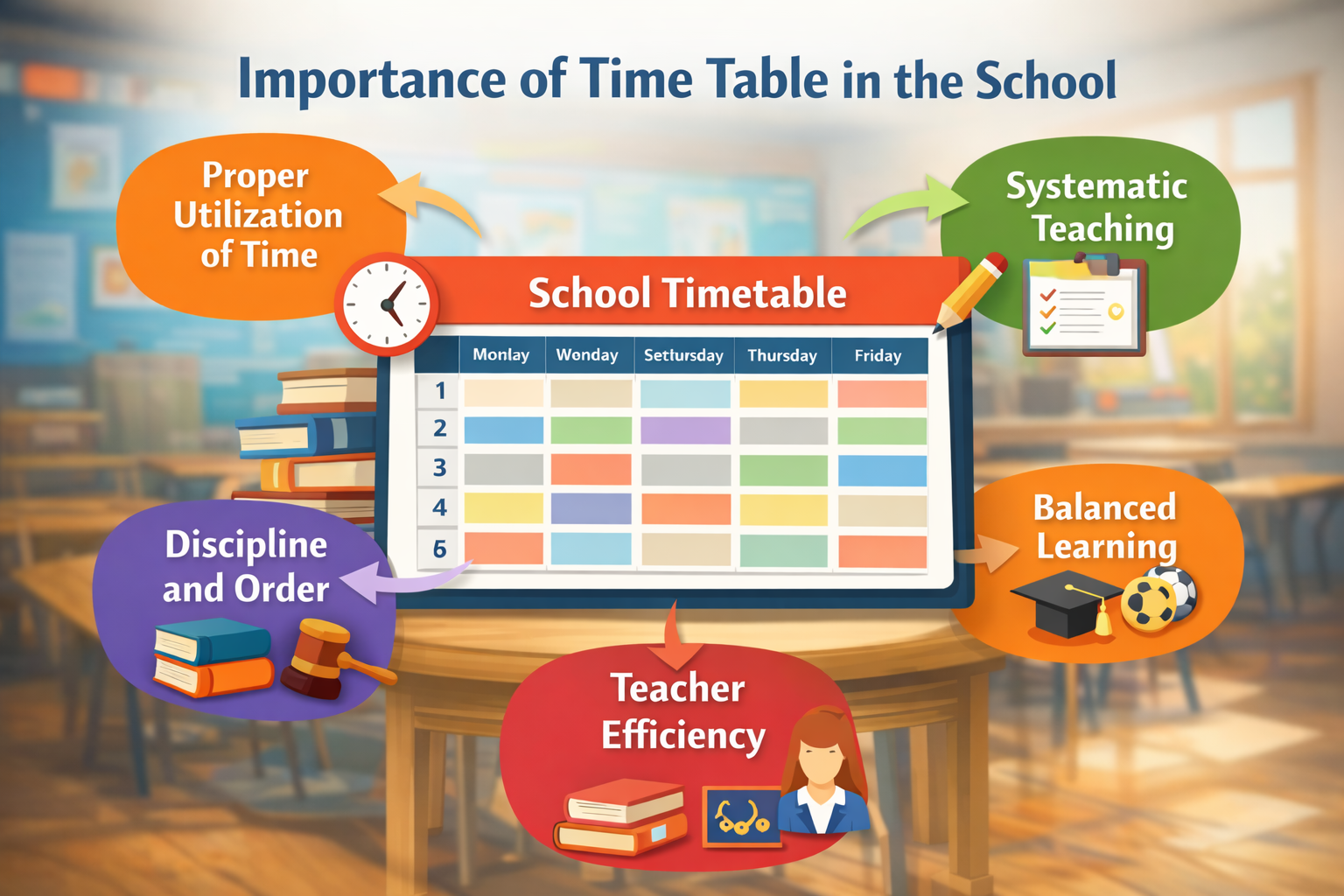
3. Objectives of Time-Tabling of the School/ विद्यालय समय-सारणी के उद्देश्य
The main objectives of preparing a school timetable are:
- To ensure proper utilization of available time.
- To distribute subjects systematically.
- To avoid confusion in teaching schedules.
- To maintain discipline and regularity in school activities.
- To balance academic and co-curricular activities.
- To make the teaching process more efficient.
विद्यालय समय-सारणी के मुख्य उद्देश्य निम्नलिखित हैं:
- उपलब्ध समय का उचित उपयोग करना।
- विषयों का व्यवस्थित वितरण करना।
- शिक्षण कार्यक्रम में भ्रम से बचना।
- विद्यालय में अनुशासन और नियमितता बनाए रखना।
- शैक्षणिक तथा सह-पाठ्यक्रम गतिविधियों में संतुलन स्थापित करना।
- शिक्षण प्रक्रिया को अधिक प्रभावी बनाना।
4. Importance of Time-Tabling of the School / समय-सारणी का महत्व
Time-tabling plays a crucial role in school administration and classroom management.
1. Proper Utilization of Time
It ensures that every minute of the school day is used effectively.
2. Systematic Teaching
Teachers can plan their lessons according to the timetable.
3. Discipline and Order
A timetable creates a structured environment in the school.
4. Balanced Learning
Students get sufficient time for different subjects and activities.
5. Teacher Efficiency
Teachers can manage their workload effectively.
समय-सारणी विद्यालय प्रशासन और कक्षा प्रबंधन में महत्वपूर्ण भूमिका निभाती है।
1. समय का उचित उपयोग
यह सुनिश्चित करती है कि विद्यालय के समय का सही उपयोग हो।
2. व्यवस्थित शिक्षण
शिक्षक अपने पाठों की योजना समय-सारणी के अनुसार बना सकते हैं।
3. अनुशासन और व्यवस्था
समय-सारणी विद्यालय में अनुशासन और व्यवस्था स्थापित करती है।
4. संतुलित शिक्षा
छात्रों को सभी विषयों के लिए पर्याप्त समय मिलता है।
5. शिक्षक दक्षता
शिक्षक अपने कार्यभार को प्रभावी ढंग से प्रबंधित कर सकते हैं।
5. Principles of Time-Tabling of the School / समय-सारणी के सिद्धांत
While preparing a school timetable, certain principles should be followed:
1. Principle of Balance
All subjects should receive appropriate time.
2. Principle of Variety
Different types of subjects should be alternated to avoid monotony.
3. Principle of Flexibility
The timetable should allow modifications when necessary.
4. Principle of Child Psychology
Difficult subjects should be placed during the morning when students are more attentive.
5. Principle of Rest and Recreation
Adequate breaks should be included for relaxation.
समय-सारणी बनाते समय कुछ महत्वपूर्ण सिद्धांतों का पालन करना चाहिए:
1. संतुलन का सिद्धांत
सभी विषयों को उचित समय मिलना चाहिए।
2. विविधता का सिद्धांत
विभिन्न प्रकार के विषयों को क्रम से रखा जाना चाहिए।
3. लचीलापन का सिद्धांत
आवश्यकता पड़ने पर समय-सारणी में परिवर्तन संभव होना चाहिए।
4. बाल मनोविज्ञान का सिद्धांत
कठिन विषय सुबह के समय रखे जाने चाहिए जब छात्र अधिक सक्रिय होते हैं।
5. विश्राम का सिद्धांत
छात्रों को आराम के लिए पर्याप्त अवकाश दिया जाना चाहिए।
6. Types of Time-Tabling of the School / विद्यालय समय-सारणी के प्रकार
1. Master Time-Table
It shows the complete schedule of the entire school including all classes and teachers.
2. Class Time-Table
This timetable shows the schedule of subjects for a particular class.
3. Teacher Time-Table
It shows the teaching periods assigned to a specific teacher.
4. Room Time-Table
This timetable shows how classrooms or laboratories are allocated.
5. Activity Time-Table
It includes sports, cultural programs, and co-curricular activities.
1. मास्टर समय-सारणी
इसमें पूरे विद्यालय की सभी कक्षाओं और शिक्षकों का कार्यक्रम होता है।
2. कक्षा समय-सारणी
यह किसी विशेष कक्षा के विषयों का समय दर्शाती है।
3. शिक्षक समय-सारणी
इसमें किसी विशेष शिक्षक के पढ़ाने के समय का विवरण होता है।
4. कक्ष समय-सारणी
इसमें कक्षाओं और प्रयोगशालाओं के उपयोग का विवरण होता है।
5. गतिविधि समय-सारणी
इसमें खेल, सांस्कृतिक और सह-पाठ्यक्रम गतिविधियों का समय होता है।
7. Steps in Preparing a Time-Tabling of the School / विद्यालय समय-सारणी बनाने की प्रक्रिया
Step 1: Determine the Number of Periods
The total teaching periods in a day are decided.
Step 2: Distribution of Subjects
Subjects are allocated according to their importance and difficulty level.
Step 3: Assign Teachers
Teachers are assigned periods based on their specialization.
Step 4: Allocate Rooms
Classrooms and laboratories are assigned.
Step 5: Review and Finalize
The timetable is reviewed and approved by the school administration.
चरण 1: पीरियड की संख्या निर्धारित करना
एक दिन में कुल कितने पीरियड होंगे यह तय किया जाता है।
चरण 2: विषयों का वितरण
विषयों को उनके महत्व और कठिनाई के अनुसार रखा जाता है।
चरण 3: शिक्षकों का निर्धारण
विशेषज्ञता के आधार पर शिक्षकों को पीरियड दिए जाते हैं।
चरण 4: कक्षाओं का आवंटन
कक्षाओं और प्रयोगशालाओं का निर्धारण किया जाता है।
चरण 5: समीक्षा और अंतिम रूप
समय-सारणी की समीक्षा करके उसे अंतिम रूप दिया जाता है।
8. Role of the School Principal in Time-Tabling of the School / समय-सारणी में प्रधानाचार्य की भूमिका
The principal plays a key role in preparing and implementing the school timetable. The principal coordinates with teachers and ensures that the timetable meets educational goals and administrative requirements.
The principal also ensures fairness in workload distribution among teachers.
Hindi:
विद्यालय की समय-सारणी तैयार करने और लागू करने में प्रधानाचार्य की महत्वपूर्ण भूमिका होती है। वे शिक्षकों के साथ समन्वय स्थापित करते हैं और यह सुनिश्चित करते हैं कि समय-सारणी शैक्षणिक उद्देश्यों के अनुरूप हो।
प्रधानाचार्य यह भी सुनिश्चित करते हैं कि शिक्षकों के कार्यभार का उचित वितरण हो।
9. Problems in Time-Tabling of the School
समय-सारणी निर्माण में समस्याएँ
English:
Schools may face several problems while preparing timetables such as:
- Shortage of teachers
- Limited classrooms
- Overlapping subjects
- Sudden changes in school schedules
Proper planning and flexibility can help solve these problems.
Hindi:
समय-सारणी बनाते समय विद्यालयों को कई समस्याओं का सामना करना पड़ सकता है:
- शिक्षकों की कमी
- कक्षाओं की कमी
- विषयों का टकराव
- अचानक कार्यक्रमों में परिवर्तन
उचित योजना और लचीलापन इन समस्याओं को कम कर सकते हैं।
10. Conclusion Time-Tabling of the School / निष्कर्ष
Time-tabling is an essential component of effective school management. It ensures proper use of time, systematic teaching, and balanced learning opportunities for students. Educational institutions following guidelines from IGNOU, NIOS, and SCERT Delhi highlight the importance of scientific planning in preparing school timetables.
A well-designed timetable contributes significantly to the smooth functioning of the school and the overall development of students.
समय-सारणी प्रभावी विद्यालय प्रबंधन का एक महत्वपूर्ण अंग है। यह समय के उचित उपयोग, व्यवस्थित शिक्षण और छात्रों के संतुलित विकास को सुनिश्चित करती है। IGNOU, NIOS और SCERT Delhi के अनुसार वैज्ञानिक योजना के आधार पर बनाई गई समय-सारणी विद्यालय के सुचारु संचालन में महत्वपूर्ण भूमिका निभाती है।
एक सुव्यवस्थित समय-सारणी विद्यालय की कार्यक्षमता और छात्रों के समग्र विकास में महत्वपूर्ण योगदान देती है।
Please follow us on Facebook: https://www.facebook.com/profile.php?id=61586013442564
Please visit us for similar topics: https://teacherszone.in/

11. Previous Year Pattern MCQs on Time-Tabling of the School
(CTET / NET / DSSSB / KVS / NVS Pattern)
1.
A school places Mathematics and Science periods in the morning session when students are more attentive. Which principle of time-tabling is applied here?
A. Principle of Flexibility
B. Principle of Child Psychology
C. Principle of Economy
D. Principle of Equality
Answer: B
Exam Reference: UGC-NET Education (Educational Administration Concept)
2.
If a timetable alternates theory subjects with practical or activity-based subjects, it mainly follows the:
A. Principle of Variety
B. Principle of Supervision
C. Principle of Equality
D. Principle of Authority
Answer: A
Exam Reference: B.Ed Entrance Examination (Various Universities)
3.
Which document shows the complete schedule of all classes, teachers and rooms in the school?
A. Class Time-Table
B. Teacher Time-Table
C. Master Time-Table
D. Activity Time-Table
Answer: C
Exam Reference: DSSSB TGT / PRT Exam
4.
A principal observes that some teachers have more teaching periods than others in the timetable. Which principle of timetable preparation is violated?
A. Principle of Flexibility
B. Principle of Justice or Equality
C. Principle of Variety
D. Principle of Child Psychology
Answer: B
Exam Reference: UGC-NET Education (School Management)
5.
Which of the following factors should be given highest priority while preparing a school timetable?
A. Teacher convenience
B. Student learning needs
C. School building design
D. Transport facilities
Answer: B
Exam Reference: CTET Paper II Pedagogy
6.
A timetable that shows subjects scheduled for a particular class throughout the week is known as:
A. Teacher Time-Table
B. Room Time-Table
C. Class Time-Table
D. Master Time-Table
Answer: C
Exam Reference: KVS PRT / TGT Exam
7.
Which problem is most likely to occur if the school timetable is poorly designed?
A. Increased student motivation
B. Overlapping classes and confusion
C. Improved classroom management
D. Balanced workload
Answer: B
Exam Reference: DSSSB Teaching Exams
8.
A school includes short breaks between long teaching sessions in the timetable. Which principle does this reflect?
A. Principle of Rest and Recreation
B. Principle of Variety
C. Principle of Economy
D. Principle of Discipline
Answer: A
Exam Reference: B.Ed Educational Management Paper
9.
Which of the following is NOT usually considered while preparing a school timetable?
A. Number of teaching periods
B. Teacher specialization
C. Students’ psychological needs
D. School examination results
Answer: D
Exam Reference: CTET Pedagogy Section
10.
A timetable designed to show which teacher teaches which class and at what time is called:
A. Activity Time-Table
B. Teacher Time-Table
C. Room Time-Table
D. Master Time-Table
Answer: B
Exam Reference: KVS Teacher Recruitment Exam
11.
When a school allows modifications in the timetable due to special events or emergencies, it follows the principle of:
A. Equality
B. Flexibility
C. Variety
D. Authority
Answer: B
Exam Reference: UGC-NET Education
12.
Which stakeholder usually has the primary responsibility for approving the school timetable?
A. Class Monitor
B. Principal
C. Parents
D. Students
Answer: B
Exam Reference: NVS / KVS Administrative Questions
13.
If laboratory subjects like Physics and Chemistry are scheduled in special rooms, which timetable type is being used?
A. Activity Time-Table
B. Room Time-Table
C. Class Time-Table
D. Teacher Time-Table
Answer: B
Exam Reference: DSSSB Education Administration
14.
Which principle of timetable construction ensures that all subjects receive appropriate attention?
A. Principle of Balance
B. Principle of Authority
C. Principle of Control
D. Principle of Supervision
Answer: A
Exam Reference: B.Ed Pedagogy Paper
15.
A teacher plans lessons according to the school timetable to complete the syllabus before examinations. This reflects:
A. Curriculum alignment
B. Administrative control
C. Informal education
D. Random teaching
Answer: A
Exam Reference: CTET Teaching-Learning Process
16.
Which of the following is the main purpose of time-tabling in schools?
A. Monitoring attendance
B. Organizing teaching activities systematically
C. Evaluating teacher performance
D. Maintaining school records
Answer: B
Exam Reference: UGC-NET Education
17.
A timetable that shows co-curricular activities such as sports, debates and music programs is called:
A. Class Time-Table
B. Activity Time-Table
C. Teacher Time-Table
D. Master Time-Table
Answer: B
Exam Reference: CTET Pedagogy (Co-curricular Activities)
18.
If difficult subjects are placed consecutively without break, it may lead to:
A. Improved concentration
B. Student fatigue and reduced learning
C. Better syllabus completion
D. Increased discipline
Answer: B
Exam Reference: UGC-NET Education (Educational Psychology)
19.
The timetable that helps school administrators monitor the entire functioning of the school is:
A. Master Time-Table
B. Class Time-Table
C. Activity Time-Table
D. Teacher Time-Table
Answer: A
Exam Reference: DSSSB / KVS Teaching Exams
20.
A well-planned timetable mainly contributes to:
A. Increasing administrative paperwork
B. Smooth functioning of the school
C. Reducing teaching periods
D. Limiting extracurricular activities
Answer: B
Exam Reference: UGC-NET Education (Educational Management)