
Learn the Perspectives on School Leadership: instructional, distributed and transformativen this exam-oriented article is useful for KVS, NVS, EMRS, CTET, UGC NET, B.Ed., DSSSB, and other teaching exams.
Table of Contents
1. Introduction to School Leadership / विद्यालय नेतृत्व का परिचय
School leadership plays a crucial role in improving the quality of education and ensuring the effective functioning of educational institutions. In modern education systems, leadership is not limited to administrative duties; it also involves guiding teaching practices, promoting collaboration among teachers, and bringing positive transformation in the school environment.
Effective school leadership is essential for improving teaching-learning processes, student achievement, and institutional development. School leaders such as principals, head teachers, and coordinators must adopt innovative leadership approaches to respond to the changing needs of education.
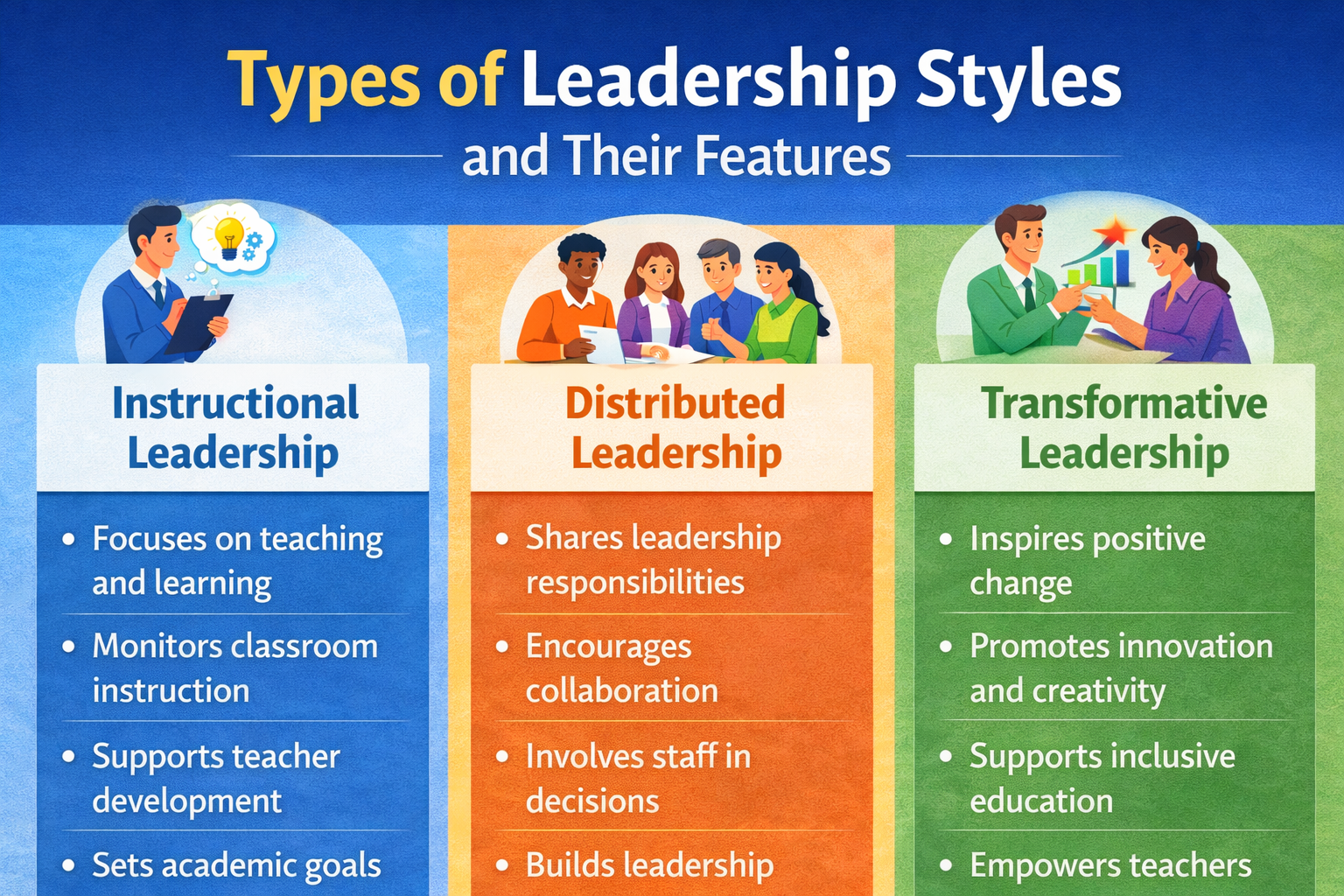
Three major perspectives of school leadership are widely discussed in educational research and teacher education:
- Instructional Leadership
- Distributed Leadership
- Transformative Leadership
These leadership perspectives focus on improving teaching practices, empowering teachers, and promoting positive change in schools.
विद्यालय नेतृत्व शिक्षा की गुणवत्ता को सुधारने और शैक्षिक संस्थानों के प्रभावी संचालन में महत्वपूर्ण भूमिका निभाता है। आधुनिक शिक्षा व्यवस्था में नेतृत्व केवल प्रशासनिक कार्यों तक सीमित नहीं है बल्कि इसमें शिक्षण प्रक्रियाओं का मार्गदर्शन करना, शिक्षकों के बीच सहयोग बढ़ाना और विद्यालय में सकारात्मक परिवर्तन लाना भी शामिल है।
प्रभावी विद्यालय नेतृत्व शिक्षण-अधिगम की गुणवत्ता, विद्यार्थियों की उपलब्धि और संस्थागत विकास को बेहतर बनाता है।
विद्यालय नेतृत्व के तीन प्रमुख दृष्टिकोण माने जाते हैं:
- इंस्ट्रक्शनल नेतृत्व
- वितरित नेतृत्व
- परिवर्तनकारी नेतृत्व
ये दृष्टिकोण शिक्षण गुणवत्ता को सुधारने, शिक्षकों को सशक्त बनाने और विद्यालय में सकारात्मक परिवर्तन लाने पर केंद्रित होते हैं।
2. Meaning and Concept of School Leadership / विद्यालय नेतृत्व का अर्थ और अवधारणा
School leadership refers to the ability of school heads or educational administrators to guide teachers, students, and the school community in achieving educational goals. Leadership in schools involves planning, organizing, motivating staff, managing resources, and ensuring effective teaching and learning.
Educational leadership has evolved over time from traditional administrative leadership to more collaborative and transformative approaches.
विद्यालय नेतृत्व का अर्थ है कि विद्यालय के प्रधानाचार्य या प्रशासक शिक्षकों, विद्यार्थियों और समुदाय का मार्गदर्शन करते हुए शैक्षिक लक्ष्यों को प्राप्त करें। इसमें योजना बनाना, संसाधनों का प्रबंधन करना, शिक्षकों को प्रेरित करना और प्रभावी शिक्षण सुनिश्चित करना शामिल है।
समय के साथ विद्यालय नेतृत्व की अवधारणा पारंपरिक प्रशासनिक नेतृत्व से विकसित होकर अधिक सहयोगात्मक और परिवर्तनकारी दृष्टिकोणों तक पहुंच गई है।
3. Instructional Leadership (इंस्ट्रक्शनल नेतृत्व)
Instructional leadership is one of the most important perspectives in school leadership. It focuses on improving the teaching-learning process in schools. Instructional leaders prioritize academic achievement, curriculum implementation, and teacher development.
The concept of instructional leadership gained prominence during the 1980s when researchers emphasized the role of principals in improving classroom instruction and student performance.
Instructional leaders regularly observe classroom teaching, provide constructive feedback to teachers, organize professional development programs, and ensure that learning objectives are achieved effectively.
Key Features of Instructional Leadership
- Focus on teaching and learning
- Monitoring classroom instruction
- Supporting teacher professional development
- Setting academic goals for students
- Using data to improve learning outcomes
Role of Instructional Leader
- Supervising teaching practices
- Providing guidance and support to teachers
- Ensuring curriculum implementation
- Improving student learning outcomes
- Encouraging innovative teaching methods
इंस्ट्रक्शनल नेतृत्व विद्यालय नेतृत्व का एक महत्वपूर्ण दृष्टिकोण है। इसका मुख्य उद्देश्य विद्यालय में शिक्षण-अधिगम की प्रक्रिया को बेहतर बनाना है। इस दृष्टिकोण में विद्यालय नेता शैक्षणिक उपलब्धि, पाठ्यक्रम के प्रभावी क्रियान्वयन और शिक्षक विकास पर ध्यान देता है।
इंस्ट्रक्शनल नेतृत्व की अवधारणा 1980 के दशक में अधिक लोकप्रिय हुई जब शोधकर्ताओं ने यह बताया कि प्रधानाचार्य की भूमिका कक्षा शिक्षण और विद्यार्थियों की उपलब्धि को सुधारने में महत्वपूर्ण है।
इंस्ट्रक्शनल नेतृत्व की विशेषताएँ
- शिक्षण-अधिगम पर ध्यान
- कक्षा शिक्षण का निरीक्षण
- शिक्षकों का व्यावसायिक विकास
- विद्यार्थियों के लिए शैक्षणिक लक्ष्य निर्धारित करना
- सीखने के परिणामों का विश्लेषण
इंस्ट्रक्शनल नेता की भूमिका
- शिक्षण प्रक्रियाओं का निरीक्षण
- शिक्षकों को मार्गदर्शन देना
- पाठ्यक्रम का प्रभावी क्रियान्वयन
- विद्यार्थियों की उपलब्धि सुधारना
- नवीन शिक्षण विधियों को प्रोत्साहित करना
4. Distributed Leadership / वितरित नेतृत्व
Distributed leadership is a modern perspective of leadership in which leadership responsibilities are shared among different members of the school community. Instead of concentrating authority in a single leader, distributed leadership encourages collaboration among teachers, coordinators, and other staff members.
This perspective recognizes that leadership is a collective process and that many individuals can contribute to decision-making and school improvement.
Characteristics of Distributed Leadership
- Shared leadership responsibilities
- Collaboration among teachers
- Collective decision-making
- Empowerment of staff
- Development of leadership capacity
Advantages of Distributed Leadership
- Encourages teamwork
- Improves decision-making quality
- Builds leadership skills among teachers
- Increases teacher participation in school development
वितरित नेतृत्व विद्यालय नेतृत्व का एक आधुनिक दृष्टिकोण है जिसमें नेतृत्व की जिम्मेदारियाँ विद्यालय के विभिन्न सदस्यों के बीच साझा की जाती हैं। इसमें नेतृत्व केवल प्रधानाचार्य तक सीमित नहीं रहता बल्कि शिक्षक, समन्वयक और अन्य कर्मचारी भी नेतृत्व की भूमिका निभाते हैं।
वितरित नेतृत्व की विशेषताएँ
- नेतृत्व की जिम्मेदारियों का साझा होना
- शिक्षकों के बीच सहयोग
- सामूहिक निर्णय लेना
- कर्मचारियों का सशक्तिकरण
- नेतृत्व क्षमता का विकास
वितरित नेतृत्व के लाभ
- टीमवर्क को बढ़ावा
- निर्णय की गुणवत्ता में सुधार
- शिक्षकों में नेतृत्व कौशल का विकास
- विद्यालय विकास में सहभागिता
5. Transformative Leadership / परिवर्तनकारी नेतृत्व
Transformative leadership focuses on bringing meaningful and positive change in educational institutions. Transformative leaders inspire teachers and students to achieve a shared vision and work towards continuous improvement.
This leadership perspective emphasizes social justice, equality, innovation, and inclusive education. Transformative leaders encourage creativity, critical thinking, and democratic participation in schools.
Features of Transformative Leadership
- Inspiring shared vision
- Promoting innovation and creativity
- Encouraging inclusive education
- Supporting teacher empowerment
- Building a positive school culture
Importance of Transformative Leadership
- Promotes educational reforms
- Encourages social equality in education
- Motivates teachers and students
- Creates long-term institutional improvement
परिवर्तनकारी नेतृत्व का उद्देश्य विद्यालय में सार्थक और सकारात्मक परिवर्तन लाना है। ऐसा नेता शिक्षकों और विद्यार्थियों को प्रेरित करता है और एक साझा दृष्टि के साथ काम करने के लिए प्रोत्साहित करता है।
परिवर्तनकारी नेतृत्व की विशेषताएँ
- प्रेरणादायक साझा दृष्टि
- नवाचार और रचनात्मकता को बढ़ावा
- समावेशी शिक्षा को प्रोत्साहन
- शिक्षकों का सशक्तिकरण
- सकारात्मक विद्यालय संस्कृति
परिवर्तनकारी नेतृत्व का महत्व
- शिक्षा में सुधार को बढ़ावा
- सामाजिक समानता को प्रोत्साहन
- शिक्षकों और विद्यार्थियों को प्रेरित करना
- संस्थागत विकास को मजबूत बनाना
6. Comparison of Three Leadership Perspectives / तीनों नेतृत्व दृष्टिकोणों की तुलना
| Leadership Type | Main Focus | Key Feature |
|---|---|---|
| Instructional Leadership | Teaching and learning | Academic improvement |
| Distributed Leadership | Shared responsibility | Collaboration |
| Transformative Leadership | Institutional change | Innovation |
| नेतृत्व प्रकार | मुख्य उद्देश्य | प्रमुख विशेषता |
|---|---|---|
| इंस्ट्रक्शनल नेतृत्व | शिक्षण-अधिगम सुधार | शैक्षणिक उपलब्धि |
| वितरित नेतृत्व | साझा नेतृत्व | सहयोग |
| परिवर्तनकारी नेतृत्व | परिवर्तन | नवाचार |
7. Importance of Leadership Perspectives in Schools (विद्यालयों में नेतृत्व दृष्टिकोण का महत्व)
These leadership perspectives help schools function more effectively and create a supportive learning environment. Instructional leadership improves teaching quality, distributed leadership strengthens collaboration among teachers, and transformative leadership brings long-term educational change.
ये नेतृत्व दृष्टिकोण विद्यालय के प्रभावी संचालन और सकारात्मक वातावरण के निर्माण में महत्वपूर्ण भूमिका निभाते हैं। इंस्ट्रक्शनल नेतृत्व शिक्षण की गुणवत्ता बढ़ाता है, वितरित नेतृत्व सहयोग को मजबूत करता है और परिवर्तनकारी नेतृत्व दीर्घकालिक परिवर्तन लाता है।
8. Conclusion. / निष्कर्ष/ Perspectives on School Leadership
School leadership is essential for improving the quality of education and ensuring effective learning environments. Instructional leadership focuses on enhancing teaching practices, distributed leadership encourages shared responsibilities, and transformative leadership promotes meaningful change in schools.
Educational institutions must adopt these leadership perspectives to create inclusive, collaborative, and innovative learning environments. Effective leadership ultimately contributes to improved student outcomes and overall school development.
विद्यालय नेतृत्व शिक्षा की गुणवत्ता को सुधारने और प्रभावी शिक्षण वातावरण बनाने के लिए अत्यंत आवश्यक है। इंस्ट्रक्शनल नेतृत्व शिक्षण को बेहतर बनाता है, वितरित नेतृत्व सहयोग को बढ़ावा देता है और परिवर्तनकारी नेतृत्व विद्यालय में सार्थक परिवर्तन लाता है।
शैक्षिक संस्थानों को इन नेतृत्व दृष्टिकोणों को अपनाकर समावेशी, सहयोगात्मक और नवाचारी शिक्षण वातावरण बनाना चाहिए।
9. MCQs 50 on Perspectives on School Leadership
1. Instructional leadership mainly focuses on:
A School infrastructure
B Teaching and learning process
C School transport
D Financial management
Answer: B
2. The main goal of instructional leadership is to:
A Improve student learning
B Increase school budget
C Maintain discipline
D Improve infrastructure
Answer: A
3. Distributed leadership means:
A Leadership by principal only
B Shared leadership among staff
C Leadership by students
D Leadership by parents
Answer: B
4. Transformative leadership mainly aims at:
A Maintaining traditional practices
B Bringing positive change in schools
C Administrative control
D Financial planning
Answer: B
5. Instructional leaders mainly monitor:
A School accounts
B Classroom teaching
C Transport system
D School building
Answer: B
6. Distributed leadership encourages:
A Competition among teachers
B Shared decision-making
C Isolation of staff
D Centralized authority
Answer: B
7. Transformative leadership focuses on:
A Innovation and social change
B Memorization
C Discipline only
D Budget control
Answer: A
8. Instructional leadership emphasizes:
A Curriculum implementation
B Transport management
C School building design
D Financial planning
Answer: A
9. Distributed leadership promotes:
A Individual authority
B Collaboration among teachers
C Isolation
D Administrative control
Answer: B
10. Transformative leadership encourages:
A Creativity and innovation
B Memorization
C Punishment
D Strict discipline
Answer: A
11. Instructional leadership mainly improves:
A Student achievement
B School transport
C School infrastructure
D Budget planning
Answer: A
12. Distributed leadership helps to:
A Develop leadership skills among teachers
B Increase control of principal
C Reduce teacher participation
D Promote competition
Answer: A
13. Transformative leadership promotes:
A Social justice in education
B Administrative control
C Financial discipline
D Memorization
Answer: A
14. Instructional leaders usually:
A Observe classroom teaching
B Check school accounts
C Inspect school building
D Manage transport
Answer: A
15. Distributed leadership involves:
A Shared responsibilities
B Single authority
C Teacher isolation
D Administrative domination
Answer: A
16. Transformative leaders inspire:
A Teachers and students
B Students only
C Parents only
D Government officials
Answer: A
17. Instructional leadership emphasizes:
A Academic goals
B Transport system
C Financial management
D Infrastructure
Answer: A
18. Distributed leadership encourages:
A Participation of teachers
B Teacher isolation
C Principal dominance
D Competition
Answer: A
19. Transformative leadership mainly promotes:
A Educational reform
B Traditional methods only
C Discipline
D Financial planning
Answer: A
20. Instructional leadership focuses on improving:
A Teaching quality
B Infrastructure
C Transport
D Budget
Answer: A
21. Distributed leadership recognizes that:
A Only principal can lead
B Leadership can be shared
C Teachers cannot lead
D Students should lead
Answer: B
22. Transformative leadership creates:
A Positive school culture
B Competition
C Isolation
D Fear
Answer: A
23. Instructional leadership involves:
A Curriculum monitoring
B Financial audit
C Transport management
D Infrastructure inspection
Answer: A
24. Distributed leadership supports:
A Teamwork
B Isolation
C Punishment
D Authority
Answer: A
25. Transformative leadership focuses on:
A Innovation
B Memorization
C Authority
D Discipline
Answer: A
26. Instructional leaders support:
A Teacher professional development
B Transport services
C Budget planning
D Infrastructure
Answer: A
27. Distributed leadership develops:
A Leadership capacity among staff
B Authority of principal
C Competition
D Isolation
Answer: A
28. Transformative leadership encourages:
A Inclusive education
B Memorization
C Competition
D Isolation
Answer: A
29. Instructional leadership ensures:
A Effective teaching
B Financial control
C Transport management
D Building maintenance
Answer: A
30. Distributed leadership increases:
A Teacher involvement in decisions
B Principal authority
C Student discipline
D Financial control
Answer: A
31. Transformative leadership inspires:
A Shared vision
B Competition
C Punishment
D Fear
Answer: A
32. Instructional leadership is closely related to:
A Classroom practices
B Infrastructure
C Finance
D Transport
Answer: A
33. Distributed leadership encourages:
A Collaboration
B Isolation
C Punishment
D Competition
Answer: A
34. Transformative leadership mainly focuses on:
A Institutional change
B Infrastructure
C Discipline
D Budget
Answer: A
35. Instructional leadership improves:
A Academic performance
B Transport system
C Infrastructure
D Finance
Answer: A
36. Distributed leadership promotes:
A Shared decision-making
B Authority of principal
C Competition
D Isolation
Answer: A
37. Transformative leadership supports:
A Innovation and equality
B Memorization
C Discipline
D Authority
Answer: A
38. Instructional leadership helps teachers to:
A Improve teaching methods
B Increase punishment
C Avoid feedback
D Reduce communication
Answer: A
39. Distributed leadership helps to:
A Strengthen teamwork
B Increase isolation
C Promote competition
D Reduce teacher participation
Answer: A
40. Transformative leadership focuses on:
A Positive change
B Traditional methods only
C Discipline
D Memorization
Answer: A
41. Instructional leadership emphasizes:
A Learning outcomes
B Transport
C Finance
D Infrastructure
Answer: A
42. Distributed leadership improves:
A Teacher collaboration
B Principal authority
C Discipline system
D Infrastructure
Answer: A
43. Transformative leadership promotes:
A Social equality in education
B Memorization
C Discipline
D Authority
Answer: A
44. Instructional leadership ensures:
A Curriculum implementation
B Financial planning
C Transport system
D Infrastructure
Answer: A
45. Distributed leadership supports:
A Collective responsibility
B Individual authority
C Competition
D Isolation
Answer: A
46. Transformative leadership encourages:
A Creative thinking
B Memorization
C Discipline
D Punishment
Answer: A
47. Instructional leadership focuses on:
A Improving teaching quality
B Transport
C Finance
D Infrastructure
Answer: A
48. Distributed leadership develops:
A Leadership among teachers
B Authority of principal
C Competition
D Isolation
Answer: A
49. Transformative leadership motivates:
A Teachers and students
B Parents only
C Government officials
D Students only
Answer: A
50. The ultimate aim of school leadership is:
A Improving teaching and learning
B Increasing authority
C Controlling teachers
D Maintaining discipline
Answer: A
10. Previous Year 60 MCQs (CTET, NET, DSSSB, KVS Pattern) Perspectives on School Leadership
1. Instructional leadership primarily focuses on:
A Infrastructure development
B Teaching and learning process
C School discipline
D Financial management
Answer: B
Reference: CTET Paper-II (Pedagogy)
2. Distributed leadership emphasizes:
A Centralized authority
B Shared leadership responsibilities
C Principal’s authority
D Student leadership only
Answer: B
Reference: UGC NET Education
3. Transformative leadership aims at:
A Maintaining tradition
B Bringing positive change
C Administrative control
D Memorization
Answer: B
Reference: NET JRF Education
4. Instructional leadership is closely associated with:
A Classroom instruction
B School transport
C Infrastructure
D Financial planning
Answer: A
Reference: KVS PGT Education
5. Distributed leadership encourages:
A Isolation
B Collaboration among staff
C Competition
D Authority
Answer: B
Reference: DSSSB TGT Exam
6. Transformative leadership promotes:
A Innovation
B Memorization
C Discipline
D Administrative authority
Answer: A
Reference: NET JRF Education
7. Instructional leadership improves:
A Student learning outcomes
B Transport facilities
C Infrastructure
D School discipline
Answer: A
Reference: CTET Paper-II
8. Distributed leadership helps in:
A Shared decision-making
B Principal domination
C Teacher isolation
D Centralized authority
Answer: A
Reference: UGC NET Education
9. Transformative leadership is associated with:
A Social justice and equality
B Administrative control
C Discipline
D Infrastructure
Answer: A
Reference: NET JRF Education
10. Instructional leaders usually:
A Observe classroom teaching
B Manage transport
C Check accounts
D Maintain discipline
Answer: A
Reference: KVS PGT Education
11. Distributed leadership focuses on:
A Individual authority
B Shared responsibility
C Administrative control
D Student authority
Answer: B
Reference: DSSSB TGT
12. Transformative leadership mainly promotes:
A Institutional change
B Traditional methods
C Discipline
D Administrative authority
Answer: A
Reference: NET JRF
13. Instructional leadership emphasizes:
A Academic goals
B Infrastructure
C Transport
D Discipline
Answer: A
Reference: CTET
14. Distributed leadership builds:
A Leadership capacity among teachers
B Authority of principal
C Competition
D Isolation
Answer: A
Reference: UGC NET
15. Transformative leaders inspire:
A Teachers and students
B Students only
C Parents only
D Administrators only
Answer: A
Reference: NET JRF
16. Instructional leadership mainly deals with:
A Curriculum implementation
B Financial management
C Transport management
D Infrastructure
Answer: A
Reference: KVS Exam
17. Distributed leadership improves:
A Collaboration
B Competition
C Isolation
D Authority
Answer: A
Reference: DSSSB Exam
18. Transformative leadership encourages:
A Creativity and innovation
B Memorization
C Discipline
D Authority
Answer: A
Reference: NET JRF
19. Instructional leadership is directly related to:
A Teaching effectiveness
B Infrastructure
C Transport
D Finance
Answer: A
Reference: CTET
20. Distributed leadership is based on:
A Collective leadership
B Single authority
C Administrative dominance
D Student authority
Answer: A
Reference: UGC NET
21. Transformative leadership promotes:
A Educational reform
B Discipline
C Memorization
D Authority
Answer: A
Reference: NET JRF
22. Instructional leadership supports:
A Teacher professional development
B Infrastructure development
C Transport services
D Budget planning
Answer: A
Reference: CTET
23. Distributed leadership emphasizes:
A Teamwork
B Authority
C Competition
D Isolation
Answer: A
Reference: DSSSB
24. Transformative leadership focuses on:
A Positive school culture
B Discipline
C Authority
D Memorization
Answer: A
Reference: NET JRF
25. Instructional leadership improves:
A Academic achievement
B Infrastructure
C Transport
D Discipline
Answer: A
Reference: CTET
26. Distributed leadership encourages:
A Participation of teachers
B Teacher isolation
C Principal authority
D Competition
Answer: A
Reference: UGC NET
27. Transformative leadership promotes:
A Inclusive education
B Memorization
C Discipline
D Authority
Answer: A
Reference: NET JRF
28. Instructional leaders focus on:
A Classroom practices
B Infrastructure
C Transport
D Finance
Answer: A
Reference: KVS Exam
29. Distributed leadership develops:
A Leadership skills among teachers
B Principal authority
C Competition
D Isolation
Answer: A
Reference: DSSSB
30. Transformative leadership inspires:
A Shared vision
B Discipline
C Memorization
D Authority
Answer: A
Reference: NET JRF
31. Instructional leadership ensures:
A Effective teaching
B Infrastructure
C Transport
D Discipline
Answer: A
Reference: CTET
32. Distributed leadership strengthens:
A Teacher collaboration
B Competition
C Isolation
D Authority
Answer: A
Reference: UGC NET
33. Transformative leadership supports:
A Innovation
B Memorization
C Discipline
D Authority
Answer: A
Reference: NET JRF
34. Instructional leadership emphasizes:
A Learning outcomes
B Infrastructure
C Transport
D Discipline
Answer: A
Reference: CTET
35. Distributed leadership promotes:
A Collective decision-making
B Authority
C Isolation
D Competition
Answer: A
Reference: DSSSB
36. Transformative leadership aims to:
A Bring social change
B Maintain status quo
C Discipline
D Authority
Answer: A
Reference: NET JRF
37. Instructional leadership supports:
A Curriculum implementation
B Transport system
C Infrastructure
D Finance
Answer: A
Reference: KVS Exam
38. Distributed leadership encourages:
A Teacher participation
B Isolation
C Authority
D Competition
Answer: A
Reference: UGC NET
39. Transformative leadership focuses on:
A Institutional transformation
B Discipline
C Authority
D Memorization
Answer: A
Reference: NET JRF
40. Instructional leadership mainly improves:
A Teaching quality
B Infrastructure
C Transport
D Finance
Answer: A
Reference: CTET
41. Distributed leadership develops:
A Shared responsibility
B Authority
C Competition
D Isolation
Answer: A
Reference: DSSSB
42. Transformative leadership promotes:
A Equality in education
B Memorization
C Discipline
D Authority
Answer: A
Reference: NET JRF
43. Instructional leadership focuses on:
A Academic improvement
B Infrastructure
C Transport
D Finance
Answer: A
Reference: CTET
44. Distributed leadership encourages:
A Collaboration
B Competition
C Isolation
D Authority
Answer: A
Reference: UGC NET
45. Transformative leadership supports:
A Innovation and creativity
B Memorization
C Discipline
D Authority
Answer: A
Reference: NET JRF
46. Instructional leadership involves:
A Classroom observation
B Infrastructure inspection
C Transport management
D Financial planning
Answer: A
Reference: CTET
47. Distributed leadership promotes:
A Shared leadership
B Principal dominance
C Isolation
D Competition
Answer: A
Reference: DSSSB
48. Transformative leadership encourages:
A Inclusive practices
B Memorization
C Discipline
D Authority
Answer: A
Reference: NET JRF
49. Instructional leadership supports:
A Student learning outcomes
B Infrastructure
C Transport
D Finance
Answer: A
Reference: CTET
50. Distributed leadership strengthens:
A Teamwork
B Competition
C Isolation
D Authority
Answer: A
Reference: UGC NET
51. Transformative leadership inspires:
A Teachers and students
B Students only
C Parents only
D Administrators only
Answer: A
Reference: NET JRF
52. Instructional leadership improves:
A Teaching effectiveness
B Infrastructure
C Transport
D Finance
Answer: A
Reference: CTET
53. Distributed leadership encourages:
A Collective responsibility
B Authority
C Isolation
D Competition
Answer: A
Reference: DSSSB
54. Transformative leadership promotes:
A Educational innovation
B Memorization
C Discipline
D Authority
Answer: A
Reference: NET JRF
55. Instructional leadership focuses on:
A Curriculum implementation
B Infrastructure
C Transport
D Finance
Answer: A
Reference: CTET
56. Distributed leadership develops:
A Leadership capacity
B Authority
C Competition
D Isolation
Answer: A
Reference: UGC NET
57. Transformative leadership supports:
A Institutional development
B Memorization
C Discipline
D Authority
Answer: A
Reference: NET JRF
58. Instructional leadership ensures:
A Effective teaching-learning process
B Infrastructure
C Transport
D Finance
Answer: A
Reference: CTET
59. Distributed leadership strengthens:
A Teacher collaboration
B Competition
C Isolation
D Authority
Answer: A
Reference: DSSSB
60. Transformative leadership mainly aims at:
A Positive educational change
B Discipline
C Authority
D Memorization
Answer: A
Reference: NET JRF Education
20 Case Study MCQs
(Instructional, Distributed and Transformative Leadership)
Case Study 1
A school principal regularly observes classroom teaching, provides feedback to teachers, and organizes workshops to improve teaching methods.
Question: Which leadership perspective is demonstrated here?
A Distributed Leadership
B Instructional Leadership
C Transformative Leadership
D Authoritarian Leadership
Answer: B (Instructional Leadership)
Case Study 2
In a school, the principal encourages teachers to participate in decision-making related to curriculum planning and school development.
Question: Which leadership approach is reflected?
A Instructional Leadership
B Distributed Leadership
C Transformative Leadership
D Bureaucratic Leadership
Answer: B (Distributed Leadership)
Case Study 3
A principal motivates teachers to adopt inclusive teaching practices and innovative learning methods to create a positive learning environment.
Question: Which leadership perspective is represented?
A Instructional Leadership
B Transformative Leadership
C Distributed Leadership
D Administrative Leadership
Answer: B (Transformative Leadership)
Case Study 4
A school leader focuses on improving students’ academic performance by monitoring lesson plans and classroom teaching.
Question: This is an example of:
A Instructional Leadership
B Transformative Leadership
C Distributed Leadership
D Transactional Leadership
Answer: A
Case Study 5
In a school, teachers lead different committees such as curriculum development, discipline, and co-curricular activities.
Question: Which leadership perspective is shown here?
A Instructional Leadership
B Distributed Leadership
C Transformative Leadership
D Bureaucratic Leadership
Answer: B
Case Study 6
A principal inspires teachers and students with a shared vision of improving the school through innovation and creativity.
Question: Which leadership approach is illustrated?
A Instructional Leadership
B Transformative Leadership
C Distributed Leadership
D Laissez-faire Leadership
Answer: B
Case Study 7
The school head ensures that teachers follow curriculum standards and regularly evaluates classroom instruction.
Question: This leadership approach is:
A Instructional Leadership
B Distributed Leadership
C Transformative Leadership
D Transactional Leadership
Answer: A
Case Study 8
In a school, teachers collaborate to plan lessons and share leadership responsibilities for different school programs.
Question: Which leadership perspective is reflected?
A Instructional Leadership
B Transformative Leadership
C Distributed Leadership
D Administrative Leadership
Answer: C
Case Study 9
A principal promotes equality, encourages social justice, and ensures inclusive education practices in the school.
Question: Which leadership perspective is this?
A Instructional Leadership
B Distributed Leadership
C Transformative Leadership
D Managerial Leadership
Answer: C
Case Study 10
A principal provides professional development opportunities for teachers and helps them improve their teaching strategies.
Question: This is an example of:
A Instructional Leadership
B Transformative Leadership
C Distributed Leadership
D Bureaucratic Leadership
Answer: A
Case Study 11
Teachers in a school collectively decide on teaching strategies and school improvement plans.
Question: Which leadership style is reflected?
A Instructional Leadership
B Distributed Leadership
C Transformative Leadership
D Transactional Leadership
Answer: B
Case Study 12
A school leader encourages innovation, creativity, and new teaching approaches to improve the quality of education.
Question: This leadership approach is:
A Instructional Leadership
B Transformative Leadership
C Distributed Leadership
D Managerial Leadership
Answer: B
Case Study 13
A principal regularly reviews student performance data and helps teachers modify teaching methods.
Question: Which leadership approach is demonstrated?
A Instructional Leadership
B Distributed Leadership
C Transformative Leadership
D Bureaucratic Leadership
Answer: A
Case Study 14
In a school, leadership responsibilities are shared among teachers, coordinators, and department heads.
Question: Which leadership perspective is reflected?
A Instructional Leadership
B Transformative Leadership
C Distributed Leadership
D Administrative Leadership
Answer: C
Case Study 15
A principal motivates teachers and students to work towards a common goal of creating an inclusive and innovative school environment.
Question: Which leadership style is shown?
A Instructional Leadership
B Transformative Leadership
C Distributed Leadership
D Transactional Leadership
Answer: B
Case Study 16
A principal ensures that lesson plans are followed properly and monitors teaching effectiveness.
Question: Which leadership perspective is reflected?
A Instructional Leadership
B Distributed Leadership
C Transformative Leadership
D Bureaucratic Leadership
Answer: A
Case Study 17
Teachers are encouraged to lead academic activities and contribute to school policy decisions.
Question: Which leadership perspective is demonstrated?
A Instructional Leadership
B Transformative Leadership
C Distributed Leadership
D Managerial Leadership
Answer: C
Case Study 18
A school leader promotes creativity, equality, and innovation in teaching practices.
Question: Which leadership approach is this?
A Instructional Leadership
B Transformative Leadership
C Distributed Leadership
D Administrative Leadership
Answer: B
Case Study 19
The principal observes classes regularly and provides constructive feedback to teachers.
Question: This is an example of:
A Instructional Leadership
B Distributed Leadership
C Transformative Leadership
D Bureaucratic Leadership
Answer: A
Case Study 20
Teachers in a school collaboratively design school improvement plans and share leadership roles.
Question: Which leadership approach is represented?
A Instructional Leadership
B Transformative Leadership
C Distributed Leadership
D Transactional Leadership
Answer: C
For more related please visit :https://teacherszone.in/
Please follow us on facebook:https://www.facebook.com/profile.php?id=61586013442564