
Comprehensive bilingual article on Early Childhood Care and Education (ECCE) in India covering history, evolution, policies, NEP 2020 reforms, pedagogy, challenges, and future vision.
Introduction: Concept and Significance of ECCE.
Table of Contents:
1. Historical Evolution of Early Childhood Care and Education(ECCE) in India/ प्रस्तावना: ECCE की अवधारणा
Early Childhood Care and Education (ECCE) refers to the comprehensive care, protection, stimulation, and education provided to children from birth to eight years of age. According to IGNOU and NIOS study materials, early childhood is a critical and sensitive period characterized by rapid brain development, personality formation, and foundational learning. ECCE is not merely pre-school education; rather, it integrates nutrition, health, emotional security, social interaction, and cognitive stimulation. The foundations of language, literacy, numeracy, moral values, and social behaviour are laid during this period. Therefore, investment in ECCE is considered one of the most cost-effective educational interventions globally.
प्रारंभिक बाल्यावस्था देखभाल एवं शिक्षा (ECCE) जन्म से 8 वर्ष तक के बच्चों को प्रदान की जाने वाली समग्र देखभाल, संरक्षण, उत्तेजना और शिक्षा है। IGNOU तथा NIOS के अध्ययन सामग्री के अनुसार यह अवधि अत्यंत संवेदनशील और महत्वपूर्ण होती है क्योंकि इसी समय मस्तिष्क का तीव्र विकास, व्यक्तित्व निर्माण और आधारभूत अधिगम होता है। ECCE केवल प्री-स्कूल शिक्षा नहीं है, बल्कि यह पोषण, स्वास्थ्य, भावनात्मक सुरक्षा, सामाजिक सहभागिता और संज्ञानात्मक उत्तेजना का समन्वित रूप है। भाषा, साक्षरता, संख्यात्मकता, नैतिक मूल्यों और सामाजिक व्यवहार की नींव इसी अवस्था में रखी जाती है।
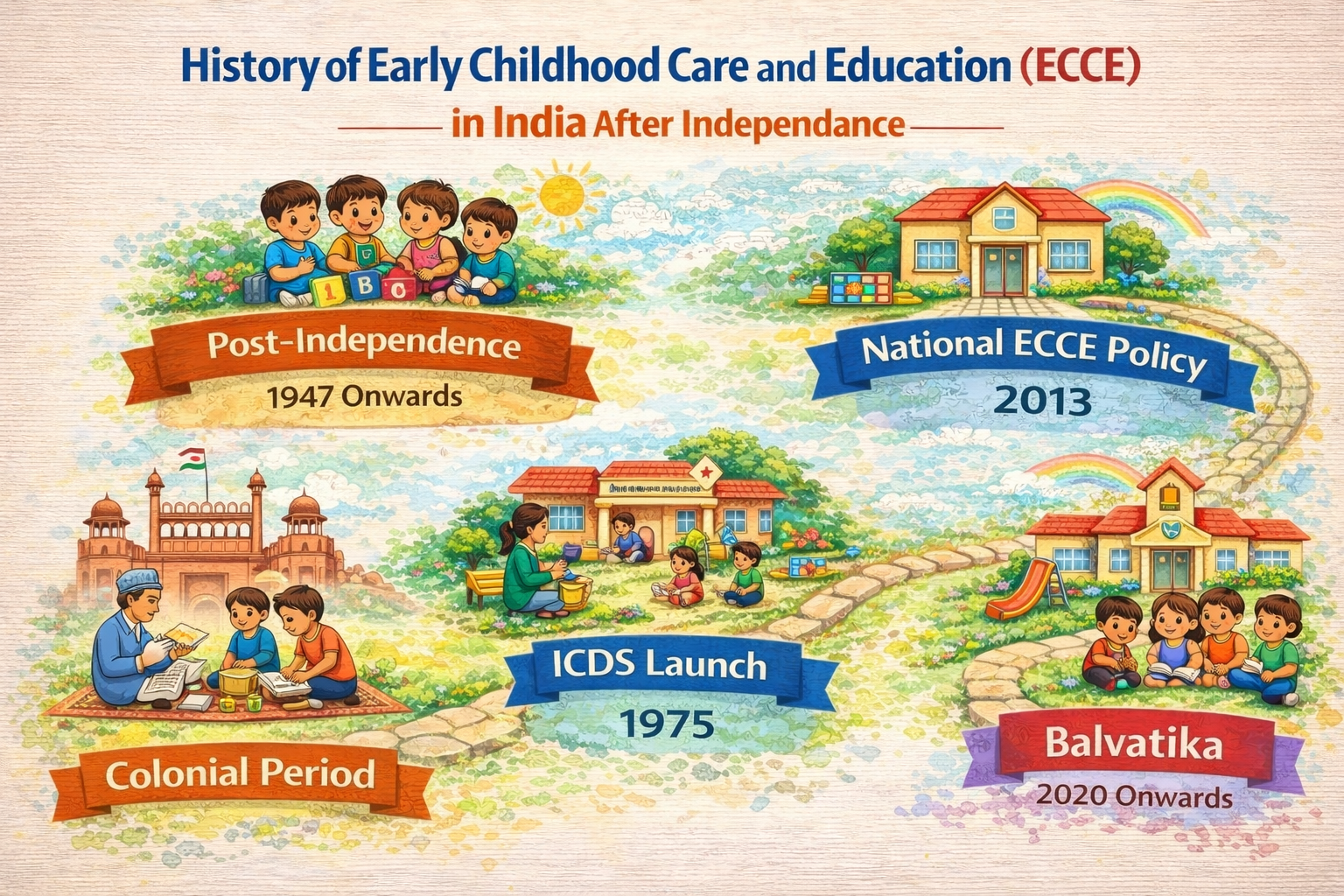
2.Historical Evolution of Early Childhood Care and Education(ECCE) in India/ भारत में ECCE का ऐतिहासिक विकास
The roots of early childhood education in India can be traced back to traditional family systems and Gurukul culture, where early moral and social training occurred informally. However, modern ECCE frameworks began emerging during the colonial period when kindergarten concepts influenced by Froebel entered India. After independence, child welfare became a national concern. The Kothari Commission (1964–66) emphasized pre-primary education as a necessary preparation for primary schooling. A landmark development was the launch of the Integrated Child Development Services (ICDS) in 1975, which integrated nutrition, immunization, health check-ups, referral services, and non-formal pre-school education through Anganwadi centres.
The National Policy on Education (1986) formally recognized Early Childhood Care and Education as a crucial input in primary education. Later, the National ECCE Policy 2013 provided a structured framework focusing on holistic development and child-centered pedagogy. The most transformative step came with the National Education Policy (NEP) 2020, which integrated ECCE into the formal education system under the 5+3+3+4 curricular structure, covering children aged 3–8 years in the foundational stage.
भारत में ECCE की जड़ें पारंपरिक परिवार प्रणाली और गुरुकुल संस्कृति में मिलती हैं, जहाँ प्रारंभिक नैतिक और सामाजिक प्रशिक्षण अनौपचारिक रूप से दिया जाता था। आधुनिक ECCE का विकास औपनिवेशिक काल में किंडरगार्टन अवधारणा के आगमन से हुआ। स्वतंत्रता के बाद बाल कल्याण राष्ट्रीय प्राथमिकता बना। कोठारी आयोग (1964–66) ने प्री-प्राइमरी शिक्षा को प्राथमिक शिक्षा की तैयारी के रूप में महत्वपूर्ण बताया। 1975 में समेकित बाल विकास सेवा (ICDS) की शुरुआत एक ऐतिहासिक कदम था, जिसमें पोषण, टीकाकरण, स्वास्थ्य जांच और गैर-औपचारिक प्री-स्कूल शिक्षा को आंगनवाड़ी केंद्रों के माध्यम से एकीकृत किया गया।Early Childhood Care and Education
1986 की राष्ट्रीय शिक्षा नीति ने ECCE को औपचारिक रूप से प्राथमिक शिक्षा की आधारशिला माना। 2013 की राष्ट्रीय ECCE नीति ने समग्र विकास और बाल-केंद्रित शिक्षण पर आधारित एक संरचित ढांचा प्रस्तुत किया। नई शिक्षा नीति 2020 ने 3–8 वर्ष आयु वर्ग को औपचारिक शिक्षा संरचना में शामिल करते हुए ECCE को शिक्षा प्रणाली का अभिन्न अंग बना दिया। Early Childhood Care and Education
3. ECCE Curriculum and Pedagogy / ECCE पाठ्यक्रम और शिक्षण पद्धति
SCERT and NCERT frameworks emphasize that ECCE curriculum must be developmentally appropriate. It should not replicate formal schooling but provide joyful, activity-based experiences. The curriculum integrates language exposure, early literacy, pre-numeracy concepts, environmental awareness, creative expression, and motor skills development. Continuous observation-based assessment replaces formal examinations. The classroom environment must be safe, inclusive, culturally responsive, and stimulating.
SCERT और NCERT के अनुसार ECCE पाठ्यक्रम विकासानुकूल होना चाहिए। यह औपचारिक विद्यालय शिक्षा की नकल न करते हुए आनंदमय और गतिविधि-आधारित अनुभव प्रदान करे। इसमें भाषा संपर्क, प्रारंभिक साक्षरता, पूर्व-संख्यात्मक अवधारणाएँ, पर्यावरण जागरूकता, रचनात्मक अभिव्यक्ति और मोटर कौशल विकास शामिल होते हैं। औपचारिक परीक्षा के स्थान पर सतत अवलोकन आधारित मूल्यांकन अपनाया जाता है। Early Childhood Care and Education
4.Role of ICDS and Anganwadi System / ICDS और आंगनवाड़ी प्रणाली की भूमिका
The ICDS scheme is one of the world’s largest early childhood programmes. It addresses interlinked needs of nutrition, health, and early learning. Anganwadi workers play a critical role as grassroots-level facilitators. However, challenges such as infrastructure gaps, workload, and training limitations persist. Strengthening Anganwadi centres through capacity building and integration with schools is essential for improving ECCE quality.
ICDS विश्व की सबसे बड़ी प्रारंभिक बाल विकास योजनाओं में से एक है। यह पोषण, स्वास्थ्य और प्रारंभिक शिक्षा को एकीकृत रूप में प्रदान करता है। आंगनवाड़ी कार्यकर्ता जमीनी स्तर पर महत्वपूर्ण भूमिका निभाती हैं। हालांकि, आधारभूत संरचना और प्रशिक्षण संबंधी चुनौतियाँ बनी हुई हैं। आंगनवाड़ी केंद्रों को सुदृढ़ बनाना आवश्यक है। Early Childhood Care and Education
5. NEP 2020 and the Foundational Stage / नई शिक्षा नीति 2020 और आधारभूत चरण
NEP 2020 introduced the foundational stage covering ages 3–8, combining three years of preschool with Grades 1 and 2. It recognises ECCE as the bedrock of learning. The policy advocates universal access to quality preschool education, school readiness programmes, and integration with the Foundational Literacy and Numeracy (FLN) mission.
NEP 2020 ने 3–8 वर्ष आयु वर्ग को आधारभूत चरण में शामिल किया, जिसमें तीन वर्ष का प्री-स्कूल और कक्षा 1-2 सम्मिलित हैं। इस नीति ने ECCE को शिक्षा की नींव माना है और गुणवत्तापूर्ण प्री-स्कूल शिक्षा की सार्वभौमिक उपलब्धता पर बल दिया है। Early Childhood Care and Education
6. Post-Independence Developments in ECCE / स्वतंत्रता के बाद का विकास/Early Childhood Care and Education
After independence, the Government of India recognized the importance of child welfare. Major milestones include:
- 1964-66 Kothari Commission – Emphasized early childhood education.
- 1975 – Launch of ICDS (Integrated Child Development Services) – A landmark programme providing nutrition, health, and preschool education through Anganwadi centres.
- 1986 National Policy on Education (NPE) – Highlighted ECCE as a crucial input for primary education.
स्वतंत्रता के बाद भारत सरकार ने बाल कल्याण को प्राथमिकता दी। प्रमुख पड़ाव:
- 1964-66 कोठारी आयोग – प्रारंभिक शिक्षा पर बल।
- 1975 – ICDS (समेकित बाल विकास सेवा) की शुरुआत – आंगनवाड़ी केंद्रों के माध्यम से पोषण, स्वास्थ्य और प्री-स्कूल शिक्षा।
- 1986 राष्ट्रीय शिक्षा नीति – ECCE को प्राथमिक शिक्षा की महत्वपूर्ण आधारशिला बताया। Early Childhood Care and Education
7. ECCE Policy 2013. / ECCE नीति 2013/Early Childhood Care and Education
The National ECCE Policy 2013 provided a structured framework for universal access to quality early childhood education. It emphasized play-based, child-centered learning and developmental milestones.
2013 की राष्ट्रीय ECCE नीति ने गुणवत्तापूर्ण प्रारंभिक शिक्षा के लिए एक संगठित ढांचा प्रदान किया। इसमें खेल-आधारित और बाल-केंद्रित शिक्षण पर बल दिया गया।
8. NEP 2020 and ECCE Transformation / नई शिक्षा नीति 2020 और ECCE का परिवर्तन
The National Education Policy (NEP) 2020 marked a revolutionary step. It introduced the 5+3+3+4 structure, placing Early Childhood Care and Education(ECCE) (ages 3–6) within the formal education system. Balvatika and School Preparation Modules were recommended to ensure school readiness.
नई शिक्षा नीति 2020 ने 5+3+3+4 संरचना लागू की, जिसमें 3–6 वर्ष आयु वर्ग को औपचारिक शिक्षा का हिस्सा बनाया गया। बालवाटिका और स्कूल तैयारी मॉड्यूल को स्कूल तत्परता के लिए सुझाया गया। Early Childhood Care and Education
9. Objectives of Early Childhood Care and Education(ECCE) in India / भारत में ECCE के उद्देश्य
Early Childhood Care and Education aims to ensure:
- Holistic development
- School readiness
- Language and early literacy skills
- Pre-numeracy skills
- Socio-emotional growth
- Health and nutrition support
Early Childhood Care and Education(ECCE) का उद्देश्य है:
- समग्र विकास
- विद्यालय तत्परता
- भाषा और प्रारंभिक साक्षरता
- पूर्व-संख्यात्मक कौशल
- सामाजिक-भावनात्मक विकास
- स्वास्थ्य और पोषण समर्थन
10. Domains of Child Development in Early Childhood Care and Education(ECCE) / ECCE में बाल विकास के क्षेत्र
ECCE focuses on five major developmental domains:
- Physical and Motor Development
- Cognitive Development
- Language Development
- Socio-Emotional Development
- Creative and Aesthetic Development
Early Childhood Care and Education(ECCE) पाँच प्रमुख विकास क्षेत्रों पर केंद्रित है:
- शारीरिक एवं मोटर विकास
- संज्ञानात्मक विकास
- भाषा विकास
- सामाजिक-भावनात्मक विकास
- सृजनात्मक एवं सौंदर्यात्मक विकास
11.Pedagogy in Early Childhood Care and Education (ECCE): Play-Based Learning / ECCE में शिक्षण पद्धति: खेल-आधारित अधिगम
Play-based and activity-based learning are central to Early Childhood Care and Education(ECCE). Children learn best through exploration, storytelling, music, art, and hands-on experiences rather than rote memorization.
खेल-आधारित और गतिविधि-आधारित शिक्षण ECCE का केंद्र है। बच्चे रटने के बजाय खोज, कहानी, संगीत और कला के माध्यम से बेहतर सीखते हैं।
12. Teacher Preparation and Training / शिक्षक प्रशिक्षण और तैयारी
Quality Early Childhood Care and Education(ECCE) depends on trained educators. Government initiatives such as NISHTHA and continuous professional development programs strengthen teacher capacity.
गुणवत्तापूर्ण Early Childhood Care and Education(ECCE) प्रशिक्षित शिक्षकों पर निर्भर करता है। NISHTHA जैसे कार्यक्रम शिक्षक क्षमता निर्माण को मजबूत करते हैं।
13. Assessment in Early Childhood Care and Education(ECCE) / ECCE में मूल्यांकन
Assessment in ECCE is observational and developmental. It tracks child progress through portfolios, anecdotal records, and play observations rather than formal exams.
ECCE में मूल्यांकन अवलोकन आधारित और विकासात्मक होता है। इसमें पोर्टफोलियो और गतिविधि अवलोकन का उपयोग होता है, न कि औपचारिक परीक्षाएँ।
14.Role of Parents and Community / अभिभावकों और समुदाय की भूमिका
Parents are the first teachers. Active community involvement strengthens ECCE outcomes and ensures cultural relevance in early learning.
अभिभावक बच्चे के पहले शिक्षक होते हैं। सामुदायिक सहभागिता ECCE को प्रभावी और सांस्कृतिक रूप से प्रासंगिक बनाती है।
15. Challenges in Early Childhood Care and Education(ECCE) in India / भारत में ECCE की चुनौतियाँ
- Infrastructure gaps
- Lack of trained teachers
- Regional disparities
- Limited parental awareness
- Quality monitoring issues
- आधारभूत संरचना की कमी
- प्रशिक्षित शिक्षकों की कमी
- क्षेत्रीय असमानताएँ
- अभिभावकों में जागरूकता की कमी
- गुणवत्ता निगरानी की समस्याएँ
16. Impact of Early Childhood Care and Education(ECCE) on National Development/ राष्ट्रीय विकास पर ECCE का प्रभाव
Investing in ECCE reduces dropout rates, improves learning outcomes, increases employability, and strengthens human capital development.
ECCE में निवेश ड्रॉपआउट कम करता है, अधिगम परिणाम सुधारता है और मानव संसाधन विकास को मजबूत बनाता है।
50 MCQs on Early Childhood Care and Education (ECCE)
1. Early Childhood Care and Education(ECCE) covers which age group?
ECCE किस आयु वर्ग को कवर करता है?
A. 0–3 years
B. 3–6 years
C. 0–8 years
D. 6–14 years
Answer: C
2. The ICDS scheme was launched in:
ICDS योजना शुरू हुई:
A. 1964
B. 1975
C. 1986
D. 1992
Answer: B
3. The main objective of ICDS is:
ICDS का मुख्य उद्देश्य है:
A. Only literacy
B. Only nutrition
C. Integrated child development
D. Higher education
Answer: C
4. Anganwadi centres function under which scheme?
आंगनवाड़ी केंद्र किस योजना के अंतर्गत कार्य करते हैं?
A. SSA
B. RMSA
C. ICDS
D. Mid-Day Meal
Answer: C
5. National Early Childhood Care and Education(ECCE) Policy was launched in:
राष्ट्रीय ECCE नीति कब लागू हुई?
A. 2005
B. 2009
C. 2013
D. 2020
Answer: C
6. NEP 2020 introduced which structure?
NEP 2020 ने कौन-सी संरचना लागू की?
A. 10+2
B. 5+3+3+4
C. 8+4
D. 6+3+3
Answer: B
7. Foundational Stage under NEP 2020 covers:
NEP 2020 में आधारभूत चरण कवर करता है:
A. 3–8 years
B. 6–10 years
C. 0–6 years
D. 8–12 years
Answer: A
8. Play-way method is based on which philosophy?
खेल विधि किस दर्शन पर आधारित है?
A. Idealism
B. Pragmatism
C. Constructivism
D. Realism
Answer: C
9. Jean Piaget is associated with:
जीन पियाजे संबंधित हैं:
A. Emotional theory
B. Cognitive development
C. Moral theory
D. Behaviourism
Answer: B
10. Vygotsky emphasized:
विगोत्स्की ने बल दिया:
A. Individual learning
B. Social interaction
C. Punishment
D. IQ testing
Answer: B
11. ECCE focuses mainly on:
ECCE मुख्य रूप से केंद्रित है:
A. Exams
B. Holistic development
C. Homework
D. Discipline only
Answer: B
12. Which commission emphasized pre-primary education?
किस आयोग ने प्री-प्राइमरी शिक्षा पर बल दिया?
A. Hunter Commission
B. Kothari Commission
C. Mudaliar Commission
D. Radhakrishnan Commission
Answer: B
13. FLN mission stands for:
FLN का पूर्ण रूप है:
A. Fundamental Learning Network
B. Foundational Literacy and Numeracy
C. Formal Learning Norms
D. Functional Language Network
Answer: B
14. ECCE curriculum should be:
ECCE पाठ्यक्रम होना चाहिए:
A. Rigid
B. Developmentally appropriate
C. Exam-based
D. Textbook-centered
Answer: B
15. Assessment in ECCE is mainly:
ECCE में मूल्यांकन मुख्यतः होता है:
A. Written exam
B. Oral test
C. Observation-based
D. Board exam
Answer: C
16. Pre-numeracy skills include:
पूर्व-संख्यात्मक कौशल में शामिल है:
A. Algebra
B. Counting
C. Geometry proofs
D. Trigonometry
Answer: B
17. Erikson’s stage in early childhood is:
एरिक्सन के अनुसार प्रारंभिक अवस्था है:
A. Trust vs Mistrust
B. Initiative vs Guilt
C. Identity vs Role confusion
D. Integrity vs Despair
Answer: B
18. Brain development is maximum before:
मस्तिष्क विकास अधिकतम होता है:
A. 2 years
B. 4 years
C. 6 years
D. 10 years
Answer: C
19. Anganwadi worker is responsible for:
आंगनवाड़ी कार्यकर्ता जिम्मेदार होती है:
A. Nutrition only
B. Teaching only
C. Integrated services
D. Exams
Answer: C
20. NIOS provides training for:
NIOS प्रशिक्षण देता है:
A. Engineering
B. ECCE workers
C. Medical
D. Law
Answer: B
(Continuing…)
21. ECCE ensures school:
A. Admission
B. Uniform
C. Readiness
D. Punishment
Answer: C
22. ICDS includes:
A. Nutrition
B. Immunization
C. Preschool education
D. All of the above
Answer: D
23. Child-centered education means:
A. Teacher dominates
B. Child participates actively
C. Strict discipline
D. Lecture method
Answer: B
24. SCERT develops:
A. National policy
B. State curriculum
C. International law
D. Parliament acts
Answer: B
25. ECCE is important because it:
A. Reduces dropout
B. Increases stress
C. Delays learning
D. Promotes exams
Answer: A
26. The first and most important teacher of a child is:
बच्चे का पहला और सबसे महत्वपूर्ण शिक्षक कौन होता है?
A. School teacher
B. Peer group
C. Parents
D. Society
Answer: C
27. Play in early childhood mainly helps in developing:
प्रारंभिक बाल्यावस्था में खेल मुख्य रूप से विकसित करता है:
A. Memorization
B. Social skills
C. Competition
D. Fear
Answer: B
28. ICDS scheme functions under which ministry?
ICDS योजना किस मंत्रालय के अंतर्गत कार्य करती है?
A. Ministry of Education
B. Ministry of Health
C. Ministry of Women and Child Development
D. Ministry of Rural Development
Answer: C
29. NEP 2020 emphasizes universal access to:
NEP 2020 सार्वभौमिक पहुंच पर बल देता है:
A. Higher education
B. Technical education
C. ECCE
D. Online education
Answer: C
30. The Anganwadi system was introduced in India in:
भारत में आंगनवाड़ी प्रणाली प्रारंभ हुई:
A. 1968
B. 1975
C. 1986
D. 1995
Answer: B
31. Learning through direct experience is called:
प्रत्यक्ष अनुभव के माध्यम से सीखना कहलाता है:
A. Rote learning
B. Experiential learning
C. Lecture method
D. Drill method
Answer: B
32. Inclusive education in ECCE means:
ECCE में समावेशी शिक्षा का अर्थ है:
A. Only gifted children
B. Only disabled children
C. Education for all children
D. Only rural children
Answer: C
33. A portfolio in ECCE assessment is:
ECCE में पोर्टफोलियो है:
A. Final exam record
B. Continuous record of child’s work
C. IQ test
D. Attendance sheet
Answer: B
34. School readiness includes development of:
स्कूल तत्परता में विकास शामिल है:
A. Only writing
B. Only reading
C. Language, cognitive and social skills
D. Only numeracy
Answer: C
35. An ECCE teacher should be primarily:
ECCE शिक्षक को मुख्य रूप से होना चाहिए:
A. Strict
B. Authoritative
C. Sensitive and trained
D. Punitive
Answer: C
36. Activity-based learning encourages:
गतिविधि-आधारित शिक्षण प्रोत्साहित करता है:
A. Passive listening
B. Active participation
C. Fear
D. Competition
Answer: B
37. Proper nutrition in early years affects:
प्रारंभिक वर्षों में उचित पोषण प्रभावित करता है:
A. Only physical growth
B. Only emotional growth
C. Cognitive and overall development
D. None
Answer: C
38. Holistic development refers to development of:
समग्र विकास का अर्थ है विकास:
A. Only physical
B. Only mental
C. Physical, emotional, cognitive and social
D. Only intellectual
Answer: C
39. Around 85% of brain development occurs before:
लगभग 85% मस्तिष्क विकास होता है:
A. 3 years
B. 5 years
C. 6 years
D. 10 years
Answer: C
40. Quality ECCE helps in reducing:
गुणवत्तापूर्ण ECCE कम करता है:
A. Intelligence
B. Dropout rate
C. Curiosity
D. Play
Answer: B
41. Play-based curriculum is most suitable for:
खेल-आधारित पाठ्यक्रम सबसे उपयुक्त है:
A. Secondary stage
B. Higher education
C. Early childhood
D. University level
Answer: C
42. Early stimulation of children improves:
बच्चों का प्रारंभिक प्रोत्साहन सुधारता है:
A. Stress
B. Learning ability
C. Fear
D. Aggression
Answer: B
43. Anecdotal records are used to:
ऐनैक्डोटल रिकॉर्ड का उपयोग किया जाता है:
A. Punish students
B. Observe behaviour
C. Conduct exams
D. Give marks
Answer: B
44. Balvatika is included in which stage under NEP 2020?
NEP 2020 के अंतर्गत बालवाटिका किस चरण में शामिल है?
A. Preparatory stage
B. Middle stage
C. Foundational stage
D. Secondary stage
Answer: C
45. Children learn best when learning is:
बच्चे सबसे अच्छा सीखते हैं जब सीखना होता है:
A. Fear-based
B. Punishment-based
C. Play and interaction-based
D. Memorization-based
Answer: C
46. ECCE helps in bridging:
ECCE सहायता करता है:
A. Language gap
B. Learning gap
C. Social gap
D. All of the above
Answer: D
47. Community participation in ECCE ensures:
ECCE में सामुदायिक भागीदारी सुनिश्चित करती है:
A. Better quality
B. Higher fees
C. Strict exams
D. Uniform system
Answer: A
48. Developmental milestones indicate:
विकासात्मक मील के पत्थर संकेत देते हैं:
A. Exam results
B. Stages of child growth
C. Attendance
D. Marks
Answer: B
49. Continuous and Comprehensive Evaluation (CCE) in ECCE is:
ECCE में सतत एवं व्यापक मूल्यांकन है:
A. Annual board exam
B. Continuous observation and feedback
C. Competitive test
D. Entrance test
Answer: B
50. Investment in ECCE contributes to:
ECCE में निवेश योगदान देता है:
A. Individual growth only
B. National development
C. Private profit
D. Exam success only
Answer: B
For more topic please visit: https://teacherszone.in/
Please follow us on Facebook:https://www.facebook.com/profile.php?id=61586013442564