
Learn Digital Technology in Teaching Learning with meaning, importance, advantages, challenges and MCQs for CTET, NET, B.Ed & M.Ed, KVS,NVS,EMRS exams.
Digital Technology in Teaching–Learning/शिक्षण-अधिगम में डिजिटल प्रौद्योगिकी
Table of Contents
1. Introduction / Digital Technology in Teaching & Learning/ परिचय
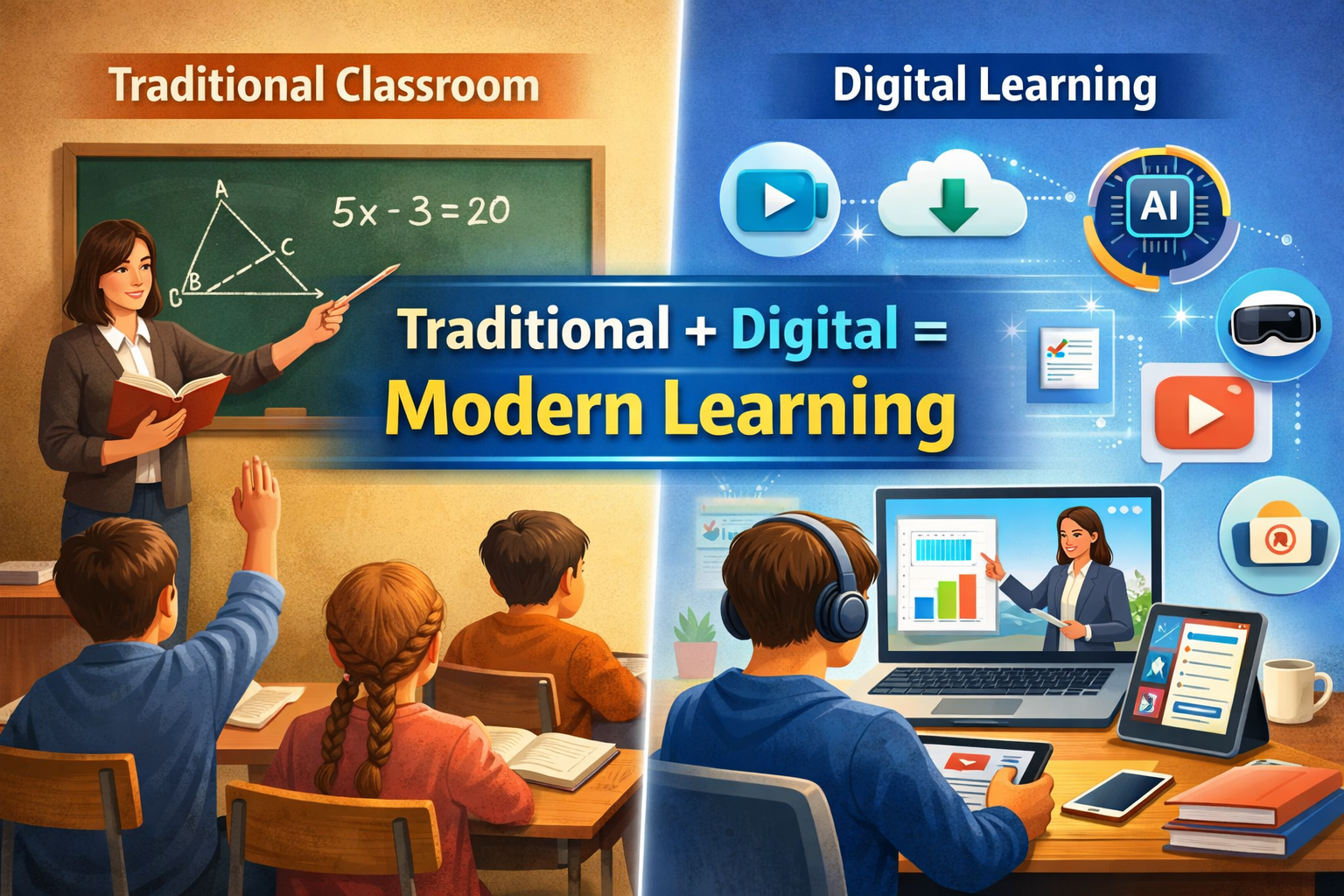
Digital technology has transformed almost every field of human life, and education is no exception. In the 21st century, the teaching–learning process is no longer limited to chalk and board. With the integration of digital tools, learning has become more interactive, accessible, and learner-centered. According to study materials from teacher education institutions such as IGNOU, B.Ed., M.Ed., NIOS, and SCERT Delhi, digital technology plays a crucial role in improving the quality of teaching and learning.
डिजिटल प्रौद्योगिकी ने मानव जीवन के लगभग हर क्षेत्र को बदल दिया है और शिक्षा भी इससे अछूती नहीं है। 21वीं सदी में शिक्षण-अधिगम प्रक्रिया केवल चॉक और ब्लैकबोर्ड तक सीमित नहीं रह गई है। डिजिटल उपकरणों के उपयोग से सीखना अधिक इंटरैक्टिव, सुलभ और शिक्षार्थी-केंद्रित हो गया है। IGNOU, B.Ed., M.Ed., NIOS और SCERT दिल्ली के अध्ययन सामग्री के अनुसार, डिजिटल प्रौद्योगिकी शिक्षण-अधिगम की गुणवत्ता को बेहतर बनाने में महत्वपूर्ण भूमिका निभाती है।
2. Meaning of Digital Technology in Education/शिक्षा में डिजिटल प्रौद्योगिकी का अर्थ
Digital technology in education refers to the use of electronic tools, devices, systems, and resources to support teaching and learning. It includes computers, internet, multimedia, mobile applications, smart boards, online learning platforms, and digital educational resources.
शिक्षा में डिजिटल प्रौद्योगिकी का अर्थ है शिक्षण और अधिगम को सहयोग देने के लिए इलेक्ट्रॉनिक उपकरणों, प्रणालियों और संसाधनों का उपयोग करना। इसमें कंप्यूटर, इंटरनेट, मल्टीमीडिया, मोबाइल एप्लिकेशन, स्मार्ट बोर्ड, ऑनलाइन लर्निंग प्लेटफॉर्म और डिजिटल शैक्षिक संसाधन शामिल हैं।
Digital technology enables teachers to present information in various forms such as text, audio, video, animation, and simulations.
डिजिटल तकनीक शिक्षकों को जानकारी को विभिन्न रूपों जैसे टेक्स्ट, ऑडियो, वीडियो, एनीमेशन और सिमुलेशन के माध्यम से प्रस्तुत करने में सक्षम बनाती है।
3.Types of Digital Technology Used in Teaching/ शिक्षण में प्रयुक्त डिजिटल तकनीकों के प्रकार
1. Computers and Laptops
Computers help teachers prepare presentations, digital notes, assignments, and assessments.
कंप्यूटर और लैपटॉप शिक्षकों को प्रस्तुतियाँ, डिजिटल नोट्स, असाइनमेंट और मूल्यांकन तैयार करने में सहायता करते हैं।
2. Smart Boards and Interactive Whiteboards
Smart boards make teaching interactive and visually attractive.
स्मार्ट बोर्ड और इंटरैक्टिव व्हाइटबोर्ड शिक्षण को अधिक इंटरैक्टिव और आकर्षक बनाते हैं।
3. Learning Management Systems (LMS)
LMS platforms help in managing courses, assignments, and communication between teachers and students.
LMS प्लेटफॉर्म शिक्षकों और छात्रों के बीच पाठ्यक्रम प्रबंधन, असाइनमेंट और संवाद को आसान बनाते हैं।
4. Educational Mobile Applications
Mobile apps provide access to learning materials anytime and anywhere.
मोबाइल ऐप्स छात्रों को कभी भी और कहीं भी अध्ययन सामग्री तक पहुँच प्रदान करते हैं।
5. Online Learning Platforms
Online platforms allow students to attend virtual classes and access digital resources.
ऑनलाइन प्लेटफॉर्म छात्रों को वर्चुअल कक्षाओं में भाग लेने और डिजिटल संसाधनों तक पहुँचने की सुविधा देते हैं।
4. Importance of Digital Technology in Teaching Learning / शिक्षण-अधिगम में डिजिटल तकनीक का महत्व
Digital technology has several advantages in education.
डिजिटल तकनीक के शिक्षा में कई लाभ हैं।
1. Improves Quality of Education
Multimedia presentations make learning more effective and interesting.
मल्टीमीडिया प्रस्तुति सीखने को अधिक प्रभावी और रोचक बनाती है।
2. Promotes Student-Centered Learning
Students can learn at their own pace using digital resources.
डिजिटल संसाधनों के माध्यम से छात्र अपनी गति से सीख सकते हैं।
3. Provides Access to Vast Knowledge
Internet provides unlimited information and learning resources.
इंटरनेट असीमित जानकारी और सीखने के संसाधन प्रदान करता है।
4. Enhances Collaboration
Students can collaborate through online discussions, forums, and group projects.
छात्र ऑनलाइन चर्चा, फोरम और समूह परियोजनाओं के माध्यम से सहयोग कर सकते हैं।
5. Supports Inclusive Education
Digital tools help students with disabilities through assistive technologies.
डिजिटल उपकरण सहायक तकनीकों के माध्यम से दिव्यांग छात्रों की सहायता करते हैं।
5. Role of Teacher in Digital Technology in Teaching & Learning / डिजिटल शिक्षण में शिक्षक की भूमिका
In a digital learning environment, the role of the teacher changes from a knowledge provider to a facilitator and guide.
डिजिटल अधिगम वातावरण में शिक्षक की भूमिका ज्ञान प्रदाता से बदलकर मार्गदर्शक और सहायक की हो जाती है।
Key Roles of Teachers
- Designing digital learning materials
- Guiding students in using digital tools
- Encouraging critical thinking
- Monitoring students’ online learning
- Ensuring ethical use of technology
मुख्य भूमिकाएँ:
- डिजिटल शिक्षण सामग्री का निर्माण
- छात्रों को डिजिटल उपकरणों के उपयोग में मार्गदर्शन
- आलोचनात्मक सोच को बढ़ावा देना
- ऑनलाइन सीखने की निगरानी
- तकनीक के नैतिक उपयोग को सुनिश्चित करना
6. Digital Resources in Education / शिक्षा में डिजिटल संसाधन
According to IGNOU and SCERT study materials, digital learning resources include:
IGNOU और SCERT अध्ययन सामग्री के अनुसार डिजिटल शिक्षण संसाधनों में शामिल हैं:
- E-books
- Online lectures
- Educational videos
- Digital libraries
- Open Educational Resources (OER)
- Virtual labs
7. Challenges of Digital Technology in Education/ शिक्षा में डिजिटल तकनीक की चुनौतियाँ
Despite many benefits, digital technology also has some limitations.
कई लाभों के बावजूद डिजिटल तकनीक की कुछ सीमाएँ भी हैं।
1. Digital Divide
Not all students have access to internet and devices.
सभी छात्रों के पास इंटरनेट और उपकरण उपलब्ध नहीं होते।
2. Lack of Digital Skills
Teachers and students may lack digital literacy.
शिक्षकों और छात्रों में डिजिटल साक्षरता की कमी हो सकती है।
3. Distraction
Excessive use of digital devices can distract students.
डिजिटल उपकरणों का अधिक उपयोग छात्रों का ध्यान भटका सकता है।
4. Technical Problems
Internet issues and software errors may interrupt learning.
इंटरनेट समस्याएँ और सॉफ़्टवेयर त्रुटियाँ सीखने की प्रक्रिया को बाधित कर सकती हैं।
8.Strategies for Effective Use of Digital Technology in Digital Technology in Teaching & Learning / डिजिटल तकनीक के प्रभावी उपयोग की रणनीतियाँ
- Teacher training in digital skills
- Proper digital infrastructure in schools
- Blended learning approach
- Use of interactive digital content
- Continuous monitoring of students
रणनीतियाँ:
- शिक्षकों का डिजिटल प्रशिक्षण
- विद्यालयों में उचित डिजिटल अवसंरचना
- ब्लेंडेड लर्निंग का उपयोग
- इंटरैक्टिव डिजिटल सामग्री का प्रयोग
- छात्रों की निरंतर निगरानी
9. Conclusion / Digital Technology in Teaching & Learning/निष्कर्ष
Digital technology has become an essential component of modern education. It enhances teaching effectiveness and improves students’ learning experiences. However, the successful integration of digital technology requires proper training, infrastructure, and responsible use. Educational institutions and teachers must adopt digital tools carefully to ensure inclusive, effective, and meaningful learning.
डिजिटल प्रौद्योगिकी आधुनिक शिक्षा का एक अनिवार्य हिस्सा बन चुकी है। यह शिक्षण की प्रभावशीलता बढ़ाती है और छात्रों के सीखने के अनुभव को बेहतर बनाती है। हालांकि, डिजिटल तकनीक के सफल उपयोग के लिए उचित प्रशिक्षण, अवसंरचना और जिम्मेदार उपयोग आवश्यक है। शैक्षणिक संस्थानों और शिक्षकों को डिजिटल उपकरणों का सावधानीपूर्वक उपयोग करना चाहिए ताकि समावेशी, प्रभावी और सार्थक अधिगम सुनिश्चित हो सके।
10. Digital Technology in Teaching & Learning 50 MCQs for Practice
- The use of ICT in education helps mainly in
A. Teacher-centered learning
B. Student-centered learning
C. Memorization
D. Discipline
Answer: B
- The main objective of digital learning is
A. Replace teachers
B. Improve learning experiences
C. Increase homework
D. Reduce books
Answer: B
- Which of the following is an example of digital learning resource?
A. Blackboard
B. Chalk
C. E-book
D. Notebook
Answer: C
- Open Educational Resources are
A. Paid resources
B. Restricted resources
C. Free learning resources
D. Printed materials
Answer: C
- Virtual classrooms enable
A. Distance learning
B. Only offline learning
C. Only practical learning
D. Only group learning
6. Which of the following is a key characteristic of digital learning environments?
A. Teacher-dominated instruction
B. Passive learning
C. Interactive and collaborative learning
D. Only textbook-based learning
Answer: C
7. The concept of “Blended Learning” refers to
A. Traditional classroom teaching only
B. Combination of online and face-to-face learning
C. Learning through textbooks only
D. Practical learning only
Answer: B
8. Which of the following is an example of Open Educational Resources (OER)?
A. Commercial textbooks
B. Paid online courses
C. Freely accessible digital learning materials
D. Printed study guides
Answer: C
9. In digital learning, MOOCs stand for
A. Massive Open Online Courses
B. Modern Online Organized Courses
C. Multiple Online Open Classes
D. Massive Online Offline Courses
Answer: A
10. The main objective of integrating ICT in education is to
A. Replace teachers
B. Enhance the effectiveness of teaching and learning
C. Reduce classroom interaction
D. Eliminate traditional teaching
Answer: B
11. Which of the following is NOT a component of digital literacy?
A. Information evaluation
B. Digital communication
C. Memorization of facts
D. Ethical use of digital tools
Answer: C
12. The digital divide refers to
A. Difference between digital devices
B. Gap between people who have access to technology and those who do not
C. Difference between teachers and students
D. Internet speed difference
Answer: B
13. Learning Management Systems (LMS) are primarily used for
A. Entertainment
B. Managing teaching-learning processes
C. Printing documents
D. Data storage only
Answer: B
14. Which teaching method is most supported by digital technology?
A. Lecture method only
B. Rote learning
C. Interactive learning
D. Silent reading
Answer: C
15. Which of the following is an example of synchronous online learning?
A. Recorded video lecture
B. Live online class
C. E-book reading
D. Online PDF notes
Answer: B
16. Asynchronous learning means
A. Learning at the same time
B. Learning at different times according to learner convenience
C. Learning only in classroom
D. Learning through experiments
Answer: B
17. In digital education, multimedia refers to
A. Only text content
B. Combination of text, audio, video, and graphics
C. Only animation
D. Only images
Answer: B
18. Which of the following digital tools is mainly used for online assessment?
A. Google Forms
B. Smart board
C. Projector
D. Scanner
Answer: A
19. The role of the teacher in a digital learning environment is mainly that of
A. Controller
B. Facilitator and guide
C. Authority only
D. Passive observer
Answer: B
20. Virtual laboratories are mainly useful for
A. Teaching only theory
B. Conducting experiments through simulation
C. Classroom decoration
D. Writing notes
Answer: B
21. Which of the following is a challenge in digital education?
A. Accessibility of learning materials
B. Digital divide
C. Interactive learning
D. Flexible learning
Answer: B
22. ICT integration in teaching mainly promotes
A. Passive learning
B. Memorization
C. Active and participatory learning
D. Teacher dependency
Answer: C
23. Which of the following is a major advantage of digital learning?
A. Limited resources
B. Global access to information
C. Reduced student engagement
D. Less communication
Answer: B
24. E-learning mainly refers to
A. Electronic learning through digital devices
B. Only classroom learning
C. Learning through books only
D. Traditional teaching
Answer: A
25. The National Digital Education Architecture (NDEAR) in India aims to
A. Increase school fees
B. Provide a digital infrastructure for education
C. Replace teachers
D. Eliminate books
Answer: B
26. Which platform is commonly used for online classroom interaction?
A. Video conferencing tools
B. Chalk board
C. Notebook
D. Printed books
Answer: A
27. Digital storytelling is mainly used to
A. Improve memorization
B. Enhance creativity and engagement
C. Replace textbooks
D. Avoid teaching
Answer: B
28. Which of the following supports inclusive education through digital technology?
A. Assistive technologies
B. Chalk and board
C. Printed books
D. Only classroom lectures
Answer: A
29. Gamification in education refers to
A. Playing games only
B. Using game elements in learning
C. Sports education
D. Physical education
Answer: B
30. The effective use of digital technology in education requires
A. Teacher training and digital literacy
B. Only computers
C. Only internet
D. Only smart boards
Answer: A
11. Previous Year 50 MCQs on Digital Technology in Teaching–Learning
1. ICT in education primarily helps in
A. Teacher-centered learning
B. Student-centered learning
C. Memorization of facts
D. Reducing classroom interaction
Answer: B
Explanation: ICT tools promote interactive and learner-centered approaches where students actively participate in the learning process.
2. ICT stands for
A. Information and Communication Technology
B. International Communication Technology
C. Information Computer Technology
D. Internet Communication Tool
Answer: A
Explanation: ICT refers to technologies used for information processing, communication, and digital learning.
3. Which of the following is an example of digital learning?
A. Chalk and board teaching
B. Printed textbooks
C. Online classes through video conferencing
D. Classroom dictation
Answer: C
Explanation: Online classes through platforms enable digital teaching and learning.
4. The main aim of integrating ICT in education is to
A. Replace teachers
B. Improve teaching effectiveness
C. Increase examination difficulty
D. Reduce curriculum
Answer: B
Explanation: ICT enhances teaching methods and learning experiences.
5. Which of the following is a component of multimedia learning?
A. Text
B. Audio
C. Video
D. All of these
Answer: D
Explanation: Multimedia integrates multiple formats like text, audio, video, graphics, and animation.
6. Digital divide refers to
A. Difference between online and offline classes
B. Gap between people with and without access to technology
C. Difference between teachers and students
D. Internet speed difference
Answer: B
Explanation: Digital divide highlights inequality in access to digital resources.
7. Blended learning refers to
A. Traditional teaching only
B. Online learning only
C. Combination of online and classroom learning
D. Practical learning only
Answer: C
Explanation: Blended learning integrates face-to-face teaching with digital learning.
8. MOOCs stands for
A. Massive Open Online Courses
B. Modern Online Organized Courses
C. Massive Offline Online Classes
D. Multiple Online Open Classes
Answer: A
Explanation: MOOCs are large-scale online courses accessible to learners globally.
9. Learning Management System (LMS) is used for
A. Cooking
B. Managing courses and learning activities
C. Printing documents
D. Playing games
Answer: B
Explanation: LMS platforms manage content, assignments, communication, and assessment.
10. Which of the following promotes interactive learning?
A. Lecture method only
B. ICT tools
C. Rote memorization
D. Silent reading
Answer: B
Explanation: ICT tools encourage interaction and participation.
11. Smart boards are mainly used for
A. Online shopping
B. Interactive classroom teaching
C. Writing books
D. Gaming
Answer: B
Explanation: Smart boards allow teachers to present digital content interactively.
12. E-learning mainly refers to
A. Electronic learning through digital devices
B. Learning through printed books
C. Classroom teaching only
D. Outdoor learning
Answer: A
Explanation: E-learning uses electronic technologies such as computers and internet.
13. Asynchronous learning means
A. Learning at the same time
B. Learning at different times
C. Classroom learning only
D. Practical learning
Answer: B
Explanation: Learners access materials at their own pace.
14. Which of the following is synchronous learning?
A. Recorded video
B. E-book reading
C. Live online class
D. PDF notes
Answer: C
Explanation: Synchronous learning occurs in real time.
15. Open Educational Resources (OER) are
A. Paid resources
B. Restricted materials
C. Freely accessible educational materials
D. Printed books
Answer: C
Explanation: OER are free and open learning resources available online.
16. Virtual labs are useful for
A. Playing games
B. Conducting experiments digitally
C. Writing assignments
D. Taking attendance
Answer: B
Explanation: Virtual labs simulate experiments through digital platforms.
17. Digital storytelling is used to
A. Improve memorization
B. Enhance creativity and engagement
C. Replace teachers
D. Reduce classroom teaching
Answer: B
Explanation: Digital storytelling uses multimedia to make learning engaging.
18. Which tool is commonly used for online quizzes?
A. Google Forms
B. Scanner
C. Printer
D. Calculator
Answer: A
Explanation: Google Forms helps create quizzes and assessments.
19. Assistive technologies mainly support
A. Gifted students only
B. Students with disabilities
C. Teachers only
D. Administrators
Answer: B
Explanation: Assistive technologies promote inclusive education.
20. ICT integration in education mainly encourages
A. Passive learning
B. Active learning
C. Memorization
D. Teacher dominance
Answer: B
Explanation: ICT supports participation and collaboration.
21. Gamification in education means
A. Playing games in class
B. Using game elements in learning
C. Physical education
D. Outdoor activities
Answer: B
Explanation: Gamification increases motivation through rewards, levels, and challenges.
22. Digital literacy means
A. Reading books
B. Ability to use digital technologies effectively
C. Writing essays
D. Learning mathematics
Answer: B
Explanation: Digital literacy includes skills for using technology responsibly.
23. Which of the following is NOT a digital resource?
A. E-books
B. Online videos
C. Printed textbooks
D. Digital libraries
Answer: C
Explanation: Printed textbooks are traditional resources.
24. The role of a teacher in digital learning is mainly
A. Controller
B. Facilitator
C. Authority only
D. Observer
Answer: B
Explanation: Teachers guide students in digital environments.
25. Video conferencing tools help in
A. Distance learning
B. Classroom decoration
C. Printing
D. Attendance only
Answer: A
Explanation: Video conferencing enables remote education.
26. One major challenge of ICT in education is
A. Interactive learning
B. Digital divide
C. Access to knowledge
D. Flexibility
Answer: B
Explanation: Not all learners have equal access to technology.
27. Which of the following improves collaborative learning?
A. Online discussion forums
B. Chalk board
C. Dictation
D. Silent reading
Answer: A
Explanation: Forums allow students to share ideas.
28. Which ICT tool is used to display multimedia content in class?
A. Projector
B. Calculator
C. Printer
D. Stapler
Answer: A
Explanation: Projectors display presentations, videos, and graphics.
29. The concept of flipped classroom means
A. Students teach teachers
B. Homework in class and lectures at home
C. Only online learning
D. Only practical work
Answer: B
Explanation: Students study content at home and do activities in class.
30. Digital learning mainly promotes
A. Rote learning
B. Self-directed learning
C. Passive learning
D. Memorization
Answer: B
Explanation: Learners take responsibility for their learning.
31. ICT helps teachers mainly in
A. Lesson planning
B. Teaching presentation
C. Assessment
D. All of these
Answer: D
Explanation: ICT supports multiple teaching tasks.
32. Cloud storage is used for
A. Data storage online
B. Cooking
C. Writing notes only
D. Printing
Answer: A
Explanation: Cloud services store data online.
33. Which platform provides digital education in India?
A. DIKSHA
B. Amazon
C. Flipkart
D. WhatsApp
Answer: A
Explanation: DIKSHA is India’s national digital education platform.
34. ICT-based learning mainly supports
A. Personalized learning
B. Fixed learning pace
C. Only teacher control
D. No interaction
Answer: A
Explanation: Technology allows customized learning.
35. Online discussion helps develop
A. Communication skills
B. Isolation
C. Passive learning
D. Memorization
Answer: A
Explanation: Discussions improve expression and collaboration.
36. Digital portfolio is used for
A. Student performance records
B. Cooking recipes
C. Classroom decoration
D. Attendance
Answer: A
37. Which tool is used for creating presentations?
A. PowerPoint
B. Calculator
C. Printer
D. Scanner
Answer: A
38. ICT enhances learning through
A. Visual and audio content
B. Only text
C. Only lecture
D. Only notes
Answer: A
39. Technology-based assessment allows
A. Instant feedback
B. Delayed evaluation
C. No evaluation
D. Only manual checking
Answer: A
40. Which learning approach uses digital tools along with classroom teaching?
A. Blended learning
B. Lecture method
C. Demonstration method
D. Dictation
Answer: A
41. Digital tools help students develop
A. Critical thinking
B. Problem-solving skills
C. Creativity
D. All of these
Answer: D
42. Internet in education mainly provides
A. Limited information
B. Global knowledge resources
C. Only entertainment
D. Only communication
Answer: B
43. Digital education supports
A. Lifelong learning
B. Temporary learning
C. Limited learning
D. Passive learning
Answer: A
44. ICT integration in classrooms requires
A. Teacher training
B. Infrastructure
C. Digital literacy
D. All of these
Answer: D
45. Which technology supports inclusive education?
A. Assistive technology
B. Chalk board
C. Notebook
D. Printed book
Answer: A
46. Interactive simulations help students understand
A. Complex concepts
B. Only facts
C. Only definitions
D. Only theory
Answer: A
47. Educational technology mainly aims to
A. Improve teaching-learning process
B. Replace schools
C. Reduce teachers
D. Increase exams
Answer: A
48. Digital platforms enable
A. Remote learning
B. Flexible learning
C. Global interaction
D. All of these
Answer: D
49. Which skill is essential for digital learning?
A. Digital literacy
B. Only writing
C. Only memorization
D. Only reading
Answer: A
50. Effective use of digital technology requires
A. Infrastructure
B. Skilled teachers
C. Proper planning
D. All of these
Answer: D
Explanation: Successful digital education requires infrastructure, training, and planning.
For more topic please visit:https://teacherszone.in/category/kvs/
Follow us on Facebook: https://www.facebook.com/profile.php?id=61586013442564