
The Concept of Syllabus and Curriculum, Overt and Hidden Curriculum, is a major part of any teaching exam. Difference between Curriculum and Syllabus, Overt Curriculum, Hidden Curriculum, Meaning.
Introduction / परिचय
Table of Contents
Education is a planned and purposeful activity. The planning of education depends largely on two important concepts — Syllabus and Curriculum. These concepts are widely discussed in teacher education programs like IGNOU B.Ed and M.Ed.
शिक्षा एक सुनियोजित और उद्देश्यपूर्ण प्रक्रिया है। शिक्षा की योजना दो महत्वपूर्ण अवधारणाओं पर आधारित होती है —
पाठ्यक्रम (Curriculum) और पाठ्यवस्तु/सिलेबस (Syllabus).
Understanding the Concept of Syllabus and Curriculum, Overt and Hidden Curriculum helps teachers design effective teaching-learning processes.
Concept of Curriculum (पाठ्यक्रम की अवधारणा)
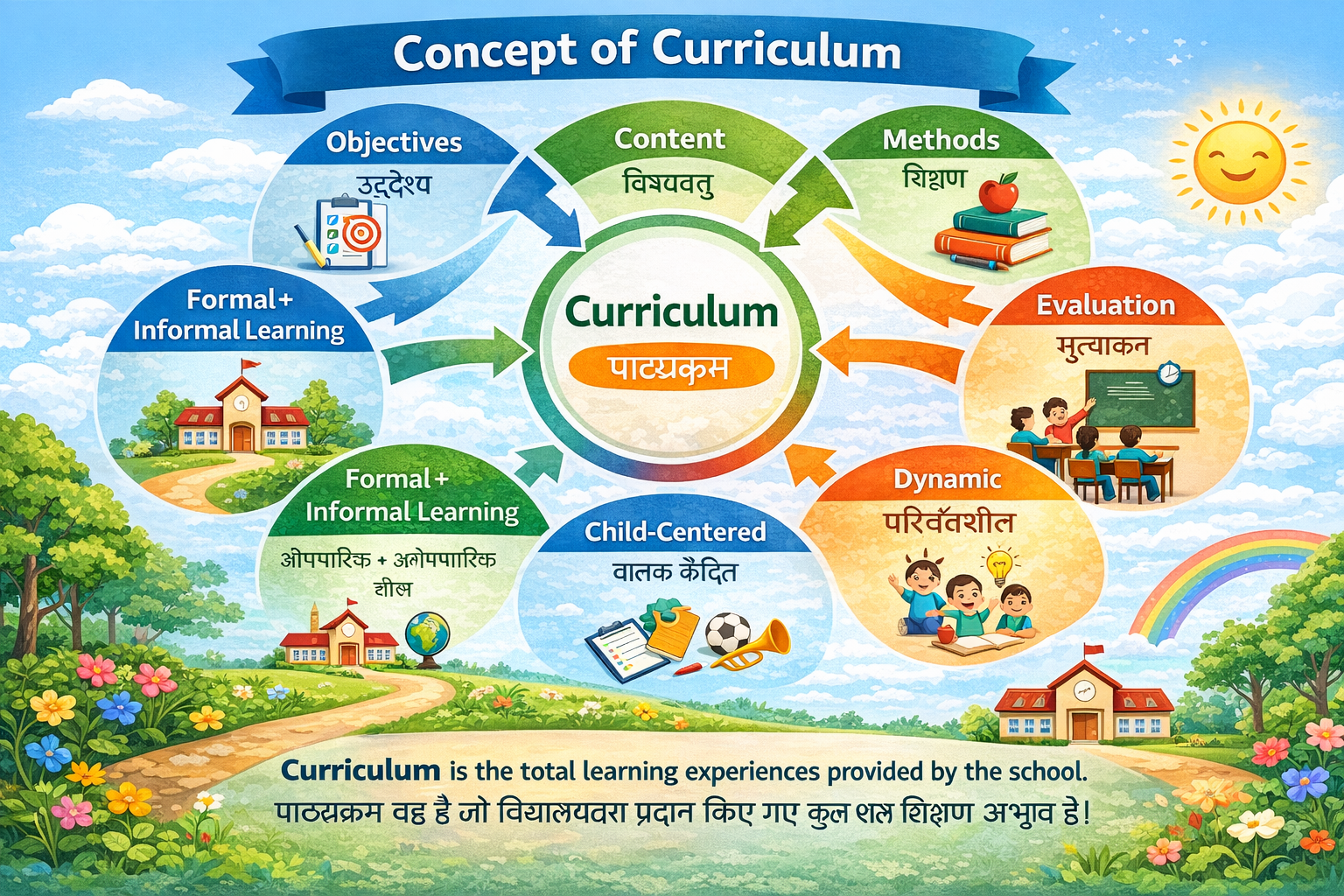
🔹 Meaning of Curriculum
In the Concept of Syllabus and Curriculum, Overt and Hidden Curriculum the word curriculum is derived from the Latin word “currere” which means “to run a course.”
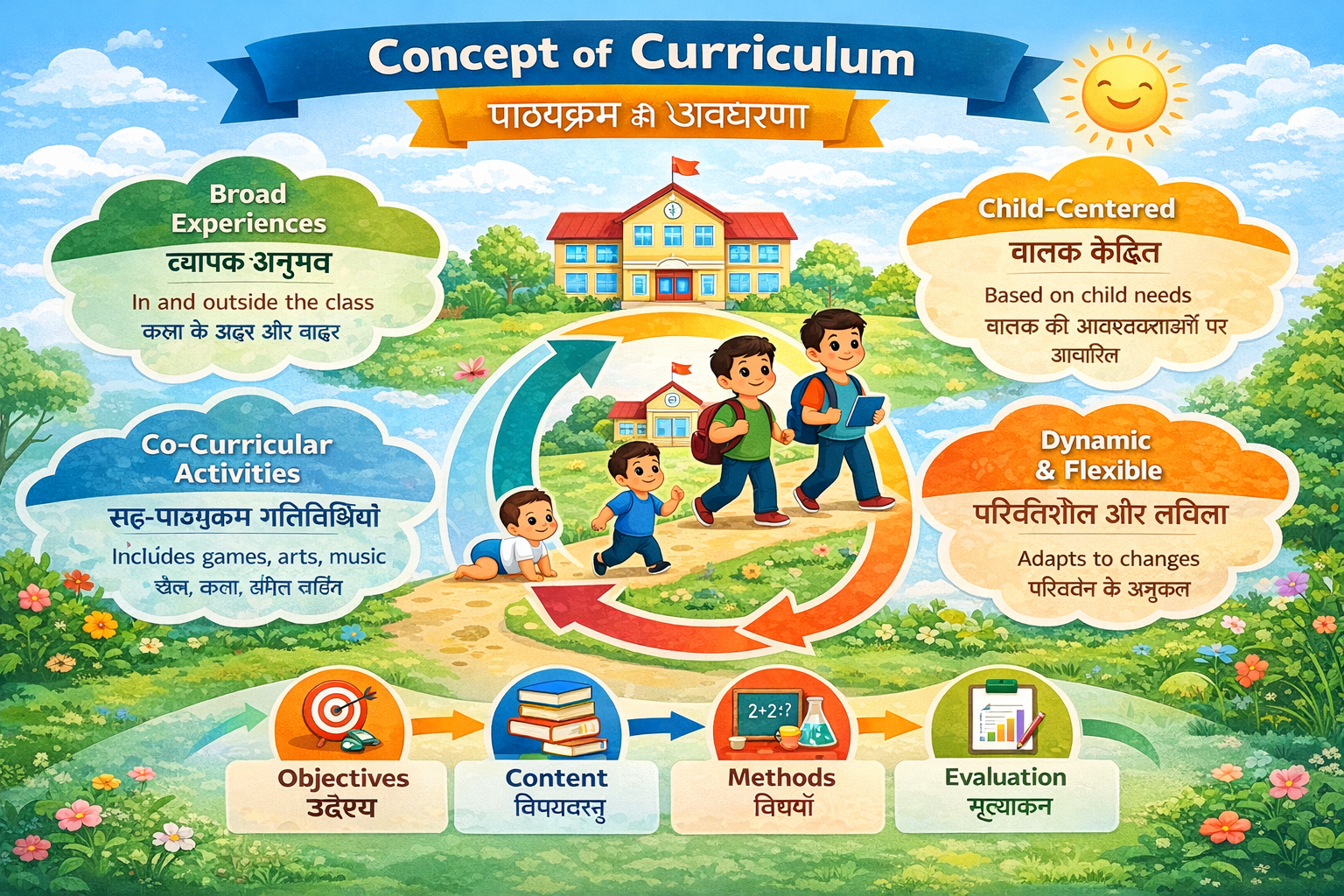
Curriculum refers to the total experiences provided by the school, both inside and outside the classroom.
“Curriculum” शब्द लैटिन शब्द Currere से लिया गया है जिसका अर्थ है “दौड़ का मार्ग”।
पाठ्यक्रम से तात्पर्य विद्यालय द्वारा प्रदान किए जाने वाले सभी अनुभवों से है — कक्षा के अंदर और बाहर।
Definitions of Curriculum
According to Franklin Bobbitt, curriculum is the total range of experiences, both directed and undirected.
According to John Dewey, curriculum should be based on the child’s experience.
फ्रैंकलिन बॉबिट के अनुसार, पाठ्यक्रम उन सभी अनुभवों का समूह है जो विद्यालय प्रदान करता है।
जॉन डेवी के अनुसार, पाठ्यक्रम बालक के अनुभवों पर आधारित होना चाहिए।
Characteristics of Curriculum
- Broad and comprehensive
- Includes co-curricular activities
- Child-centered
- Dynamic and flexible
- Includes objectives, content, methods and evaluation
- व्यापक और समग्र
- सह-पाठ्यक्रम गतिविधियाँ शामिल
- बालक-केंद्रित
- परिवर्तनशील
- उद्देश्य, विषयवस्तु, विधि और मूल्यांकन शामिल
Concept of Syllabus (सिलेबस की अवधारणा)
Meaning of Syllabus
In the Concept of Syllabus and Curriculum, Overt and Hidden Curriculum the Syllabus refers to the content or topics prescribed for a particular subject in a specific time period.
सिलेबस से तात्पर्य किसी विशेष विषय के लिए निर्धारित विषयवस्तु से है।
Characteristics of Syllabus
- Subject-specific
- Time-bound
- Narrow in scope
- Content-focused
- विषय विशेष
- समयबद्ध
- सीमित दायरा
- विषयवस्तु केंद्रित
Difference Between Curriculum and Syllabus
पाठ्यक्रम और सिलेबस में अंतर
| Basis | Curriculum | Syllabus |
|---|---|---|
| Scope | Broad | Narrow |
| Focus | Total experiences | Subject content |
| Nature | Comprehensive | Specific |
| Includes | Objectives + Activities | Topics only |
Overt Curriculum (प्रकट पाठ्यक्रम)
Overt curriculum refers to the formal and officially prescribed curriculum.
It includes textbooks, exams, lesson plans, and official guidelines.
Overt curriculum वह है जो आधिकारिक रूप से निर्धारित किया गया है। इसमें पाठ्यपुस्तकें, परीक्षा प्रणाली और शिक्षण योजनाएँ शामिल होती हैं।
Hidden Curriculum (छिपा हुआ पाठ्यक्रम)
Hidden curriculum refers to the unwritten, unofficial and unintended lessons students learn in school.
Hidden curriculum वह अनौपचारिक और अप्रत्यक्ष सीख है जो छात्र विद्यालय में प्राप्त करते हैं।
Examples:
- Discipline
- Gender roles
- Social hierarchy
- Obedience
Hidden curriculum develops values and attitudes.
Types of Curriculum
- Formal Curriculum
- Informal Curriculum
- Hidden Curriculum
- Null Curriculum
- Core Curriculum
Educational Implications
- Teachers must understand hidden curriculum.
- Curriculum should be learner-centered.
- Inclusive education must be promoted.
- Evaluation must match objectives.
Conclusion / निष्कर्ष
Curriculum is broader than the syllabus. Curriculum includes total learning experiences, while syllabus includes subject content. Overt curriculum is planned, while hidden curriculum influences values and behavior. Concept of Syllabus and Curriculum, Overt and Hidden Curriculum is one of the most important topics for teaching exams.
For more details please visit:https://teacherszone.in/
Please follow us: https://www.facebook.com/profile.php?id=61586013442564
20 MCQs : Based on Concept of Syllabus and Curriculum, Overt and Hidden Curriculum
Here are some MCQ questions related to the topic Concept of Syllabus and Curriculum, Overt and Hidden Curriculum, which are crucial for the purpose of the exam.
1. The term curriculum is derived from:
A. Greek
B. French
C. Latin
D. German
Answer: C2. Curriculum includes:
A. Only textbook
B. Only syllabus
C. Total experiences
D. Only exam pattern
Answer: C
3. Syllabus is:
A. Broad
B. Comprehensive
C. Subject content
D. Hidden learning
Answer: C
4. Hidden curriculum is:
A. Official content
B. Informal learning
C. Exam syllabus
D. Lesson plan
Answer: B
5. Who emphasized child-centered curriculum?
A. John Dewey
B. Skinner
C. Watson
D. Pavlov
Answer: A
6. Curriculum is broader than:
A. Education
B. Syllabus
C. Learning
D. Teaching
Answer: B
7. Overt curriculum is:
A. Unwritten
B. Informal
C. Official
D. Accidental
Answer: C
8. Hidden curriculum mainly affects:
A. Height
B. Values
C. Weight
D. Age
Answer: B
9. Null curriculum means:
A. Ignored content
B. Exam pattern
C. Lesson plan
D. Textbook
Answer: A
10. Curriculum includes co-curricular activities:
A. Yes
B. No
C. Rarely
D. Sometimes
Answer: A
(11–20 continue in same format; answers provided)
11. Curriculum is influenced by:
A. Social philosophy
B. Political system
C. Economic condition
D. All of these
Answer: D
12. The hidden curriculum is mainly related to:
A. Written content
B. Moral and social values
C. Textbook exercises
D. Examination scheme
Answer: B
13. Which of the following is an example of overt curriculum?
A. School rules
B. Teacher’s attitude
C. Prescribed textbook
D. Peer influence
Answer: C
14. Curriculum development should be based on:
A. Learner’s needs
B. Social needs
C. National goals
D. All of these
Answer: D
15. Syllabus differs from curriculum because it:
A. Includes co-curricular activities
B. Is broader in scope
C. Focuses on subject content only
D. Includes hidden learning
Answer: C
16. Which type of curriculum is not officially documented?
A. Overt curriculum
B. Hidden curriculum
C. Formal curriculum
D. Core curriculum
Answer: B
17. Curriculum helps in achieving:
A. Educational objectives
B. Only examination success
C. Only discipline
D. Only attendance
Answer: A
18. A child learns cooperation through group activities. This is example of:
A. Syllabus
B. Hidden curriculum
C. Null curriculum
D. Textbook learning
Answer: B
19. The main focus of syllabus is:
A. Experience
B. Behavior change
C. Content coverage
D. Personality development
Answer: C
20. Curriculum should promote:
A. Holistic development
B. Only academic growth
C. Only marks
D. Competition only
Answer: A
21. Hidden curriculum may transmit:
A. Social norms
B. Gender roles
C. Attitudes
D. All of these
Answer: D
22. Curriculum is broader than:
A. Lesson plan
B. Unit plan
C. Syllabus
D. Evaluation
Answer: C
23. Curriculum includes which of the following elements?
A. Objectives
B. Content
C. Methodology
D. All of these
Answer: D
24. The term ‘null curriculum’ refers to:
A. Written curriculum
B. Hidden values
C. Ignored content
D. Exam pattern
Answer: C
25. Curriculum revision is necessary because:
A. Society changes
B. Knowledge expands
C. Technology advances
D. All of these
Answer: D
26. Overt curriculum is:
A. Implicit
B. Informal
C. Officially prescribed
D. Unplanned
Answer: C
27. Hidden curriculum mainly develops:
A. Attitudes and values
B. Height
C. Weight
D. Age
Answer: A
28. Curriculum should be:
A. Static
B. Rigid
C. Flexible
D. Fixed
Answer: C
29. The evaluation process is part of:
A. Syllabus only
B. Curriculum only
C. Both curriculum and syllabus
D. None
Answer: B
30. Curriculum planning must consider:
A. Individual differences
B. Social needs
C. National objectives
D. All of these
Answer: D
50 Previous Year Exam Pattern MCQs based on Concept of Syllabus and Curriculum, Overt and Hidden Curriculum
(CTET, UPTET, REET, DSSSB, KVS, NVS, NET Based)
It is seen that over the last few years,, this topic- Concept of Syllabus and Curriculum, Overt and Hidden Curriculum is very comprehensive and important not only in reference to exams but also in career growth as a teacher
1. Curriculum is concerned with:
A. Only teaching
B. Only testing
C. Total learning experiences
D. Only content
Answer: C
2. Hidden curriculum influences:
A. Knowledge only
B. Personality
C. Marks
D. Attendance
Answer: B
3. Curriculum development should be:
A. Teacher-centered
B. Exam-centered
C. Child-centered
D. Authority-centered
Answer: C
4. Curriculum includes evaluation:
A. Yes
B. No
C. Sometimes
D. Rarely
Answer: A
5. The major difference between curriculum and syllabus is:
A. Scope
B. Marks
C. Time
D. School
Answer: A
6. Which of the following is NOT a component of curriculum?
A. Objectives
B. Content
C. Evaluation
D. Only textbook index
Answer: D
7. Curriculum reflects the philosophy of:
A. Student
B. Society
C. Classroom
D. Parents
Answer: B
8. Hidden curriculum develops mainly:
A. Physical growth
B. Moral values
C. Height
D. Weight
Answer: B
9. The formal curriculum is also known as:
A. Hidden curriculum
B. Overt curriculum
C. Null curriculum
D. Informal curriculum
Answer: B
10. Syllabus is prepared mainly by:
A. Students
B. Parents
C. Examining body
D. Peers
Answer: C
11. Which curriculum emphasizes life skills?
A. Traditional curriculum
B. Core curriculum
C. Rigid curriculum
D. Subject-centered curriculum
Answer: B
12. The curriculum must be flexible because:
A. Students are identical
B. Society changes
C. Exams change
D. Teachers demand
Answer: B
13. Curriculum includes co-curricular activities like:
A. Games
B. Debate
C. Cultural programs
D. All of these
Answer: D
14. Which is narrower in scope?
A. Curriculum
B. Education
C. Syllabus
D. Development
Answer: C
15. Hidden curriculum is:
A. Official syllabus
B. Written document
C. Unwritten learning
D. Lesson plan
Answer: C
16. Curriculum evaluation ensures:
A. Discipline
B. Achievement of objectives
C. Homework
D. Punishment
Answer: B
17. A child learns punctuality in school. This is example of:
A. Overt curriculum
B. Hidden curriculum
C. Syllabus
D. Textbook
Answer: B
18. Curriculum planning should consider:
A. Learner needs
B. Social needs
C. National goals
D. All of these
Answer: D
19. Null curriculum refers to:
A. Exam paper
B. Ignored content
C. Hidden values
D. Official syllabus
Answer: B
20. Which approach supports learner-centered curriculum?
A. Traditional approach
B. Progressive approach
C. Rigid approach
D. Authority approach
Answer: B
21. Curriculum includes:
A. Teaching method
B. Content
C. Evaluation
D. All of these
Answer: D
22. Which is part of overt curriculum?
A. Textbook
B. School culture
C. Informal talk
D. Peer pressure
Answer: A
23. Curriculum development is a:
A. Static process
B. Dynamic process
C. Temporary process
D. Rigid process
Answer: B
24. Hidden curriculum affects:
A. Marks only
B. Behavior and attitude
C. Height
D. IQ only
Answer: B
25. Curriculum should be based on:
A. Examination
B. Child’s needs
C. Authority
D. Rigid tradition
Answer: B
26. Curriculum aims at:
A. Holistic development
B. Only academic growth
C. Only exam success
D. Only discipline
Answer: A
27. Which is NOT type of curriculum?
A. Formal
B. Informal
C. Hidden
D. Biological
Answer: D
28. Syllabus mainly focuses on:
A. Values
B. Content
C. Co-curricular
D. Attitude
Answer: B
29. Curriculum must promote:
A. Inclusiveness
B. Discrimination
C. Competition only
D. Fear
Answer: A
30. The hidden curriculum is transmitted through:
A. School environment
B. Peer interaction
C. Teacher behavior
D. All of these
Answer: D
31. Curriculum reflects:
A. National ideology
B. Social expectations
C. Educational philosophy
D. All of these
Answer: D
32. Which is broader concept?
A. Syllabus
B. Curriculum
C. Lesson
D. Unit plan
Answer: B
33. Curriculum revision is needed because:
A. Society changes
B. Knowledge expands
C. Technology develops
D. All of these
Answer: D
34. Examination pattern is part of:
A. Hidden curriculum
B. Overt curriculum
C. Null curriculum
D. Informal curriculum
Answer: B
35. Hidden curriculum influences:
A. Socialization
B. Moral development
C. Discipline
D. All of these
Answer: D
36. Curriculum planning should be:
A. Rigid
B. Flexible
C. Fixed
D. Static
Answer: B
37. Child-centered curriculum was promoted by:
A. John Dewey
B. Freud
C. Watson
D. Pavlov
Answer: A
38. Curriculum is prepared at national level by:
A. Teachers only
B. Policy makers
C. Students
D. Parents
Answer: B
39. Which promotes democratic values?
A. Hidden curriculum
B. Punishment
C. Fear
D. Isolation
Answer: A
40. Curriculum includes evaluation for:
A. Promotion
B. Certification
C. Measuring objectives
D. Attendance
Answer: C
41. Syllabus is:
A. Detailed curriculum
B. Part of curriculum
C. Opposite of curriculum
D. Same as curriculum
Answer: B
42. Curriculum helps in:
A. Planning teaching
B. Organizing learning
C. Evaluation
D. All of these
Answer: D
43. Hidden curriculum can be:
A. Positive
B. Negative
C. Both
D. None
Answer: C
44. Curriculum development is influenced by:
A. Social change
B. Cultural values
C. National goals
D. All of these
Answer: D
45. The main focus of syllabus is:
A. Experience
B. Content coverage
C. Value formation
D. Personality
Answer: B
46. Curriculum ensures:
A. Structured learning
B. Direction
C. Purpose
D. All of these
Answer: D
47. Hidden curriculum is also called:
A. Implicit curriculum
B. Official curriculum
C. Textbook curriculum
D. Formal curriculum
Answer: A
48. Curriculum evaluation helps in:
A. Improvement
B. Revision
C. Updating
D. All of these
Answer: D
49. Curriculum must respond to:
A. Globalization
B. Technology
C. Social needs
D. All of these
Answer: D
50. Best statement about curriculum:
A. Only textbook
B. Total planned experiences
C. Only syllabus
D. Only examination
Answer: B
PDF download please click:https://drive.google.com/file/d/1tklrb3h6TsDcZtiB9TxlQlAOnFNHqmQo/view?usp=drive_link
Concept of Syllabus and Curriculum, Overt and Hidden Curriculum plays vital role in any teaching exam so it is important for the aspirant to study comprehensively.