
Complete & comprehensive Guide for KVS, NVS, EMRS,CTET, B.Ed, M.Ed, and Teaching Exams: Protecting and Provisioning a Safe and Secure School Environment for KVS, NVS, EMRS, CTET, M.Ed, B.Ed, and other teaching exams in India.
Table of Contents
1. Introduction(परिचय)
Children are the most valuable assets of a nation. Ensuring their safety, dignity, and holistic development is the responsibility of society, schools, and the government. Educational institutions are not only places for academic learning but also environments where children develop socially, emotionally, and morally. Therefore, protecting the rights of children in schools and creating a safe and secure environment is a fundamental responsibility of the education system.
Internationally, the concept of child rights gained recognition through the United Nations Convention on the Rights of the Child (UNCRC) adopted in 1989. It recognizes children as individuals with their own rights and emphasizes protection, participation, development, and survival rights.
In India, several laws and policies safeguard children’s rights in schools. One of the most significant among them is the Right of Children to Free and Compulsory Education Act, 2009, which guarantees free and compulsory education for children aged 6–14 years and places responsibility on the government to ensure their enrollment and safe learning environment.
बच्चे किसी भी राष्ट्र की सबसे महत्वपूर्ण संपत्ति होते हैं। उनकी सुरक्षा, सम्मान और समग्र विकास सुनिश्चित करना समाज, विद्यालय और सरकार की सामूहिक जिम्मेदारी है। विद्यालय केवल शिक्षा प्राप्त करने का स्थान नहीं है, बल्कि यह बच्चों के सामाजिक, भावनात्मक और नैतिक विकास का केंद्र भी है।
अंतरराष्ट्रीय स्तर पर बच्चों के अधिकारों को मान्यता United Nations Convention on the Rights of the Child के माध्यम से मिली, जो 1989 में अपनाया गया। इस संधि में बच्चों के जीवन, विकास, सुरक्षा और सहभागिता के अधिकारों को मान्यता दी गई है।
भारत में भी कई कानून और नीतियाँ बच्चों के अधिकारों की रक्षा करती हैं। इनमें प्रमुख है Right of Children to Free and Compulsory Education Act, 2009, जो 6–14 वर्ष के बच्चों के लिए निःशुल्क और अनिवार्य शिक्षा की व्यवस्था करता है।
2. Meaning of Child Rights (बाल अधिकारों का अर्थ)
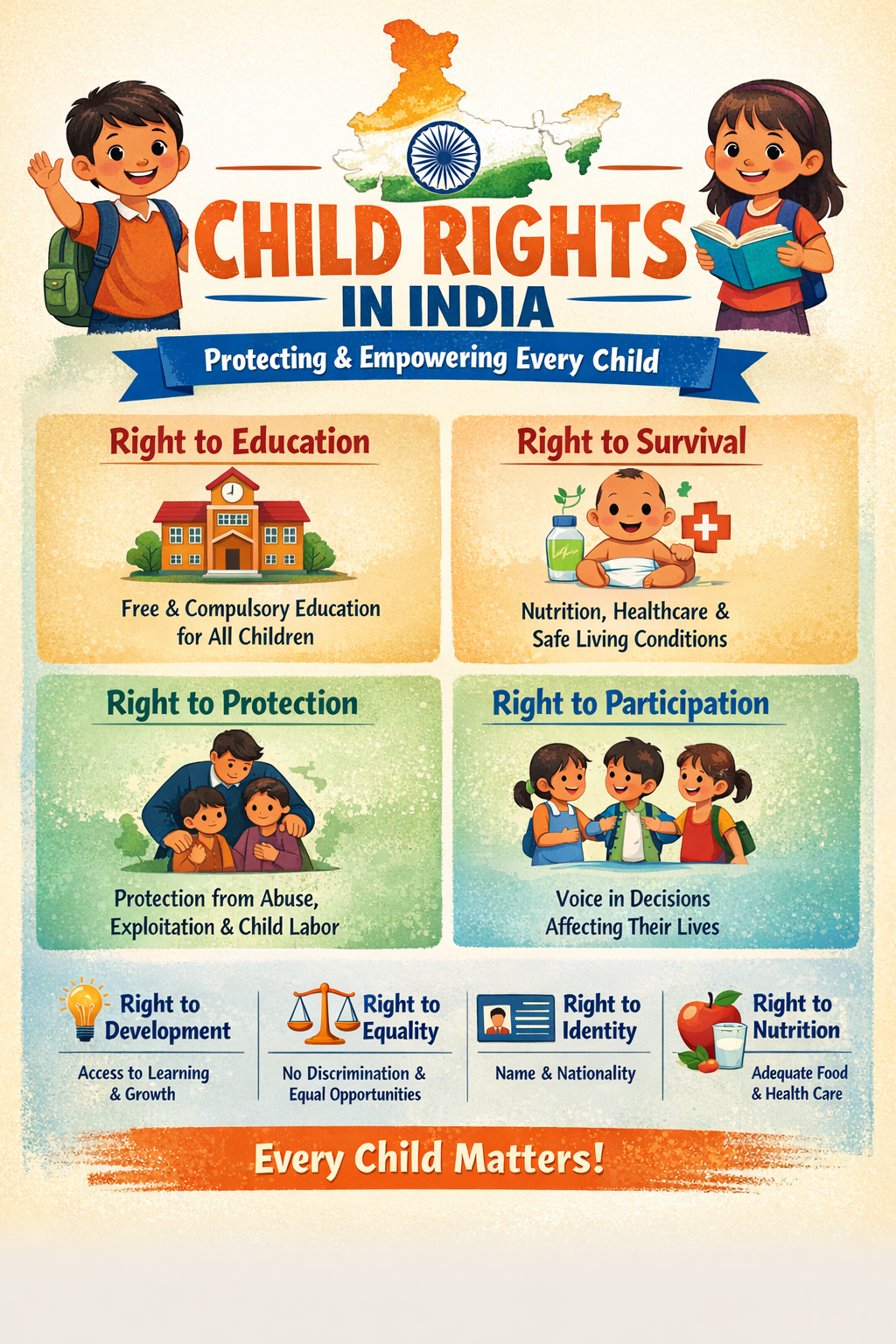
Child rights refer to the fundamental freedoms and protections that every child should enjoy irrespective of gender, caste, religion, disability, or socio-economic background.
Child rights ensure that children receive:
- Proper education
- Health and nutrition
- Protection from abuse and exploitation
- Participation in decisions affecting their lives
- Opportunities for development
According to global frameworks, child rights are generally divided into four categories:
- Right to Survival
- Right to Protection
- Right to Development
- Right to Participation
These rights ensure that children live with dignity and receive opportunities for holistic development.
बाल अधिकार
बाल अधिकार उन मूलभूत स्वतंत्रताओं और सुरक्षा उपायों को दर्शाते हैं जो प्रत्येक बच्चे को प्राप्त होने चाहिए, चाहे उसकी जाति, धर्म, लिंग, सामाजिक या आर्थिक स्थिति कुछ भी हो।
बाल अधिकारों के मुख्य प्रकार हैं:
- जीवन का अधिकार (Right to Survival)
- सुरक्षा का अधिकार (Right to Protection)
- विकास का अधिकार (Right to Development)
- सहभागिता का अधिकार (Right to Participation)
इन अधिकारों का उद्देश्य बच्चों के समग्र विकास को सुनिश्चित करना है।
3. Guiding Principles for Child Rights (बाल अधिकारों के लिए मार्गदर्शक सिद्धांत)
Educational frameworks used in IGNOU, NIOS, and teacher training programs highlight certain guiding principles for ensuring child rights.
1. Best Interest of the Child
All decisions related to children should prioritize their welfare and development.
2. Respect for Dignity
Children must be treated with respect, equality, and fairness.
3. Non-Discrimination
Every child should have equal access to education regardless of background.
4. Participation
Children should be encouraged to express their opinions and participate in decisions affecting them.
5. Protection from Abuse
Schools must ensure zero tolerance for physical, emotional, or sexual abuse.
6. Privacy and Confidentiality
Children’s personal information must be respected and protected.
7. Accountability
Teachers, administrators, parents, and government agencies share responsibility for protecting children.
These principles help create a child-friendly educational environment.
मार्गदर्शक सिद्धांत
बाल अधिकारों को लागू करने के लिए कुछ प्रमुख सिद्धांत हैं:
- बच्चे के सर्वोत्तम हित का सिद्धांत
- सम्मान और गरिमा का सिद्धांत
- भेदभाव रहित शिक्षा
- बच्चों की सहभागिता
- दुरुपयोग से सुरक्षा
- गोपनीयता का सम्मान
- साझा जिम्मेदारी
ये सिद्धांत बाल-मित्र विद्यालयी वातावरण बनाने में सहायक होते हैं।
4. Concept of Safe and Secure School Environment / (सुरक्षित विद्यालयी वातावरण की अवधारणा)
A safe school environment refers to a space where children feel physically, emotionally, and psychologically secure.
Such an environment ensures:
- Protection from violence and harassment
- Healthy learning atmosphere
- Equal opportunities for all children
- Inclusive education
- Emotional support from teachers
Educational guidelines emphasize that schools should be free from fear, trauma, and anxiety so that children can learn effectively.
सुरक्षित विद्यालयी वातावरण
सुरक्षित विद्यालयी वातावरण वह होता है जहाँ बच्चे:
- शारीरिक रूप से सुरक्षित हों
- मानसिक रूप से तनावमुक्त हों
- भावनात्मक रूप से समर्थित हों
- बिना डर के सीख सकें
जब विद्यालय भय और हिंसा से मुक्त होता है, तब बच्चों का सीखने का स्तर बेहतर होता है।
5. Legal and Policy Framework in India (भारत में कानूनी और नीतिगत ढांचा)
Several institutions and laws ensure the protection of child rights in schools.
1. Right of Children to Free and Compulsory Education Act, 2009
- Free education for children aged 6–14
- No discrimination in admission
- Safe infrastructure and child-friendly classrooms
2. National Commission for Protection of Child Rights
This statutory body monitors the implementation of laws related to children and ensures their protection.
3. National Curriculum Framework 2005
The framework promotes inclusive education, safe infrastructure, equality, and respect for students in schools.
कानूनी ढांचा
भारत में बच्चों की सुरक्षा के लिए कई कानून और संस्थाएँ कार्य करती हैं:
- Right of Children to Free and Compulsory Education Act, 2009
- National Commission for Protection of Child Rights
- National Curriculum Framework 2005
ये सभी संस्थाएँ बच्चों के अधिकारों की रक्षा करने में महत्वपूर्ण भूमिका निभाती हैं।
6. Role of Schools in Protecting Child Rights (बाल अधिकारों की रक्षा में विद्यालय की भूमिका)
Schools play a crucial role in protecting children’s rights.
Key Responsibilities
- Creating child-friendly classrooms
- Preventing bullying and harassment
- Providing counselling services
- Promoting inclusive education
- Ensuring equal participation of all students
- Encouraging creativity and expression
Schools should adopt teaching methods that allow children to express their ideas and opinions freely.
विद्यालय की भूमिका
विद्यालयों की प्रमुख जिम्मेदारियाँ:
- बाल-मित्र वातावरण बनाना
- हिंसा और उत्पीड़न को रोकना
- परामर्श सेवाएँ प्रदान करना
- समावेशी शिक्षा को बढ़ावा देना
- सभी बच्चों को समान अवसर देना
7. Role of Teachers in Ensuring Child Safety (बच्चों की सुरक्षा में शिक्षक की भूमिका)
Teachers act as guardians in the school environment.
Important Duties
- Respecting students’ dignity
- Identifying cases of abuse
- Promoting emotional wellbeing
- Encouraging open communication
- Maintaining discipline without punishment
Teachers must create a supportive environment where children feel safe to share their concerns.
8. Importance of Child Protection Policies in Schools (विद्यालयों में बाल संरक्षण नीति का महत्व)
Child protection policies help schools establish clear guidelines to protect children from harm.
Key Components
- Anti-bullying policies
- Complaint redressal mechanisms
- Awareness programmes
- Safety guidelines for infrastructure
- Staff training on child protection
These policies ensure accountability and transparency in educational institutions.
9. Challenges in Ensuring Child Rights in Schools (विद्यालयों में बाल अधिकार सुनिश्चित करने की चुनौतियाँ)
Despite policies and laws, several challenges remain:
- Lack of awareness about child rights
- Inadequate infrastructure
- Bullying and discrimination
- Shortage of trained teachers
- Socio-economic inequalities
Addressing these challenges requires cooperation between schools, communities, and government authorities.
10. Strategies for Creating Child-Friendly Schools (बाल-सुलभ विद्यालय बनाने की रणनीतियाँ)
To ensure safe and secure school environments, several strategies can be adopted:
- Implementing child protection policies
- Providing teacher training on child rights
- Promoting inclusive education
- Establishing counselling services
- Encouraging student participation in school governance
- Developing safe infrastructure
These strategies help create a supportive and inclusive educational environment.
11. Conclusion (निष्कर्ष)
Child rights are essential for the holistic development of children and the progress of society. Schools must provide environments where children feel safe, respected, and valued.
Implementing the guiding principles of child rights ensures that every child can learn without fear and develop their full potential. When schools, teachers, parents, and governments work together, they can create a system that truly protects and nurtures children.
Please visit for KVS/NVS syllabus articles: https://teacherszone.in/
Please follow us on facebook: https://www.facebook.com/profile.php?id=61586013442564
निष्कर्ष
बाल अधिकार बच्चों के समग्र विकास और समाज की प्रगति के लिए अत्यंत आवश्यक हैं। विद्यालयों को ऐसा वातावरण प्रदान करना चाहिए जहाँ बच्चे सुरक्षित, सम्मानित और समर्थित महसूस करें।
जब विद्यालय, शिक्षक, अभिभावक और सरकार मिलकर काम करते हैं, तब एक ऐसा शिक्षा तंत्र बनता है जो बच्चों के अधिकारों की रक्षा करता है और उनके उज्ज्वल भविष्य की नींव रखता है।
12. MCQs on Child Rights and Safe School Environment
(CTET / NET / DSSSB / B.Ed / M.Ed Level)
1.
Which international convention recognizes children as holders of their own rights?
A. Universal Declaration of Human Rights
B. Convention on the Rights of the Child
C. Geneva Convention
D. International Labour Convention
Answer: B
2.
The Convention on the Rights of the Child was adopted by the United Nations in:
A. 1985
B. 1989
C. 1992
D. 2001
Answer: B
3.
The main categories of child rights include:
A. Survival, Protection, Development, Participation
B. Education, Employment, Health, Safety
C. Protection, Freedom, Equality, Justice
D. Health, Education, Shelter, Food
Answer: A
4.
Which principle states that every decision concerning children must prioritize their welfare?
A. Equality Principle
B. Best Interest of the Child
C. Freedom Principle
D. Responsibility Principle
Answer: B
5.
The law that ensures free and compulsory education for children aged 6–14 years in India is:
A. Child Labour Act
B. Juvenile Justice Act
C. Right to Education Act
D. National Education Policy
Answer: C
6.
A safe school environment primarily focuses on:
A. Academic excellence only
B. Physical safety only
C. Physical, emotional, and psychological safety
D. Infrastructure development
Answer: C
7.
Which of the following is a guiding principle of child rights?
A. Corporal punishment
B. Non-discrimination
C. Competitive pressure
D. Academic ranking
Answer: B
8.
The body responsible for monitoring child rights in India is:
A. National Commission for Women
B. National Commission for Protection of Child Rights
C. National Human Rights Commission
D. Ministry of Social Justice
Answer: B
9.
Participation rights allow children to:
A. Work in industries
B. Express their views and opinions
C. Take part in elections
D. Manage school administration
Answer: B
10.
A child-friendly classroom encourages:
A. Fear of punishment
B. Memorization only
C. Active participation
D. Strict discipline
Answer: C
11.
Which of the following is NOT a type of child right?
A. Survival rights
B. Protection rights
C. Development rights
D. Property rights
Answer: D
12.
Bullying in schools violates which child right?
A. Right to protection
B. Right to survival
C. Right to employment
D. Right to taxation
Answer: A
13.
Inclusive education means:
A. Education only for talented students
B. Education for children from rich families
C. Education for all children regardless of differences
D. Education for boys only
Answer: C
14.
The principle of non-discrimination ensures that:
A. Only talented children are selected
B. All children receive equal opportunities
C. Teachers control students strictly
D. Children compete for resources
Answer: B
15.
Child protection policies in schools are designed to:
A. Increase school fees
B. Prevent harm to children
C. Promote sports
D. Increase academic workload
Answer: B
16.
Corporal punishment in schools is:
A. Encouraged
B. Legally acceptable
C. Prohibited under child rights frameworks
D. Mandatory
Answer: C
17.
Which document emphasizes child-centered education in India?
A. National Curriculum Framework
B. Industrial Policy
C. National Health Mission
D. Labour Policy
Answer: A
18.
Emotional safety in schools includes:
A. Freedom from humiliation and harassment
B. Strict discipline
C. Academic pressure
D. Physical training
Answer: A
19.
Teachers play a major role in:
A. Ignoring student concerns
B. Promoting child rights awareness
C. Punishing students strictly
D. Limiting student participation
Answer: B
20.
Which right ensures access to education, health care, and development opportunities?
A. Right to participation
B. Right to development
C. Right to protection
D. Right to employment
Answer: B
21.
A safe school environment helps children to:
A. Develop fear of authority
B. Improve academic performance
C. Avoid interaction
D. Become competitive only
Answer: B
22.
Child participation in school decision-making promotes:
A. Democratic values
B. Competition
C. Obedience only
D. Teacher authority
Answer: A
23.
Which law protects children from sexual offences in India?
A. Child Labour Act
B. POCSO Act
C. RTI Act
D. Motor Vehicle Act
Answer: B
24.
School counselling services mainly help students with:
A. Emotional and psychological issues
B. Sports training
C. Homework completion
D. School discipline
Answer: A
25.
Which factor contributes most to a child-friendly school environment?
A. Fear-based discipline
B. Supportive teacher-student relationships
C. High examination pressure
D. Strict competition
Answer: B
26.
A child’s right to express opinions freely refers to:
A. Protection rights
B. Participation rights
C. Survival rights
D. Development rights
Answer: B
27.
Which organization developed many child rights frameworks used in education?
A. UNICEF
B. WHO
C. IMF
D. World Bank
Answer: A
28.
Safe school infrastructure includes:
A. Secure buildings and sanitation facilities
B. Strict classroom rules
C. Higher fees
D. Competitive exams
Answer: A
29.
Teacher training on child rights aims to:
A. Improve exam results only
B. Promote awareness of child protection
C. Increase teacher authority
D. Limit student participation
Answer: B
30.
Which factor may threaten child safety in schools?
A. Bullying
B. Respectful interaction
C. Inclusive teaching
D. Cooperation
Answer: A
31.
A child-friendly school environment should be:
A. Fear-based
B. Competitive
C. Inclusive and supportive
D. Authoritarian
Answer: C
32.
Which of the following promotes emotional well-being of children?
A. Public humiliation
B. Encouragement and support
C. Strict punishment
D. Isolation
Answer: B
33.
The responsibility of ensuring child safety in schools lies with:
A. Teachers only
B. Government only
C. Parents only
D. All stakeholders
Answer: D
34.
Equal opportunities in education represent:
A. Discrimination
B. Non-discrimination principle
C. Competition principle
D. Authority principle
Answer: B
35.
Child rights education helps students to:
A. Understand their responsibilities and rights
B. Ignore school rules
C. Challenge teachers
D. Avoid learning
Answer: A
36.
Which of the following is essential for a safe school climate?
A. Mutual respect
B. Fear
C. Competition
D. Punishment
Answer: A
37.
The role of parents in child protection includes:
A. Ignoring school policies
B. Supporting school safety measures
C. Avoiding communication
D. Increasing pressure on children
Answer: B
38.
Child abuse in schools can be:
A. Physical
B. Emotional
C. Sexual
D. All of the above
Answer: D
39.
A complaint redressal mechanism in schools helps to:
A. Increase punishment
B. Address student grievances
C. Reduce teaching hours
D. Increase fees
Answer: B
40.
Child participation encourages:
A. Passive learning
B. Critical thinking and confidence
C. Fear of authority
D. Silence in classroom
Answer: B
41.
Which principle promotes respect for children’s dignity?
A. Authoritarian principle
B. Respect principle
C. Competition principle
D. Discipline principle
Answer: B
42.
Inclusive classrooms support:
A. Only gifted students
B. Only disabled students
C. All students regardless of differences
D. Only academically strong students
Answer: C
43.
A positive school climate improves:
A. Student well-being
B. Fear among students
C. Academic stress
D. Competition
Answer: A
44.
Safe schools must ensure:
A. Equal participation
B. Discrimination
C. Corporal punishment
D. Academic pressure
Answer: A
45.
Which factor helps protect children from bullying?
A. Teacher supervision
B. Ignoring conflicts
C. Strict punishment only
D. Competition
Answer: A
46.
Which child right emphasizes freedom from exploitation and abuse?
A. Protection rights
B. Survival rights
C. Participation rights
D. Development rights
Answer: A
47.
The concept of child-friendly education focuses on:
A. Teacher authority
B. Child-centered learning
C. Examination pressure
D. Memorization
Answer: B
48.
The main aim of child rights education is to:
A. Promote discipline only
B. Ensure holistic development
C. Increase competition
D. Limit freedom
Answer: B
49.
A school environment that promotes cooperation and respect is called:
A. Competitive environment
B. Safe and supportive environment
C. Fear-based environment
D. Authoritarian environment
Answer: B
50.
Which of the following is most essential for protecting children’s rights in schools?
A. High examination scores
B. Safe and inclusive school environment
C. Strict discipline
D. Competitive atmosphere
Answer: B