
This blog will explain you the Role of Socialisation Agencies in Child Development and Educationand Steps to Ensure Home–School Continuity/प्राथमिक एवं द्वितीयक समाजीकरण अभिकरणों की भूमिका तथा गृह-विद्यालय निरंतरता सुनिश्चित करने के उपाय/ Important topic for Role of Socialisation Agencies in Child Development and EducationTier II syllabus for KVS/NVS exam 2026
Table of Contents
1. Introduction
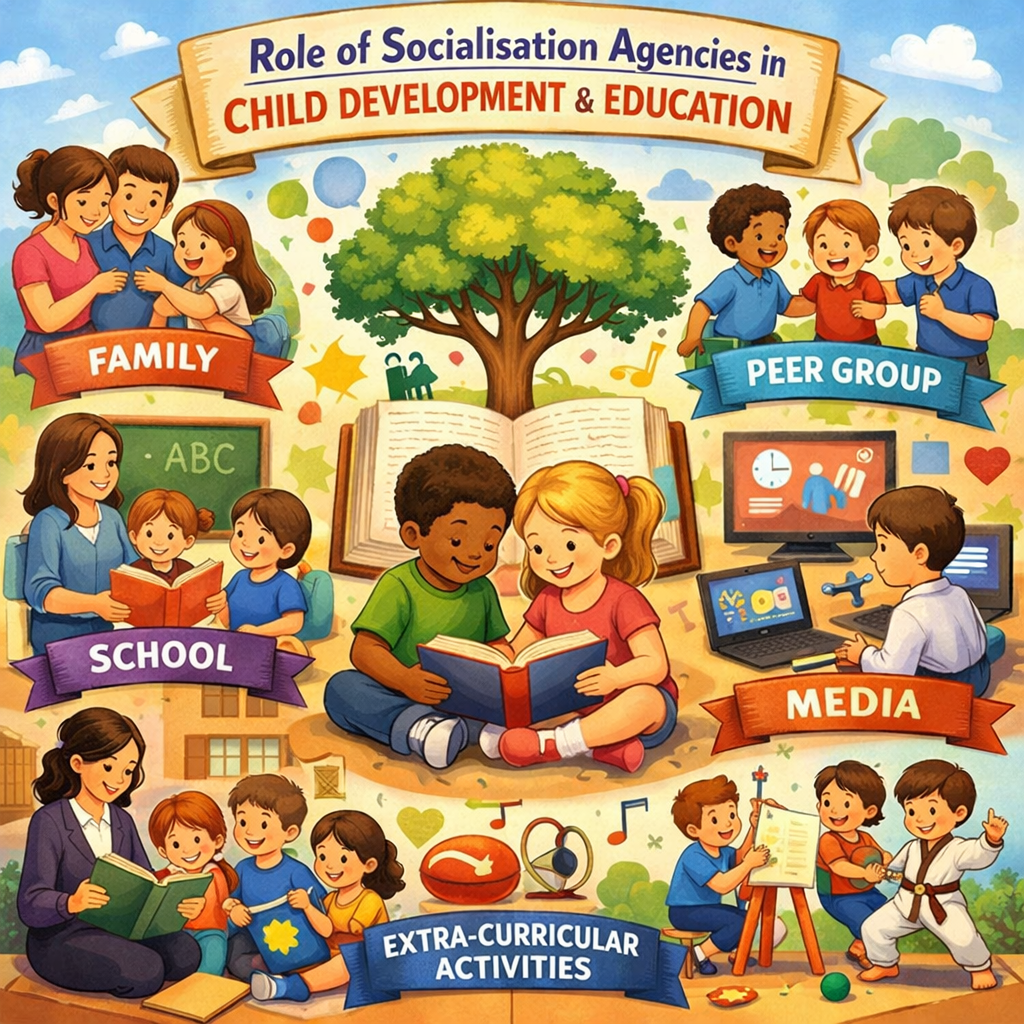
Socialisation is a lifelong process through which an individual learns the norms, values, beliefs, attitudes, skills, and behaviour patterns of society. Education is not limited to schools alone but begins at home and continues through various social institutions. Socialisation plays a crucial role in shaping personality, identity, and social behaviour.
Primary and secondary socialisation agencies jointly contribute to the holistic development of a child. In modern education, ensuring home–school continuity has become essential to bridge gaps between family upbringing and formal schooling.
समाजीकरण एक सतत प्रक्रिया है जिसके माध्यम से व्यक्ति समाज के मूल्यों, मानदंडों, विश्वासों, व्यवहारों और कौशलों को सीखता है। शिक्षा केवल विद्यालय तक सीमित नहीं है, बल्कि यह परिवार से आरंभ होकर विभिन्न सामाजिक संस्थाओं तक विस्तारित होती है। समाजीकरण व्यक्ति के व्यक्तित्व, पहचान और सामाजिक व्यवहार के निर्माण में महत्वपूर्ण भूमिका निभाता है।
प्राथमिक और द्वितीयक समाजीकरण अभिकरण मिलकर बालक के समग्र विकास में योगदान देते हैं। वर्तमान शैक्षिक परिदृश्य में गृह-विद्यालय की निरंतरता बनाए रखना अत्यंत आवश्यक हो गया है।
Meaning of Socialisation
(Role of Socialisation Agencies in Child Development and Education- for KVS/ NVS Tier 2 exam 2026)
समाजीकरण का अर्थ
Socialisation is the process by which an individual internalises the culture of society. It enables the individual to become a socially acceptable and responsible member of society. Education is a structured form of socialisation.
समाजीकरण वह प्रक्रिया है जिसके माध्यम से व्यक्ति समाज की संस्कृति को आत्मसात करता है। यह व्यक्ति को समाज का एक उत्तरदायी एवं स्वीकार्य सदस्य बनाता है। शिक्षा समाजीकरण का एक संगठित रूप है।
Agencies of Socialisation
(Role of Socialisation Agencies in Child Development and Education)
समाजीकरण के अभिकरण/Socialisation agencies are broadly classified into:
- Primary Socialisation Agencies
- Secondary Socialisation Agencies
समाजीकरण के अभिकरण मुख्यतः दो प्रकार के होते हैं—
- प्राथमिक समाजीकरण अभिकरण
- द्वितीयक समाजीकरण अभिकरण
Primary Socialisation Agencies (Role of Socialisation Agencies in Child Development and Education)
Role of Socialisation Agencies in Child Development and Education- for KVS/ NVS Tier 2 exam 2026
प्राथमिक समाजीकरण अभिकरण
1. Family (परिवार)
Family is the first and most influential agency of socialisation. It provides emotional security, language development, moral values, habits, and social norms. The child learns discipline, cooperation, respect, and empathy within the family.
परिवार समाजीकरण का प्रथम एवं सर्वाधिक प्रभावशाली अभिकरण है। यहीं बालक भावनात्मक सुरक्षा, भाषा, नैतिक मूल्य, अनुशासन एवं सामाजिक व्यवहार सीखता है।
2. Peer Group (सहकर्मी समूह)
Peer groups help children learn social adjustment, leadership, cooperation, competition, and group behaviour. They promote independence from parents.
सहकर्मी समूह बालक को सहयोग, प्रतिस्पर्धा, नेतृत्व तथा सामाजिक समायोजन सिखाते हैं।
3. Neighborhood and Community (पड़ोस एवं समुदाय)
Community interaction helps in developing social responsibility, tolerance, and civic sense.
समुदाय के माध्यम से बालक सामाजिक उत्तरदायित्व और सहिष्णुता सीखता है।
Secondary Socialisation Agencies (Role of Socialisation Agencies in Child Development and Education)
Role of Socialisation Agencies in Child Development and Education- for KVS/ NVS Tier 2 exam 2026
द्वितीयक समाजीकरण अभिकरण
1. School (विद्यालय)
School is the most important secondary agency of socialisation. It provides formal education, discipline, values, and social skills. Teachers act as role models.
विद्यालय समाजीकरण का प्रमुख द्वितीयक अभिकरण है जहाँ बालक औपचारिक शिक्षा, अनुशासन और सामाजिक कौशल सीखता है।
2. Teachers (शिक्षक)
English:
Teachers shape students’ behaviour, attitudes, moral development, and career aspirations.
Hindi:
शिक्षक विद्यार्थियों के चरित्र निर्माण एवं मूल्य विकास में महत्वपूर्ण भूमिका निभाते हैं।
3. Mass Media (जनसंचार माध्यम)
English:
Media influences attitudes, beliefs, and aspirations. It has both positive and negative effects.
Hindi:
जनसंचार माध्यम विचारों, दृष्टिकोणों और व्यवहारों को प्रभावित करते हैं।
4. Religious Institutions (धार्मिक संस्थाएँ)
English:
They inculcate moral and ethical values and promote social harmony.
Hindi:
धार्मिक संस्थाएँ नैतिक मूल्यों और सामाजिक सद्भाव को बढ़ावा देती हैं।
Role of Socialisation Agencies in Education
शिक्षा में समाजीकरण अभिकरणों की भूमिका
English:
- Development of personality
- Moral and value education
- Social adjustment
- Emotional development
- Citizenship education
Hindi:
- व्यक्तित्व विकास
- नैतिक शिक्षा
- सामाजिक समायोजन
- भावनात्मक विकास
- नागरिकता शिक्षा
Concept of Home–School Continuity
गृह-विद्यालय निरंतरता की अवधारणा
English:
Home–school continuity refers to a consistent, cooperative, and complementary relationship between home and school that supports the child’s learning and development.
Hindi:
गृह-विद्यालय निरंतरता का अर्थ घर और विद्यालय के बीच सहयोगपूर्ण एवं सामंजस्यपूर्ण संबंध से है, जिससे बालक का समग्र विकास हो सके।
Need for Home–School Continuity
गृह-विद्यालय निरंतरता की आवश्यकता
English:
- Consistent value education
- Emotional security
- Improved academic performance
- Behavioural stability
- Holistic development
Hindi:
- मूल्यों में निरंतरता
- भावनात्मक सुरक्षा
- शैक्षिक उपलब्धि
- व्यवहारिक स्थिरता
- समग्र विकास
Steps to Ensure Home–School Continuity
गृह-विद्यालय निरंतरता सुनिश्चित करने के उपाय
1. Effective Communication
प्रभावी संप्रेषण
Regular interaction between parents and teachers builds trust and understanding.
2. Parent–Teacher Meetings
अभिभावक-शिक्षक बैठकें
These meetings help discuss academic progress and behavioural issues.
3. Shared Educational Goals
साझा शैक्षिक लक्ष्य
Parents and teachers should have common expectations from children.
4. Parental Involvement in Learning
शिक्षा में अभिभावकों की भागीदारी
Helping with homework and monitoring learning enhances continuity.
5. Positive Home Environment
सकारात्मक गृह वातावरण
A supportive environment encourages learning habits.
6. Use of Digital Platforms
डिजिटल प्लेटफॉर्म का उपयोग
Online communication tools strengthen collaboration.
7. Consistency in Discipline
अनुशासन में निरंतरता
Similar disciplinary practices at home and school reduce confusion.
8. Value Reinforcement
मूल्यों का सुदृढ़ीकरण
Values taught in school should be reinforced at home.
Conclusion
निष्कर्ष
Primary and secondary socialisation agencies play a vital role in shaping a child’s personality and social behaviour. Home–school continuity ensures harmony between informal and formal education systems, leading to holistic development.
प्राथमिक एवं द्वितीयक समाजीकरण अभिकरण बालक के व्यक्तित्व निर्माण में महत्वपूर्ण भूमिका निभाते हैं। गृह-विद्यालय निरंतरता शिक्षा की गुणवत्ता और प्रभावशीलता को बढ़ाती है।
MCQs (30) with Answers
बहुविकल्पीय प्रश्न (उत्तर सहित)
- Socialisation is a process of:
A. Teaching only
B. Learning social norms
C. Economic development
D. Physical growth
Answer: B - The first agency of socialisation is:
A. School
B. Peer group
C. Family
D. Media
Answer: C - School is a ______ agency of socialisation.
A. Primary
B. Informal
C. Secondary
D. Natural
Answer: C - Family provides ______ security.
A. Economic
B. Emotional
C. Political
D. Legal
Answer: B - Peer group develops:
A. Dependence
B. Independence
C. Fear
D. Isolation
Answer: B - Teachers act as:
A. Observers
B. Role models
C. Controllers
D. Inspectors
Answer: B - Home–school continuity promotes:
A. Confusion
B. Discipline
C. Isolation
D. Conflict
Answer: B - Socialisation helps in:
A. Personality development
B. Economic growth
C. Political power
D. Physical training only
Answer: A - Media is a:
A. Primary agency
B. Secondary agency
C. Natural agency
D. Biological agency
Answer: B - Community develops:
A. Selfishness
B. Social responsibility
C. Laziness
D. Isolation
Answer: B - Education is a form of:
A. Competition
B. Socialisation
C. Domination
D. Isolation
Answer: B - Parent–teacher meetings help in:
A. Punishment
B. Coordination
C. Competition
D. Examination
Answer: B - Home–school continuity ensures:
A. Value conflict
B. Value consistency
C. Value neglect
D. Value rejection
Answer: B - Discipline should be:
A. Different everywhere
B. Ignored
C. Consistent
D. Harsh
Answer: C - Socialisation begins at:
A. School
B. Playground
C. Home
D. Society
Answer: C - Moral values are taught by:
A. Family and school
B. Media only
C. Peer group only
D. Market
Answer: A - Informal education mainly occurs in:
A. School
B. Family
C. College
D. University
Answer: B - Secondary socialisation is more:
A. Emotional
B. Formal
C. Biological
D. Natural
Answer: B - Teachers influence:
A. Career choices
B. Moral development
C. Behaviour
D. All of the above
Answer: D - Digital platforms help in:
A. Isolation
B. Communication
C. Punishment
D. Control
Answer: B - Social norms are learned through:
A. Socialisation
B. Memorisation
C. Conditioning
D. Imitation only
Answer: A - Peer group helps in learning:
A. Cooperation
B. Competition
C. Leadership
D. All of the above
Answer: D - Home–school continuity improves:
A. Academic achievement
B. Behaviour
C. Emotional stability
D. All of the above
Answer: D - Religious institutions promote:
A. Conflict
B. Ethics
C. Violence
D. Isolation
Answer: B - Value education starts at:
A. College
B. School
C. Home
D. Society
Answer: C - School socialisation is:
A. Informal
B. Unplanned
C. Formal
D. Biological
Answer: C - Parental involvement leads to:
A. Better learning
B. Confusion
C. Stress
D. Failure
Answer: A - Community helps in developing:
A. Citizenship
B. Isolation
C. Fear
D. Dependence
Answer: A - Socialisation is a:
A. One-time process
B. Lifelong process
C. Short process
D. Temporary process
Answer: B - Home–school coordination ensures:
A. Conflict
B. Harmony
C. Competition
D. Neglect
Answer: B