
In this blog, I will explain an important topic for the KVS/NVS tier 2 exam 2026: Mental Health and Well-Being. Comprehensive article on Mental Health and Well-Being. This article will provide “Mental Health and Well-Being: A Holistic, Positive and Empowering Guide for Students & Educators and aspirants.
Introduction / परिचय
Table of Contents
Mental Health and Well-Being is not just the absence of illness; it is a state of emotional balance, psychological strength, and social harmony. Mental health is multidimensional and closely linked with overall development.
मानसिक स्वास्थ्य केवल बीमारी की अनुपस्थिति नहीं है, बल्कि यह भावनात्मक संतुलन, मनोवैज्ञानिक मजबूती और सामाजिक सामंजस्य की अवस्था है।
According to the World Health Organization, mental health enables individuals to realize their abilities, cope with normal stresses, work productively, and contribute to society.
विश्व स्वास्थ्य संगठन के अनुसार मानसिक स्वास्थ्य व्यक्ति को अपनी क्षमताओं को पहचानने, सामान्य तनाव से निपटने, उत्पादक रूप से कार्य करने और समाज में योगदान देने में सक्षम बनाता है।
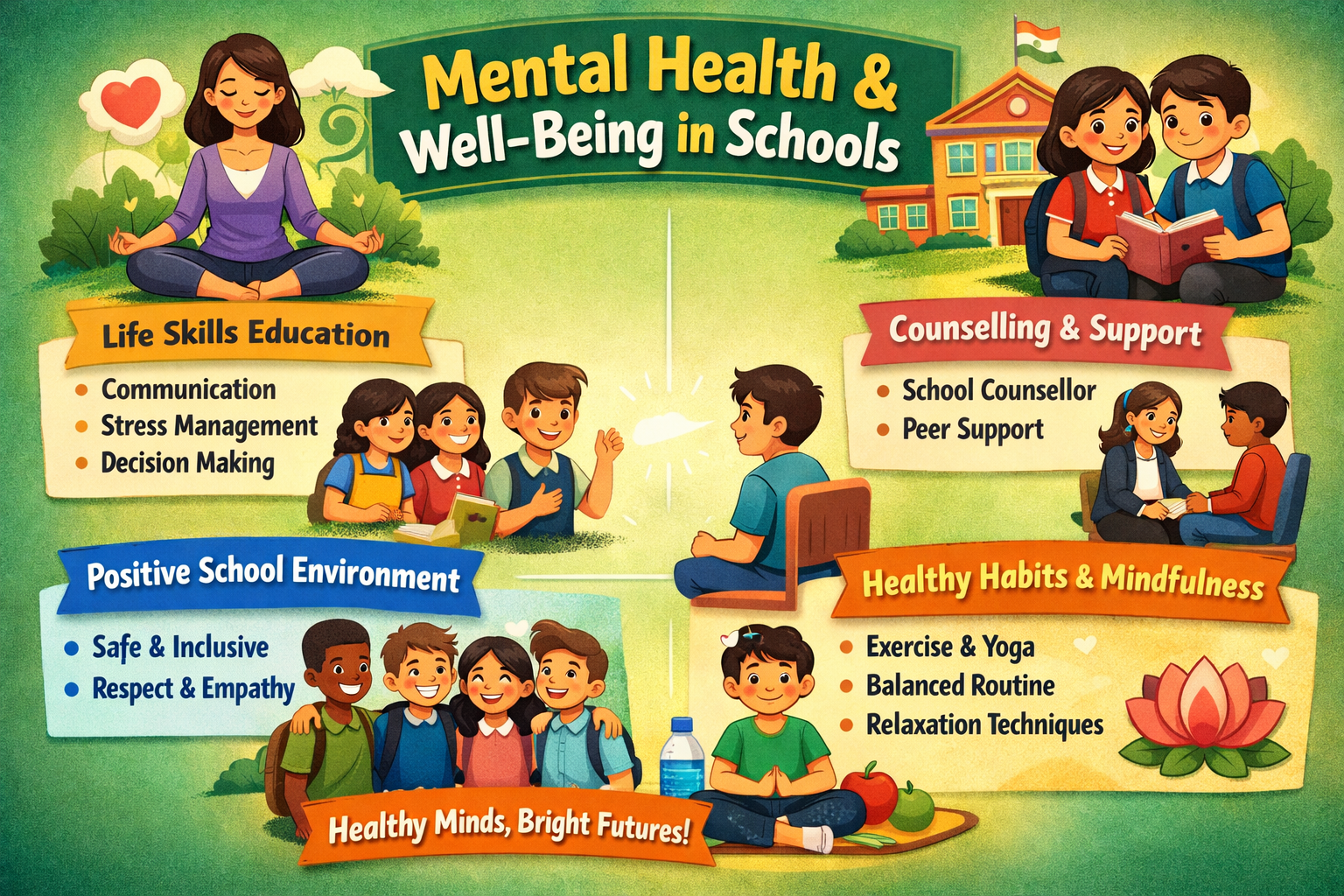
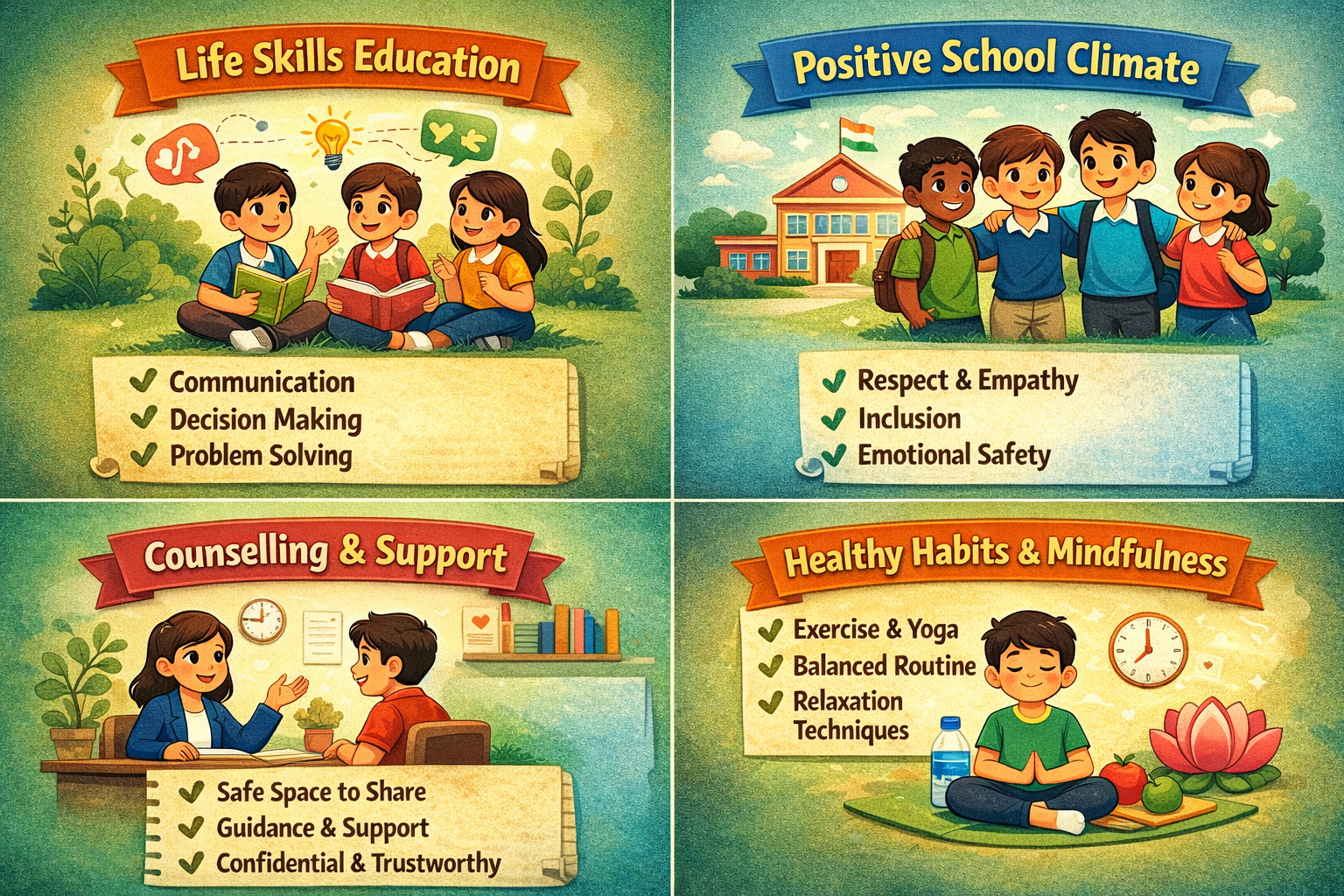
The Ministry of Education and Central Board of Secondary Education emphasize promoting mental well-being in schools through life skills, counselling, and positive classroom environments.
शिक्षा मंत्रालय एवं सीबीएसई विद्यालयों में जीवन कौशल, परामर्श और सकारात्मक वातावरण के माध्यम से मानसिक स्वास्थ्य को बढ़ावा देने पर बल देते हैं।
1. Meaning of Mental Health / मानसिक स्वास्थ्य का अर्थ
Mental health includes:
मानसिक स्वास्थ्य में शामिल हैं:
- Emotional stability / भावनात्मक स्थिरता
- Positive self-concept / सकारात्मक आत्म-धारणा
- Ability to handle stress / तनाव प्रबंधन क्षमता
- Healthy relationships / स्वस्थ संबंध
- Moral and social adjustment / नैतिक एवं सामाजिक समायोजन
2. Dimensions of Well-Being / कल्याण के आयाम
The World Health Organization defines mental health as a state of well-being in which individuals realize their abilities, cope with normal stresses, work productively, and contribute to society.
- Emotional Well-Being – Feeling happy and secure.
भावनात्मक सुख-शांति। - Psychological Well-Being – Self-acceptance and purpose in life.
आत्म-स्वीकृति और जीवन का उद्देश्य। - Social Well-Being – Positive interaction with society.
समाज के साथ सकारात्मक संबंध। - Physical Well-Being – Healthy body supports healthy mind.
स्वस्थ शरीर से स्वस्थ मन। - Spiritual Well-Being – Inner peace and values.
आंतरिक शांति और नैतिक मूल्य।
3. Objectives of Mental Health Education / मानसिक स्वास्थ्य शिक्षा के उद्देश्य
The following are the objectives of Mental Health Education
मानसिक स्वास्थ्य के निम्न उद्देश्य होते हैं –
- Develop resilience / धैर्य एवं सहनशीलता विकसित करना
- Reduce stigma / कलंक को कम करना
- Promote life skills / जीवन कौशल का विकास
- Provide counselling support / परामर्श सेवाएँ प्रदान करना
- Ensure safe school climate / सुरक्षित विद्यालय वातावरण
4. Characteristics of a Mentally Healthy Person / मानसिक रूप से स्वस्थ व्यक्ति की विशेषताएँ
The Ministry of Education highlights:
- Promoting resilience in students
- Reducing stigma around mental health
- Creating safe school environments
- Training teachers in basic counselling skills
- Encouraging life skills education
The Central Board of Secondary Education booklet on mental well-being focuses on:
- Positive classroom climate
- Stress management
- Peer support systems
- Role of parents
5. Factors Affecting Mental Health / मानसिक स्वास्थ्य को प्रभावित करने वाले कारक
In the mental health and well-being, the following are the factors affecting Mental Health-
(A) Personal Factors / व्यक्तिगत कारक
- Self-esteem / आत्म-सम्मान
- Physical health / शारीरिक स्वास्थ्य
(B) Family Factors / पारिवारिक कारक
- Parenting style / पालन-पोषण शैली
- Emotional support / भावनात्मक सहयोग
(C) School Factors / विद्यालयीय कारक
- Academic pressure / शैक्षणिक दबाव
- Peer relationships / सहपाठी संबंध
(D) Social Factors / सामाजिक कारक
- Social media influence / सोशल मीडिया प्रभाव
- Cultural expectations / सांस्कृतिक अपेक्षाएँ
6. Role of Schools / विद्यालय की भूमिका
Schools should:
विद्यालयों को चाहिए कि:
- Introduce life skills education / जीवन कौशल शिक्षा
- Provide counselling services / परामर्श सेवाएँ
- Promote inclusive education / समावेशी शिक्षा
- Encourage open communication / खुला संवाद
- Practice positive discipline / सकारात्मक अनुशासन
7. Mental Health Challenges in Adolescents / किशोरावस्था की चुनौतियाँ
The Ministry’s advisory encourages early identification and supportive interventions rather than punishment. The following are the challenges of Adolescents in the context of mental health and well-being-
- Examination stress / परीक्षा तनाव
- Identity crisis / पहचान संकट
- Peer pressure / साथियों का दबाव
- Digital addiction / डिजिटल लत
- Low self-esteem / कम आत्म-सम्मान
In the context of Mental health and well-being, It is emphasizes teachers as facilitators of emotional safety.
8. Strategies to Promote Mental Well-Being / मानसिक स्वास्थ्य संवर्धन के उपाय
Individual Level / व्यक्तिगत स्तर
- Regular exercise / नियमित व्यायाम
- Meditation / ध्यान
- Positive thinking / सकारात्मक सोच
Family Level / पारिवारिक स्तर
- Emotional bonding / भावनात्मक जुड़ाव
- Active listening / ध्यानपूर्वक सुनना
School Level / विद्यालय स्तर
- Awareness programs / जागरूकता कार्यक्रम
- Teacher training / शिक्षक प्रशिक्षण
Mental Health and Well-Being is the foundation of holistic education.
मानसिक स्वास्थ्य समग्र शिक्षा की आधारशिला है।
शिक्षा मंत्रालय, सीबीएसई और इग्नू के मार्गदर्शन से विद्यालय भावनात्मक रूप से सशक्त विद्यार्थियों का निर्माण कर सकते हैं।
In other words, we can say that to ensure mental health and well-being in the schools, we must ensure that –
✔ Mental health education must be integrated into the curriculum.
✔ Schools must promote resilience and emotional literacy.
✔ Teachers and parents play a crucial role.
✔ Preventive and supportive approaches are essential.
A mentally healthy student becomes a confident, responsible, and productive citizen.
For a comprehensive study, you may refer this CBSE booklet-https://manodarpan.education.gov.in/assets/img/pdf/CBSE_MH_Manual.pdf
or click this-https://drive.google.com/file/d/1FjuIod5B5L1sxNNG6LRyAgoFgOPK_pHn/view?usp=drive_link
Ministry education Mental Health and Well-being guidlines- https://drive.google.com/file/d/1FjuIod5B5L1sxNNG6LRyAgoFgOPK_pHn/view?usp=drive_link
Follow US on – https://www.facebook.com/profile.php?id=61586013442564
for other topics you may contact-https://teacherszone.in/
9.MCQs on Mental Health and Well-Being- Here are 30 MCQ questions with answers in the topic of mental health and well-being
(With Answers)
- Mental health means:
A) Absence of illness
B) Emotional balance
C) Only intelligence
D) Physical strength
Answer: B - WHO defines mental health as ability to:
A) Earn money
B) Cope with stress
C) Compete
D) Control others
Answer: B - Life skills education promotes:
A) Fear
B) Resilience
C) Punishment
D) Isolation
Answer: B - Emotional well-being relates to:
A) Income
B) Happiness
C) Height
D) Marks
Answer: B - Examination anxiety affects:
A) Learning
B) Eye color
C) Weather
D) Soil
Answer: A - Self-esteem is part of:
A) Physical health
B) Mental health
C) Geography
D) Economy
Answer: B - Positive discipline avoids:
A) Encouragement
B) Humiliation
C) Dialogue
D) Respect
Answer: B - Adolescence is:
A) Stable period
B) Sensitive period
C) Old age
D) None
Answer: B - Peer support reduces:
A) Stress
B) Confidence
C) Learning
D) Health
Answer: A - Meditation helps in:
A) Anger increase
B) Emotional control
C) Fear
D) Conflict
Answer: B
11. Inclusive education promotes:
A) Competition
B) Exclusion
C) Belongingness
D) Punishment
Answer: C
12. Parenting style mainly influences:
A) Climate change
B) Mental health of child
C) Geography
D) Infrastructure
Answer: B
13. Counselling in schools is primarily:
A) Punitive action
B) Administrative process
C) Supportive service
D) Examination method
Answer: C
14. Excessive social media use may affect:
A) Height
B) Self-image
C) Weather
D) Language grammar
Answer: B
15. Resilience refers to:
A) Physical strength
B) Emotional weakness
C) Avoiding problems
D) Ability to cope with adversity
Answer: D
16. Balanced emotions are a sign of:
A) Physical illness
B) Mental health
C) Social conflict
D) Academic failure
Answer: B
17. Teacher empathy helps to build:
A) Fear
B) Trust
C) Isolation
D) Competition
Answer: B
18. Moral well-being is related to:
A) Income
B) Appearance
C) Values and ethics
D) Fashion
Answer: C
19. Stress management is considered a:
A) Subject
B) Hobby
C) Life skill
D) Punishment
Answer: C
20. Healthy body supports:
A) Healthy mind
B) Anger
C) Laziness
D) Conflict
Answer: A
21. Family emotional support develops:
A) Fear
B) Confidence
C) Anxiety
D) Isolation
Answer: B
22. Open communication in school reduces:
A) Learning
B) Growth
C) Anxiety
D) Intelligence
Answer: C
23. Guidance services in school are:
A) Preventive in nature
B) Punishment based
C) Competitive
D) Temporary
Answer: A
24. Emotional literacy improves:
A) Marks only
B) Height
C) Relationships
D) Income
Answer: C
25. Safe school climate ensures:
A) Emotional security
B) Fear
C) Isolation
D) Stress
Answer: A
26. Mental health directly affects:
A) Weather
B) Learning ability
C) Eye color
D) Handwriting style
Answer: B
27. Stigma around mental health reduces:
A) Awareness
B) Help-seeking behavior
C) Confidence
D) Discipline
Answer: B
28. Psychological well-being includes:
A) Wealth
B) Fame
C) Fashion
D) Purpose in life
Answer: D
29. Life skills education promotes:
A) Resilience
B) Aggression
C) Fear
D) Competition only
Answer: A
30. Mental well-being contributes to:
A) Academic stress
B) Holistic development
C) Isolation
D) Conflict
Answer: B
Previous Years’ Questions- on the topic – Mental Health and Well-Being.It is observed that in previous years, in exams like CTET/KVS recruitment, NVS recruitment, DSSSB, and other STETs and state governments. Many questions are asked on the topic of Mental Health and Well-Being. Some of those are as follows.
1. Mental health is best defined as:
A) Absence of disease
B) Emotional and social well-being
C) Physical strength
D) Intelligence level
Exam: CTET Paper II (Previous Year)
Answer: B
2. According to WHO, mental health includes the ability to:
A) Control others
B) Cope with normal stresses of life
C) Compete aggressively
D) Earn wealth
Exam: UGC-NET Education (Previous Year)
Answer: B
3. Life skills education primarily aims at developing:
A) Academic excellence only
B) Coping and adaptive behavior
C) Physical growth
D) Memorization ability
📌 Exam: KVS PRT (Previous Year)
Answer: B
4. Examination anxiety mainly affects:
A) Emotional stability
B) Learning performance
C) Physical height
D) Language ability
Exam: DSSSB TGT (Previous Year)
Answer: B
5. A mentally healthy child is one who:
A) Never fails
B) Adjusts well with peers
C) Always scores high marks
D) Avoids challenges
Exam: REET Level II (Previous Year)
Answer: B
6. Emotional intelligence contributes to:
A) Stress increase
B) Better interpersonal relationships
C) Isolation
D) Aggression
Exam: UGC-NET Education (Previous Year)
Answer: B
7. Resilience refers to:
A) Avoiding stress
B) Coping effectively with adversity
C) Physical fitness
D) Social withdrawal
Exam: CTET (Previous Year)
Answer: B
8. Inclusive classroom climate promotes:
A) Competition
B) Emotional safety
C) Punishment
D) Fear
Exam: KVS PGT (Previous Year)
Answer: B
9. The most important factor influencing adolescent mental health is:
A) Weather
B) Peer group
C) Eye color
D) Height
Exam: NVS TGT (Previous Year)
Answer: B
10. Counselling in school is mainly:
A) Remedial and preventive
B) Punitive
C) Administrative
D) Competitive
Exam: DSSSB (Previous Year)
Answer: A
11. Self-esteem is related to:
A) Self-concept
B) Physical growth
C) IQ only
D) Economic status
Exam: UGC-NET Education (Previous Year)
Answer: A
12. Stress management is a part of:
A) Curriculum transaction
B) Life skills education
C) Discipline policy
D) Examination reform
Exam: CTET Paper I (Previous Year)
Answer: B
13. A positive school climate is characterized by:
A) Strict punishment
B) Respect and empathy
C) Fear
D) Competition only
Exam: KVS PRT (Previous Year)
Answer: B
14. Mental hygiene movement emphasizes:
A) Prevention of mental illness
B) Physical cleanliness
C) Academic testing
D) Medical treatment only
Exam: UGC-NET (Previous Year)
Answer: A
15. Which is a sign of poor mental health in adolescents?
A) Social participation
B) Emotional instability
C) Confidence
D) Cooperation
Exam: REET (Previous Year)
Answer: B
16. Guidance services in schools aim at:
A) Punishment
B) Holistic development
C) Competition
D) Memorization
Exam: DSSSB (Previous Year)
Answer: B
17. Emotional well-being is closely linked with:
A) Happiness and satisfaction
B) Height
C) Income
D) Age
Exam: CTET (Previous Year)
Answer: A
18. The role of teacher in mental health promotion is:
A) Only academic teaching
B) Emotional support and facilitation
C) Strict discipline
D) Evaluation only
Exam: KVS (Previous Year)
Answer: B
19. Adolescent identity crisis was explained by:
A) Piaget
B) Erik Erikson
C) Skinner
D) Thorndike
Exam: UGC-NET Education (Previous Year)
Answer: B
20. Mental health education in schools should focus on:
A) Marks only
B) Emotional and social competencies
C) Physical punishment
D) Competition
Exam: CTET / KVS (Previous Year)
Answer: B
The above topic is very important in the context of teaching exams, so go through the topic Mental Health and Well-Being and well prepeared fro the exams