
Comprehensive guide on developmental tasks and challenges in child development with stages, issues, and teaching implications. Important topics for KVS/NVS exam 2026
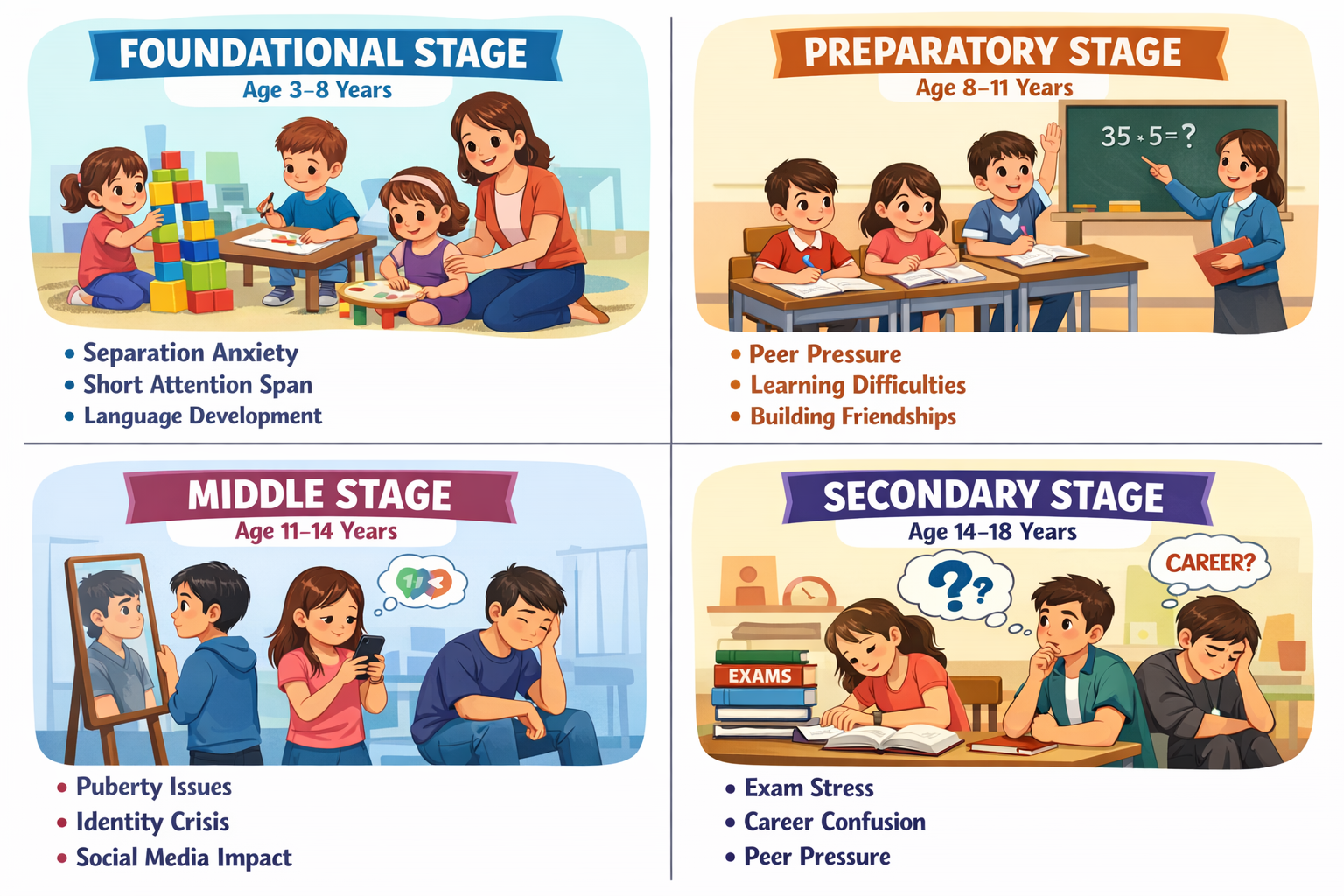
Developmental Tasks and Challenges
Table of Contents
1️⃣ Foundational Stage (3–8 Years)
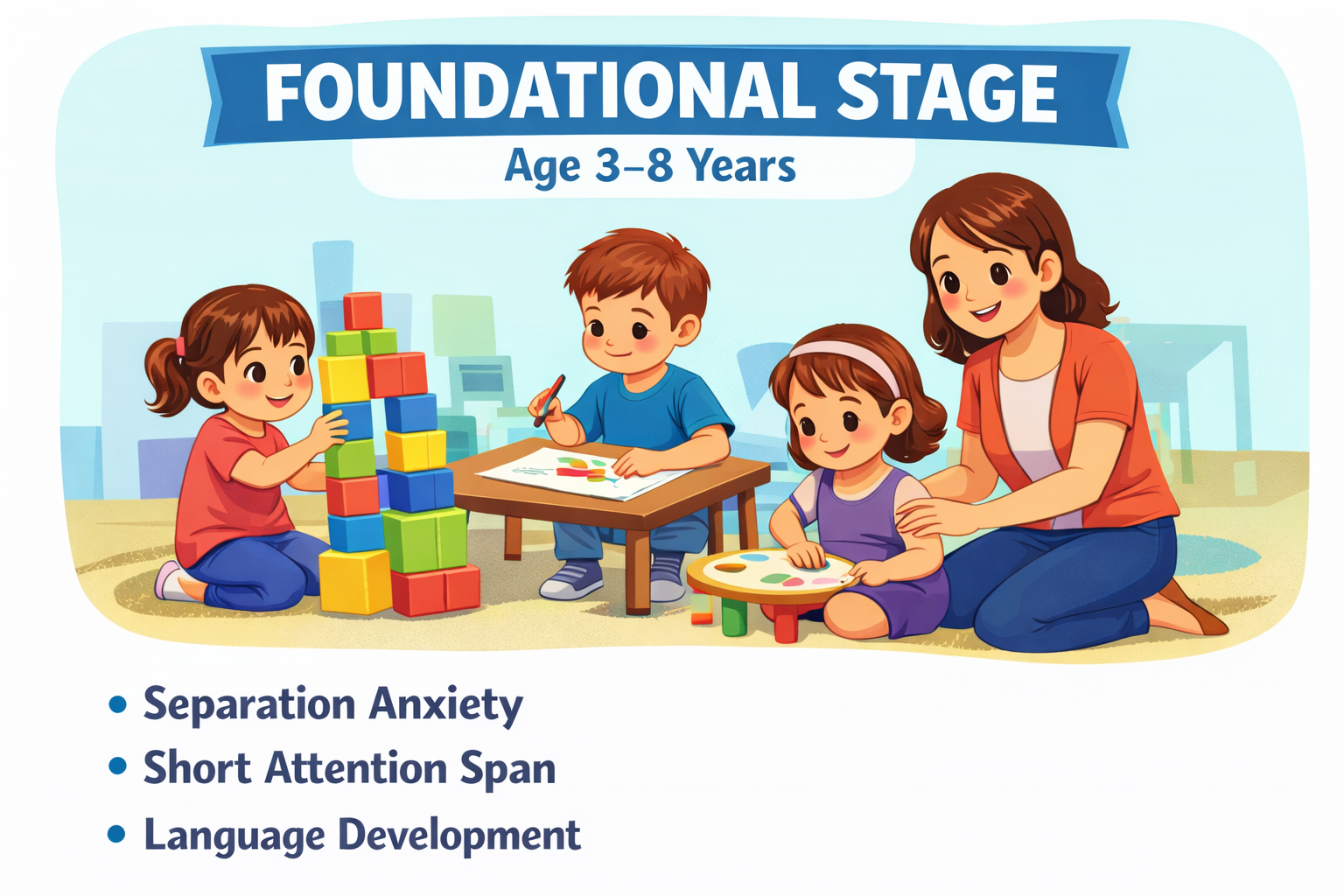
Developmental Tasks and Challenges- in the context of Child development
Developmental Tasks
1. Physical Development
- Motor skills develop (walking, running, writing basics)
- Eye-hand coordination
2. Cognitive Development
- Language development
- Curiosity and imagination
- Basic numeracy & literacy
3. Social & Emotional Development
- Sharing and cooperation
- Expressing emotions
- Attachment with teachers
Challenges
- Separation anxiety
- Short attention span
- Language barriers
- Lack of proper nutrition
- Overuse of screens
Teacher’s Role
- Play-based learning
- Activity-based teaching
- Safe and joyful classroom
- Individual attention
2️⃣ Preparatory Stage (8–11 Years)
Developmental Tasks and Challenges- in the context of Child development
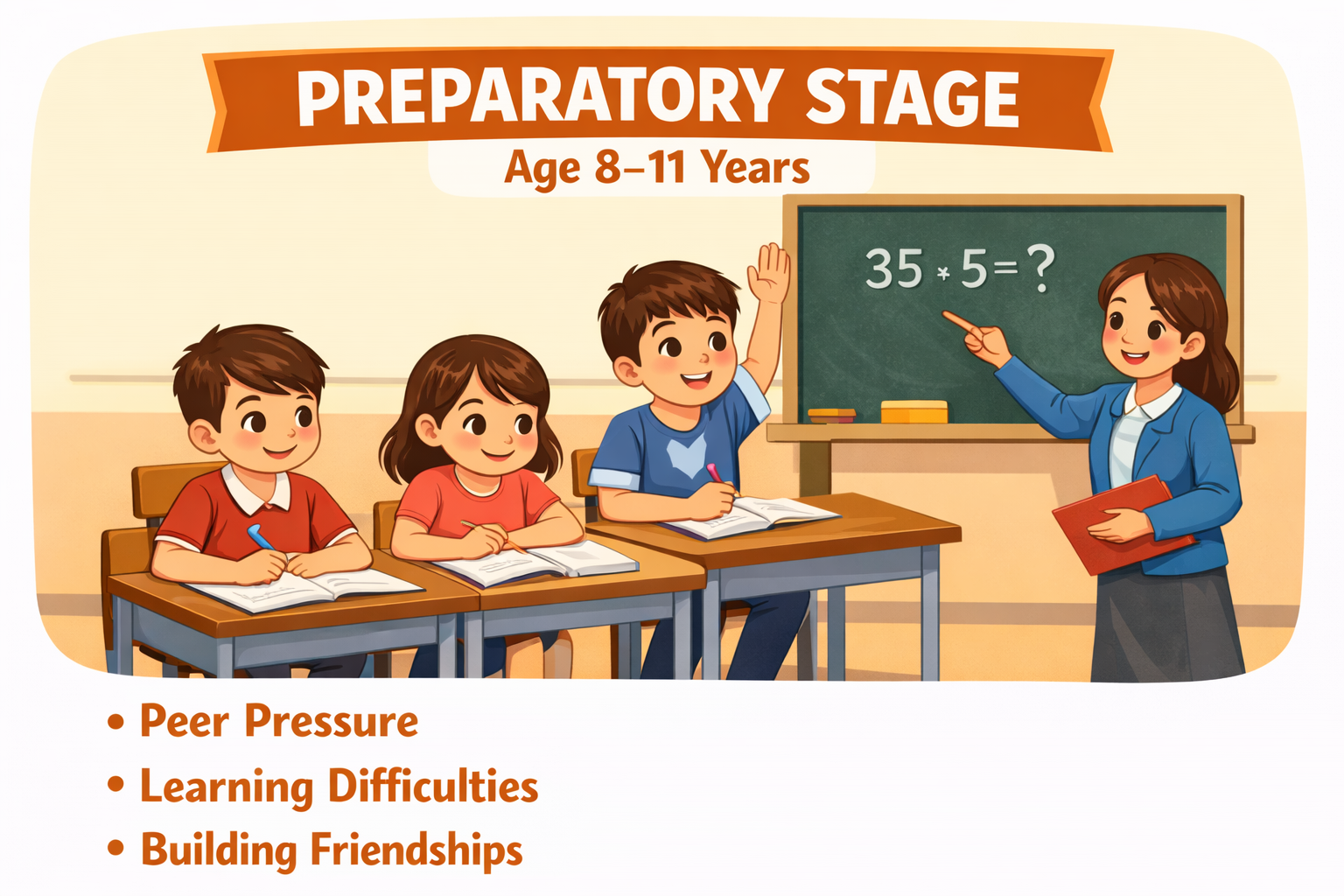
Developmental Tasks
1. Academic Skills
- Reading fluently
- Writing properly
- Basic mathematical reasoning
2. Social Skills
- Teamwork
- Rule-following
- Developing friendships
3. Moral Development
- Understanding right and wrong
Challenges
- Learning difficulties
- Peer pressure
- Comparison anxiety
- Lack of parental support
Teacher’s Role
- Encourage participation
- Remedial teaching
- Use of stories and activities
- Positive reinforcement
3️⃣ Middle Stage (11–14 Years)
Developmental Tasks and Challenges- in the context of Child development
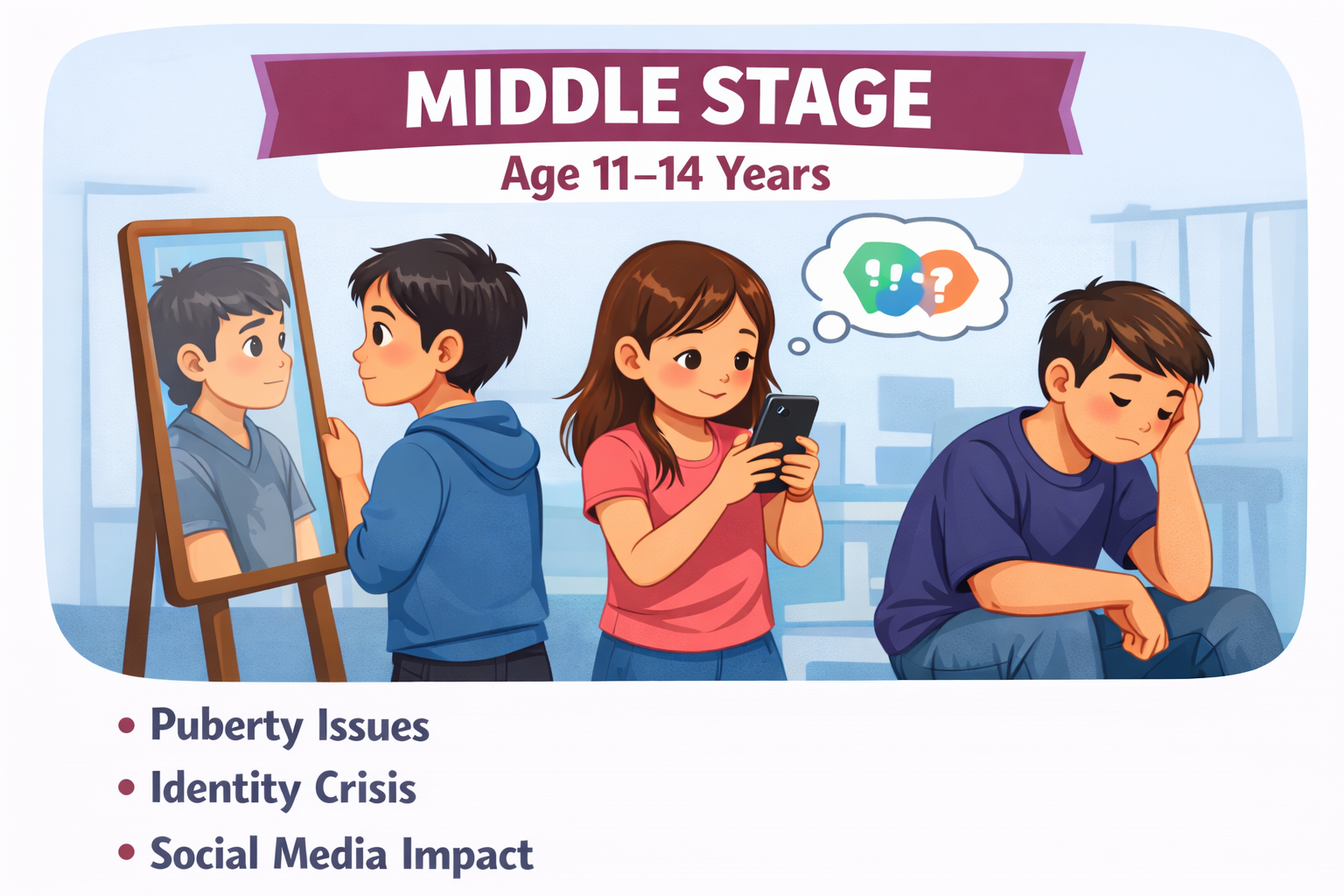
Developmental Tasks
1. Physical Changes
- Beginning of puberty
- Rapid growth
2. Cognitive Development
- Logical thinking
- Problem-solving ability
- Abstract thinking begins
3. Emotional Development
- Mood swings
- Identity formation starts
Challenges
- Low self-esteem
- Body image issues
- Academic stress
- Peer influence
- Social media distraction
Teacher’s Role
- Counseling support
- Career awareness
- Interactive learning
- Value education
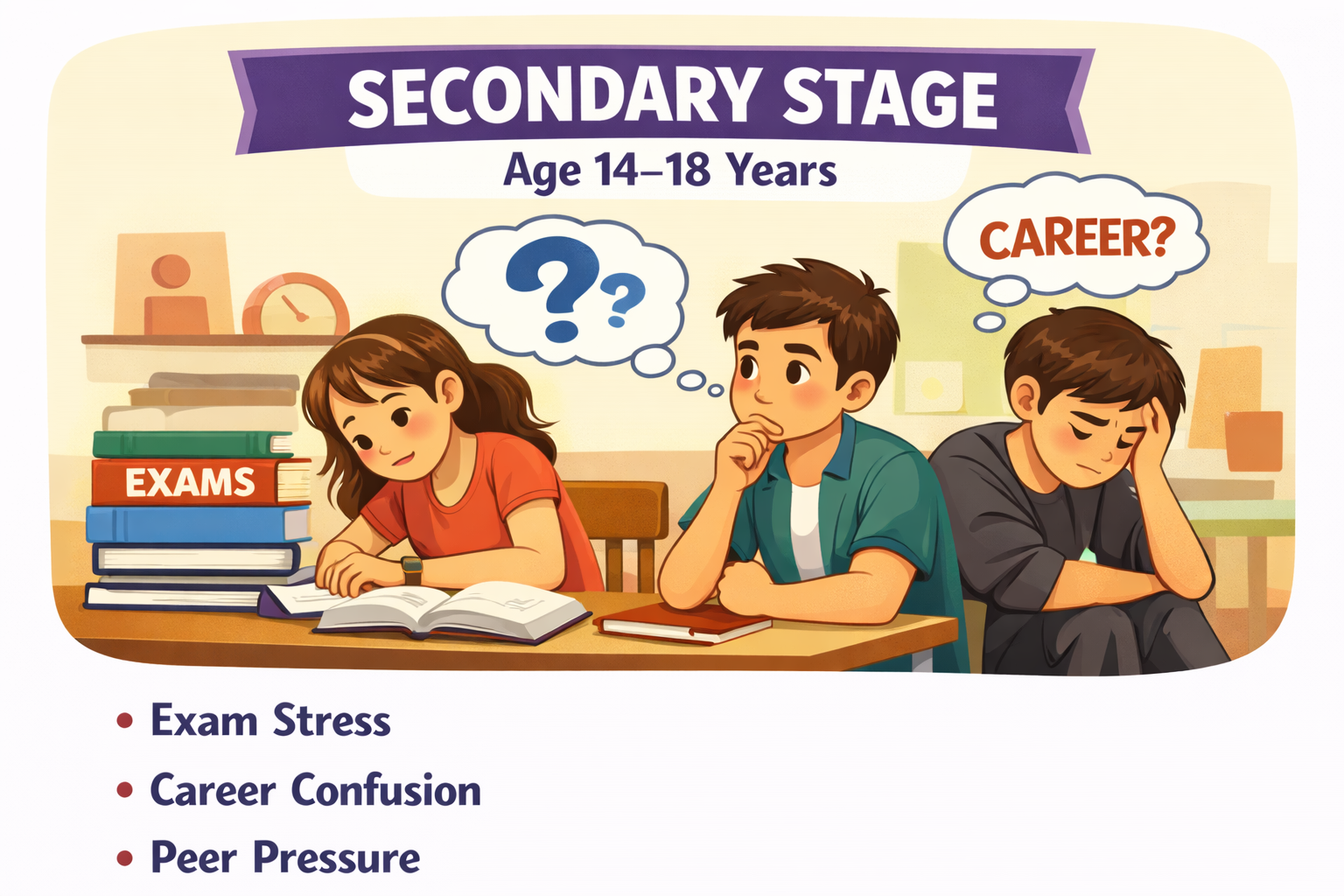
4️⃣ Secondary Stage (14–18 Years)
Developmental Tasks and Challenges- in the context of Child development
Developmental Tasks
1. Identity Formation
- Career planning
- Personal values development
2. Emotional Maturity
- Stable relationships
- Decision-making ability
3. Intellectual Growth
- Critical thinking
- Independent learning
Challenges
- Board exam stress
- Career confusion
- Mental health issues
- Peer pressure
- Digital addiction
Teacher’s Role
- Career guidance
- Mentorship
- Stress management sessions
- Life skill education
Important Theorists (Exam Point of View)
1. Jean Piaget
Stages of Cognitive Development
(Preoperational → Concrete → Formal operational)
2. Erik Erikson
Psychosocial Development (Identity vs Role confusion in adolescence)
3. Kohlberg
Moral development stages
5 Marks Long Answer Structure (Exam Ready)
Introduction:
Developmental tasks refer to age-specific skills and responsibilities that children need to achieve at different stages of growth.
Body:
Explain all four stages with tasks and challenges.
Conclusion:
Teachers and parents must provide supportive environment to help children overcome developmental challenges.
Possible Exam Questions
Short Answer (2–3 Marks)
- What are developmental tasks?
- Mention any two challenges of middle stage children.
- Define identity formation.
Long Answer (5–10 Marks)
- Explain developmental tasks and challenges at secondary stage.
- Discuss the role of teacher in dealing with adolescent problems.
- Describe NEP 2020 stage-wise development.
Objective Questions (MCQs) – 30 Questions
1. The 5+3+3+4 school structure is mentioned in:
(A) NCF 2005
(B) RTE Act
(C) National Education Policy 2020
(D) Kothari Commission
Answer: (C)
2. The age group of the Foundational Stage is:
(A) 6–10 years
(B) 3–8 years
(C) 8–11 years
(D) 11–14 years
Answer: (B)
3. The Preparatory Stage includes:
(A) Grades 1–2
(B) Grades 3–5
(C) Grades 6–8
(D) Grades 9–10
Answer: (B)
4. The Middle Stage covers which age group?
(A) 3–8 years
(B) 8–11 years
(C) 11–14 years
(D) 14–18 years
Answer: (C)
5. The Secondary Stage includes:
(A) Grades 6–8
(B) Grades 3–5
(C) Grades 9–12
(D) Pre-school
Answer: (C)
6. The most suitable teaching method in the Foundational Stage is:
(A) Lecture method
(B) Play-based learning
(C) Rote learning
(D) Exam-oriented method
Answer: (B)
7. Separation anxiety is commonly seen in:
(A) Secondary Stage
(B) Middle Stage
(C) Preparatory Stage
(D) Foundational Stage
Answer: (D)
8. The theory of moral development was proposed by:
(A) Piaget
(B) Erikson
(C) Lawrence Kohlberg
(D) Freud
Answer: (C)
9. The theory of cognitive development was given by:
(A) Freud
(B) Jean Piaget
(C) Skinner
(D) Pavlov
Answer: (B)
10. “Identity vs Role Confusion” is associated with:
(A) Kohlberg
(B) Erik Erikson
(C) Watson
(D) Thorndike
Answer: (B)
11. Logical thinking mainly develops during:
(A) Foundational Stage
(B) Preparatory Stage
(C) Middle Stage
(D) Pre-school
Answer: (C)
12. Puberty generally begins in:
(A) Foundational Stage
(B) Preparatory Stage
(C) Middle Stage
(D) Secondary Stage
Answer: (C)
13. Career-related anxiety is mostly seen in:
(A) Foundational Stage
(B) Preparatory Stage
(C) Middle Stage
(D) Secondary Stage
Answer: (D)
14. Early literacy develops mainly during:
(A) Secondary Stage
(B) Middle Stage
(C) Preparatory Stage
(D) Foundational Stage
Answer: (D)
15. Group work skills develop mainly in:
(A) Preparatory Stage
(B) Foundational Stage
(C) Secondary Stage
(D) Pre-primary
Answer: (A)
16. Abstract thinking begins in:
(A) Foundational Stage
(B) Preparatory Stage
(C) Middle Stage
(D) Nursery
Answer: (C)
17. Examination stress is commonly observed in:
(A) Foundational Stage
(B) Secondary Stage
(C) Preparatory Stage
(D) Pre-school
Answer: (B)
18. Initial social skills develop in:
(A) Foundational Stage
(B) Secondary Stage
(C) Middle Stage
(D) College
Answer: (A)
19. Low self-esteem is more common during:
(A) Foundational Stage
(B) Preparatory Stage
(C) Middle Stage
(D) Nursery
Answer: (C)
20. Life skills education is especially important during:
(A) Only Foundational Stage
(B) Middle and Secondary Stages
(C) Only Preparatory Stage
(D) Nursery
Answer: (B)
21. Learning to follow rules mainly occurs in:
(A) Preparatory Stage
(B) Secondary Stage
(C) Foundational Stage
(D) College
Answer: (A)
22. Critical thinking develops strongly in:
(A) Foundational Stage
(B) Secondary Stage
(C) Nursery
(D) Pre-primary
Answer: (B)
23. Play-based learning is most important in:
(A) Secondary Stage
(B) College
(C) Foundational Stage
(D) University
Answer: (C)
24. Identity formation is a key developmental task in:
(A) Preparatory Stage
(B) Secondary Stage
(C) Foundational Stage
(D) Nursery
Answer: (B)
25. Body image concerns are more common in:
(A) Foundational Stage
(B) Middle Stage
(C) Nursery
(D) Pre-primary
Answer: (B)
26. Early mathematical reasoning develops in:
(A) Foundational Stage
(B) Secondary Stage
(C) College
(D) University
Answer: (A)
27. Deep friendships begin to develop in:
(A) Preparatory Stage
(B) Secondary Stage
(C) Foundational Stage
(D) Nursery
Answer: (A)
28. Independent learning skills develop in:
(A) Foundational Stage
(B) Preparatory Stage
(C) Secondary Stage
(D) Nursery
Answer: (C)
29. Excessive screen time is a major concern in:
(A) Foundational Stage
(B) University
(C) College
(D) Adulthood
Answer: (A)
30. Remedial teaching is most required in:
(A) Preparatory Stage
(B) Nursery
(C) College
(D) Adulthood
Answer: (A)
For other related topic you may go to:- https://teacherszone.in/
Please follow us: https://www.facebook.com/profile.php?id=61586013442564